Tag Archives: Fenton

A Sad Accident: The Death of George W. Fenton, Revisited

Sometimes, there’s more to the story.

Eleven years ago, when I first wrote about the accidental death of Kansas pioneer George W. Fenton, the number of historic newspapers that were readily available to search online was still relatively slim. I was aware that George’s death had made the news—but at that time, I was not yet aware that several differing accounts of the incident had circulated, nor that the news had spread throughout Kansas and beyond.

George W. Fenton—a son of English immigrants who was orphaned at the age of ten when his father perished in the Civil War—had overcome his difficult childhood in Ohio and Illinois and settled down to a farmer’s life near Gypsum Creek in Saline County, Kansas. He had been married for seven years and was the father of three young daughters when, at the age of twenty-eight, he was accidentally shot and killed by his brother-in-law.

As it turned out, George had had another brush with misfortune with a firearm only days before his death. On 02 October 1880, the Salina Herald reported: “Mr. George Fenton had his eyes badly burned by the premature discharge of a gun last week. He is now able to see out of one of them, and hopes they are not seriously injured.”

Perhaps George was still taking things easy on the afternoon of Sunday, 10 October 1880, when he and his family visited at the homestead of his mother-in-law, Nancy (Stilley) Hall. However, that is when tragedy struck. The following Thursday, the Saline County Journal reported:

A Sad Accident. A very painful accident happened last Saturday which resulted in the death of George Fenton, of Gypsum creek. Mr. Fenton with his family was upon a visit to his mother-in-law, who resides about eighteen miles south-east of town, and with whom was residing “Bud” Hall, her son and brother-in-law of Mr. Fenton. During the afternoon while those two persons were engaged in some boyish pranks, Hall playfully presented a shot gun at Fenton (which Hall supposed was unloaded), cocked it and snapped the hammer. A charge of shot was lodged in Fenton’s breast, which proved his death wound. He lived for only an hour after the shot. He leaves a wife and three children. How the charge came in the gun is a mystery, as everybody about the house supposed the gun to be unloaded. Hall is nearly distracted over the result of his carelessness. The brothers-in-law were the best of friends—no trouble ever having occurred between them. The occurrence was so clearly a case of accidental shooting that no coroner’s jury was summoned. Mr. Frank Wilkeson came to town for surgical aid and Dr. Switzer hastened quickly to the scene of the accident, but arrived after Fenton’s death. The moral to be drawn from the careless habit of handling “unloaded guns” is too plain to be commented upon here. Will people never learn better?

The Saline County Journal, 14 October 1880

On the same day that the news was first reported in The Saline County Journal, the McPherson Republican printed the following:

Again we are called upon to listen to the sad results of carelessness with fire-arms. On Sunday, October 10, in the south-eastern part of Saline county, Mr. George Fenton  was accidentally shot by his brother-in-law, Bud Hall. They were both playing with the children, little dreaming of the great calamity that was about to befall one of them. Mr. Hall wishing his gun, reached through the door, and not looking at what he was taking in his hand, took hold of a gun that belonged to a person who was visiting him. Thinking it was his own gun and knowing that it was not loaded, he drew it towards him more carelessly than he would have done had he known it was not his own gun. The hammer of the gun struck against the door side and discharged it; the shot striking Mr. Fenton in the left breast and ranging upward lodged under the shoulder blade. Mr. Andrew Sloop, who had passed a moment before, was called back, and sent post haste to Roxbury for a physician. Doctor Zawadsky hastened at the call, but it was of no avail. The results were fatal, he having expired about one and a half hours after the accident, and before the Doctor arrived. Mr. Fenton leaves a wife and three children to mourn his sad loss. Mr. Hall is almost crazed, and does nothing but rave and call with endearing entreaties to the departed one. All the neighbors sympathize with the distressed family, as they show by their willing assistance. – E. October 11, 1880

McPherson Republican, 14 October 1880

Perhaps Bud had not, in fact, been so cavalier as to actually point a gun at George. The McPherson Republican account eliminates some of the blame he might otherwise have assumed by explaining that the gun—which belonged not to Bud but to an unnamed visitor—discharged accidentally when Bud reached for it behind a door. The account also informs us that medical assistance was sought not only by Frank Wilkeson, who went for Dr. Switzer of Salina, but also by Andrew Sloop, who fetched Dr. Zawadsky of Roxbury. However, both physicians arrived after George’s death, which was said to have occurred either one or one and a half hours after he was shot.

The following day, The Canton Monitor printed the following version of the events:

“We are informed by Mr. Banks, of Roxbury, that an accident occurred about five miles north of that place, by which Mr. George Fenton lost his life. The way it happened was this: Mr. Hall, a brother-in-law of Mr. Fenton, went to see him, Fenton, last Sunday. Mr. Hall was sitting in the door watching the children playing with the dogs, when he told one of them, jokingly, that he would shoot his dog, and at the same time reaching behind the door to get a shotgun, where two were standing. As he was taking one, the hammer of the gun caught some way, causing it to go off, the charge striking Mr. Fenton in the breast, killing him almost instantly. The shooting was entirely accidental, as they were the best of friends. Mr. Hall has went crazy from the accident, thus leaving two families as good as fatherless.

The Canton Monitor, 15 October 1880

This account contradicts the first in that it suggests that Bud was visiting George, when in fact The Saline County Journal was most likely correct that George was at the home of his mother-in-law, which is where Bud also resided with his family. (Frank Wilkeson, who went for the doctor, was a neighbor of the Halls.) This account also states that George died almost instantly, which is unlikely as otherwise there would have been no call to send for a doctor. However, The Canton Monitor does give a very specific and perhaps more believable account of what initiated the chain of events that resulted in George’s death. Like in the McPherson Republican, it is indicated that George and Bud were playing with the children at the time of the accident, but The Canton Monitor goes on to say that Bud was joking with the children that he would shoot his dog. (At a time when “mad dogs” were a more commonplace concern and livestock needed to be protected, this joke may have come across as slightly less alarming than it would to a modern audience!) Furthermore, the account agrees with the McPherson Republican that there was more than one gun standing behind the door, and that the hammer of the gun was caught in a way that caused it to unintentionally fire in George’s direction.

The next day, the Salina Herald printed another account of the events of October 10, more closely following the version published in the McPherson Republican and The Canton Monitor:

Sad Accident. Another sad result from the careless handling of guns occurred on Gypsum last Sunday. It appears that Geo. Fenton, living on the west branch of Gypsum creek went over to visit his mother-in-law, Mrs. Nancy Hall, who lived a short distance from him. While there himself and brother-in-law Bud. Hall were talking of hunting. Their gun was standing behind the door. Bud. Hall reached for it to shoot a dog, when the hammer caught in some way, and discharged the load in Fenton’s breast just above the heart. Mr. Wilkinson being near was informed and immediately came in for a physician, but whose service were too late, as Fenton lived only about an hour. The shooting was purely accidental, the thing to be condemned being the careless handling of firearms. Death often appears to be no warning, and almost daily is recorded sad accidents like this. Geo. Fenton was 27 years old and leaves a wife and three children to mourn his loss. He was buried Monday in McQuary’s graveyard on Gypsum Creek.

Salina Herald, 16 October 1880

The same edition of the Salina Herald also noted the following:

Mr. George Fenton, who was killed on Sunday last by the accidental discharge of a gun, was buried on Tuesday. There was a large attendance at the funeral and much sympathy expressed for the widow and her three children so suddenly bereaved of a husband and father. This adds one more instance of the criminal folly of playing with fire arms under any circumstance. Guns and [sic] playthings, but very serious matter of fact implements that carry death and destruction in their path whether accidentally or intentionally used.

Salina Herald, 16 October 1880

News of George’s death reached the Topeka papers before the end of October, and in November, it was reported in Wichita as well as in the Daily Illinois State Register in Springfield, Illinois: “George Fenton, a former resident of Buckeye Prairie, late of Saline county, Kansas, was accidentally shot and killed last week through the criminal carelessness of a a brother-in-law, who snapped a gun at him, not knowing that it was loaded.”

Elithan Davis “Bud” Hall with grandson Armond Beetch, Enid, Oklahoma Territory, circa 1905; digital image 2019, privately held by Iva Foster, 2024.

Elithan Davis “Bud” Hall did apparently recover from the grief and guilt he experienced at the loss of his brother-in-law and close friend. He went on to raise a family a family of four children and lived out his life on the Hall Homestead in Gypsum. A photograph of him as an older man with a grandchild by his side shows him with a kindly expression, and the laughter lines around his eyes make it easy to imagine him as a good-natured, fun-loving young man whose attempt at a joke went awry.

However, George’s young widow, Sarah, may never have fully recovered from the trauma of the loss of the young man she had married at the age of sixteen. Just twenty-three when she was widowed, she would remarry not once but three more times, with each marriage ending in divorce.

It is interesting that no account makes clear whose gun it was that was left loaded. A final report of the inquest held stated the following:

On Oct. 10, 1880, justice of the peace E.W. Mering was summoned to the home of E.D. Hall “near Frank Welkeson’s farm” to ascertain the circumstances stances of a man’s death. In the event that the county coroner could not attend an investigation (which turned out to be the case), Mering named six citizens to serve as jury: John C. Fahring, John M. Crumrine, Simeon Ellis, Jerome Swisher, D.C. Williams and M.M. Root.

The next day when the inquest was held at the Hall place, Mehring subpoenaed the following witnesses:  W. C. Jackson, Alonzo Gosso, Mrs. William Stahl, Mrs. E.D. Hall, Elisha Davidson and James Gaultney. All appeared to testify except Elisha Davidson, who was sick.

Witnesses revealed that George Fenton was shot in the chest by a double barreled shotgun at two in the afternoon of the previous day. The gun had been in the hands of E.D. Hall, Fenton’s brother-in-law. The shooting was ruled accidental.

Whether the double barreled shotgun in question belonged to Bud, George, or one of the witnesses—other neighbors and close kin—who were present at the Hall home that October afternoon is ultimately unknown, but as the gun was in Bud’s hands, he bore full responsibility for the accident.

Copyright © 2024 Melanie Frick. All Rights Reserved.

Continue reading

A Jolly Sleighing Party

It was a chilly January night in 1905 when a group of six young people set out on a sleighing party, traversing the thirteen miles from Center to Bloomfield in northeastern Nebraska. The Bloomfield Monitor reported:

A jolly sleighing party from Center, composed of Mr. and Mrs. Geo. A. Neilson, Mr. and Mrs. C.A. Saunders, Miss Maud Walton and O.A. Danielson took in the “Adventures of Fra Diavolo” at the opera house in Bloomfield last Saturday night. After the play, they, in company with the Misses Neff, Peterson and Lee of the Bloomfield schools, and Miss Dunham, were invited to the hospitable and commodious home of Mr. and Mrs. W. B. Frymire, where they were regaled with oyster stews and entertained with music until the wee sma’ hour when the Center people started for home, all vowing that Bloomfield is not so worse and that Mr. and Mrs. Frymire are the best.

Bloomfield Monitor, Bloomfield, Nebraska, 26 January 1905

George A. Neilson had married Anna Leota Fenton three years prior, and both were twenty-four years old at the time of this particular sleighing party. Their son, Fenton, would celebrate his second birthday just a few days later, on January 26, and he was undoubtedly left in the care of a neighbor or his visiting grandmother while his parents were out, a nighttime outing on the snowy plains not being at all suitable for a toddler! George had managed the Edwards and Bradford Lumber Company in Center ever since his marriage, and as he was known to be an affable and outgoing young man, it is no surprise that he and his wife had a lively circle of friends.

Anna Leota (Fenton) Thoma and George Hiram Thoma, alias George A. Neilson, circa 1900-1905; digital images 2010, privately held by Melanie Frick, 2024. Composite image created by the author.

Notably, however, George A. Neilson was not his real name. Born George Hiram Thoma, son of Fred and Matilda (Hammond) Thoma of Clayton County, Iowa, George is believed to have initiated the use of an assumed name around the year 1900. He is thought to have left his home in northeastern Iowa in 1899, and as of June 1900, he can be found recorded in the U.S. Federal Census of Belden, Cedar County, Nebraska, as George Thoma. Employed as a clerk, he boarded with the family of Charles and Anna Nelson, who were Swedish immigrants, along with a number of other young men between the ages of eighteen and thirty-two: William Reynolds, Morris Nielsen, Thomas Caverhill, William Graham, Arthur Knapp, Albert Brodbrochs, Edgar Stevenson, and Ed Evans. However, a January 1901 news clipping tentatively presumed to refer to him and one of his fellow boarders uses the surname Neilson:

George Neilson and Art Knapp of Belden attended a party in Coleridge Friday evening.

The Coleridge Blade, Coleridge, Nebraska, 24 January 1901

At the time of his marriage in March 1902, which took place in northwestern Iowa, George presented himself officially as George A. Neilson. Decades later, affidavits from George, his mother, and his brother attested that this was an assumed name and that George Hiram Thoma and George A. Neilson were one and the same person. A marriage announcement used the name George Neilson as well and noted an impending move to Nebraska:

George Neilson and Miss Ota Fenton were married Sunday afternoon at the home of the bride’s mother, Mrs. John Hoffman, Rev. Fegtley officiating. Mr. Neilson has been an able assistant in the Edwards & Bradford Lumber Co. for some time past and is a worthy young man. The bride has lived in Ashton for a number of years and needs no introduction. The many friends join in wishing them many happy years of wedded life. Mr. Neilson expects soon to be moved to Nebraska where he will have charge of a lumber yard for the above named firm.

The Sibley Gazette, Sibley, Iowa, 27 March 1902

This move was to Center, where George immediately began placing newspaper advertisements for the Edwards & Bradford Lumber Company under the name George Neilson. He continued to use this alias until at least 1908, through several more moves; by 1909, when he applied for a homestead in western Nebraska, he had reverted to the use of his original name. No reason has yet been uncovered for George’s use of an alias, although it appears to have emerged sometime between June 1900 and January 1901 during his residence in Belden—or perhaps prior, if by chance he had shared his true name with the census enumerator in private.

“Beggar Prince Comic Opera Co. ‘Fra Diavolo,'” Bloomfield Monitor, 12 January 1905; wspapers.com (www.newspapers.com : accessed 25 January 2024).

As he squeezed into a crowded sleigh on the wintry evening of January 21, 1905, however, any secrets that George may have suppressed were likely at the back of his mind. Along with Leota and their group of friends, he enjoyed a play performed at Bloomfield’s opera house by a traveling theater troupe, followed by oyster stew, music, and good company at the home of the owner of a prosperous local hardware store. As night crept on to morning, it was time for the sleighing party to make their return trip to Center, and, just a month or so later, George and Leota—still, at that time, Neilsons—bade their friends a fond farewell as they moved on to the eastern Nebraska town of Newcastle.

Copyright © 2024 Melanie Frick. All Rights Reserved.

Continue reading

A Tale of Two Johns

There has been an assumption made in multiple online family trees that the John Fenton who was born in 1785 in Sturton-le-Steeple, Nottinghamshire, England and the John Fenton who died in 1881 in the Union Workhouse in Clarborough, Nottinghamshire, England were one and the same.

However, when I considered the details, something didn’t quite seem to add up.

The John Fenton who was baptized on 06 May 1785 in Sturton-le-Steeple, the son of Benjamin and Zillah (Williamson) Fenton, had married Sarah Halcon in Bole, Nottinghamshire, England, in 1809. They had eight children together and spent their married life in Bole, where John was a shoemaker, or cordwainer. John and Sarah can be found there in the 1841 England Census; Sarah died as a result of “Bilious Complaint” in 1843, but John was still the head of a household in Bole at the time of the 1851 England Census, when he lived with his second eldest son, Isaac. Two years later, Isaac married, and in the 1861 England Census, John can be found living with Isaac and his family at the Brandywharf Public House of Waddingham, Lincolnshire, England.

Photograph of the Cordwainer Statue on Watling Street in the Cordwainer Ward of the City of London; Wikimedia Commons, copyright Alma Boyes, 2007.

This is where accounts of John’s following years diverge. While some initially attributed records of a John Fenton who appears with wife Ann in the poorhouse of Clarborough, Nottinghamshire, England in 1871 and 1881 to the aforementioned John, the 1861 England Census makes evident that these were in fact two different men. At the same time that our widowed John Fenton, seventy-five, a retired cordwainer and native of Bole, was a resident of Waddingham, Lincolnshire, England, another John Fenton, sixty-seven, a woodman and native of South Leverton, lived with his wife, Ann, in Treswell, Nottinghamshire, England.

With confirmation of two John Fentons in two nearby places at the same time, and spurred by the recent release of the General Register Office for England and Wales’ digital image collection, I decided to search for any John Fentons who may have died in Waddingham or in Gainsborough—where Isaac Fenton resided as of 1871, his father no longer a member of his household—between 1861-1871. And, in short order, a record was located:

“England and Wales Death Registration Record,” John Fenton, 27 July 1862, death, Gainsborough, Lincolnshire; digital image, General Register Office for England and Wales (https://www.gro.gov.uk/gro/content/certificates/indexes_search.asp : accessed 08 July 2023), citing HM Passport Office.

Our John Fenton died on 27 July 1862 at Nottingham Place in Gainsborough, Lincolnshire, England, presumably at the home of his son, with whom he had resided in nearby Waddingham the previous year. Nottingham Place was what was known as a yard, or tenement housing, located near the banks of the River Trent. The death register noted that John had been seventy-seven years of age, that he was “Formerly a Cordwainer,” and that his death was a result of bronchitis. Present at his death was Frances Fenton; she was John’s daughter-in-law who had presumably cared for him throughout his last sickness.

This all makes much more logical sense than had our John Fenton died at the age of ninety-six—which would have been quite a feat for someone living in a poorhouse whom one can only assume was not receiving the best of care. Indeed, the idea that our John would have been in a poorhouse at all seemed suspect given his decades-long career as a shoemaker and his having at least one adult child who, as evidenced by the census, was able to take him in under his roof as necessary in his later years.

John in fact had three surviving children in England at the time of his death, and it is possible that he rotated between households in his later years. Five of his eight children preceded him in death, although one by a matter of mere weeks: his eldest son, John (Jr.), the only one of his children to emigrate from England, succumbed to typhoid fever while serving in the Union Cavalry in the American Civil War on 07 June 1862. It seems likely that John Fenton died unaware of his son’s fate.

Copyright © 2023 Melanie Frick. All Rights Reserved.

Continue reading

The Soldier’s Orphans

When Union soldier John Fenton was laid to rest in the summer of 1862, one of hundreds of thousands of soldiers to succumb to infectious disease during the Civil War, he left four orphaned children: Sarah Alice, eighteen; Harriet, seventeen; John Albert, fourteen; and George W., ten.

The Fenton family had emigrated from England to America circa 1848-49, and had settled first in Ohio. That is where John’s wife, Ann (Bowskill) Fenton, died at some point between 1852-59. John and his children then moved to an area known as Buckeye Prairie near Pana, Christian County, Illinois, and in 1861, at the age of forty-six, John volunteered for Company M of the 3rd Illinois U.S. Cavalry. His children were thus left without a parent to look after them—first temporarily, and then permanently.

“Battle of Pea Ridge, Arkansas March 8th 1862,” Prints & Photographs Online Catalog, Prints & Photographs Reading Room, Library of Congress, Washington, D.C. (http://www.loc.gov/pictures/item/90709337 : accessed 25 July 2022). John Fenton of Company M of the 3rd Illinois U.S. Cavalry saw action at the Battle of Pea Ridge.

What became of the children? There is some indication that they may have resided with the family of James and Eliza Tylar during John’s absence at war; one daughter was a domestic in their household as of 1860, and at the time of John’s death in 1862, a hospital steward wrote a letter expressing John’s desire that his children give his best wishes “to Mr. Tylar and others that I have forgotten their names.” It seems perhaps more likely, however, that the children may have been hired out to different households when John enlisted, and it is unknown how their living situations may have changed when word was received of his death.

Sarah Alice Fenton, who was known as Sallie, married in 1863 to Frederick Augustus Stockbridge, a widowed farmer fifteen years her senior. Together they had six children: Clara Violet, Nellie Jane, Elva Cecelia, Chester Foote, Emily Grace, and Frederick Fenton Stockbridge. Sarah’s eldest daughter, Clara, became the wife of Baptist minister Reverend Henry Stills Black, and with him traveled west. While in northern Idaho’s Silver Valley, Clara became acquainted with a photographer who was in need of an assistant, and she recommended her younger sister, Nellie, for the job. Nellie ultimately spent the next six decades as a photographer in Wallace, Idaho, with her work—now held by the University of Idaho, and also on display at the Barnard-Stockbridge Museum—providing a rich historical record of the area. Sarah did not settle in Idaho herself, nor did she follow her daughter Elva to Oklahoma, her daughter Emily to Oregon, or her son Chester to eastern Washington; she remained in Pana for most of her adult life. Eventually, however, some years after she was widowed, she moved to western Washington state to live with her youngest son, Frederick, and she died in Tacoma in 1927 at the age of eighty-three.

Harriet Fenton, or Hattie, as she was called, never married. She lived out her life in Pana, where she spent some time supporting herself as a domestic servant and as a dressmaker before moving in with her sister’s family. By 1887, she was known to be suffering from breast cancer, and in 1893, at the age of forty-eight, she passed away as a result of what the local newspaper called “petrifying cancer.” Newspapers far and wide printed this fact, stating briefly and without further detail, “A large portion of her body was completely petrified.”

John Albert Fenton followed in his father’s footsteps and joined the Union army in 1864 at the age of sixteen—although he claimed to be eighteen. He served in Company H of the 61st Illinois Infantry, survived the war, and in 1874, married Ella Elvira Cogan in Parke County, Indiana. They had four children, two of whom survived to adulthood: Harry Cogan and Anna A. Fenton. Harry, notably, graduated from Wabash College and became a reporter, working for the Indianapolis News as well as the Associated Press in Washington, D.C. He then served as secretary to Indiana Governor Warren T. McCray and became further involved in Indiana politics, eventually serving on the state’s alcoholic beverages commission. Anna married in and lived out her life in Indiana. As for John himself, he worked for many years as a teamster and then as a foreman at a Crawfordsville, Indiana brick factory before his death in 1919 at the age of seventy-one.

George W. Fenton, the youngest of the four, left Illinois in 1871 at the age of nineteen, having likely spent most of his teenage years as a farm laborer. In the company of two other ambitious young men, he made his way to Saline County, Kansas, where he settled in 1872. The following year, he married sixteen-year-old Sarah Ellen Hall, and they had three daughters: Minnie Belle, Alpha, and Anna Leota Fenton. All three went on to marry and have children of their own, ultimately settling in Minnesota, Colorado, and Iowa, respectively. George, however, faced an untimely end when he was accidentally shot and killed by his brother-in-law in 1880 at the age of twenty-eight.

Did the eleven far-flung grandchildren of John Fenton ever meet? It seems doubtful. The cousins were likely aware of each other, at least at one point; when John’s surviving children pursued a military pension in 1887, documentation was required regarding the names and ages of his children and, as George was deceased, the names and ages of George’s children as well. Within the pension file is a letter that Sarah’s teenage daughter Elva penned in response to a request for information, which noted, “Uncle George was born in Monroe Falls Ohio and died at in Saline Co. Kansas Oct. 10 1880. We have no record of his children’s age and the letter which had them in is lost. As near as we can remember Minnie will be 12 next June Alpha 10 next March and Leota 8 next Feb.” In the years to come, however, as the families of John’s children and grandchildren became even more geographically dispersed, further contact may well have ceased.

Copyright © 2022 Melanie Frick. All Rights Reserved.

Continue reading

The Relinquished Homestead

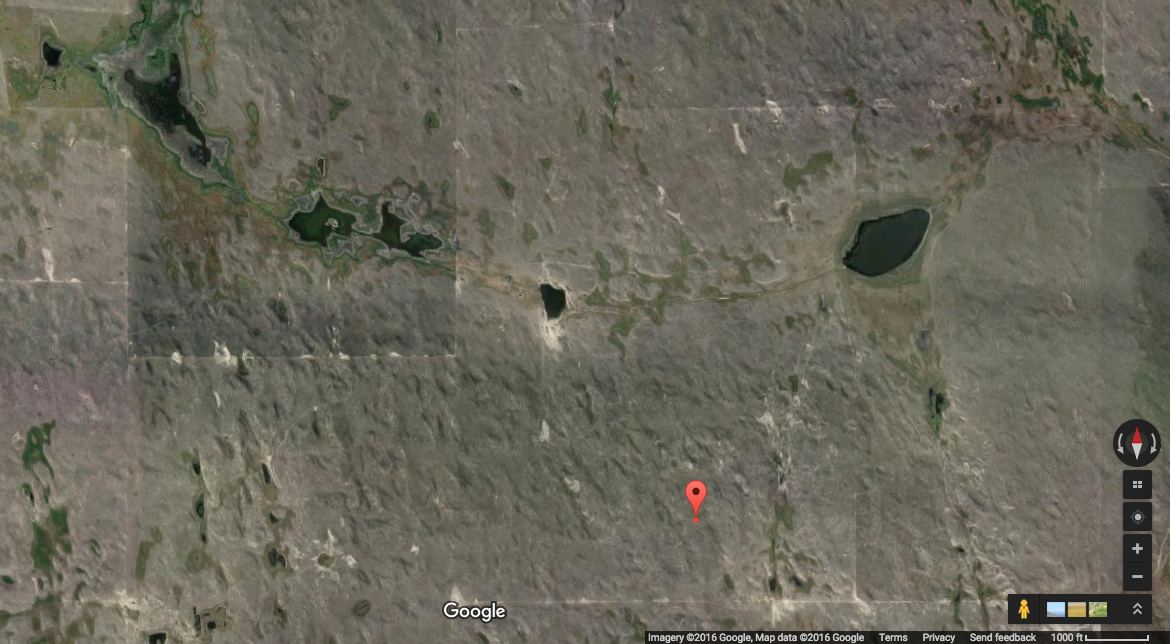
Not all homesteaders made it. As far as I know, George Hiram Thoma was the last of my direct ancestors to stake a claim, which he did in western Nebraska on a February day in 1909. George and his brother-in-law Clare Eugene Gibson arrived together at the land office in Valentine in order to pay their respective filing fees; each was granted about six hundred acres of land on adjoining claims in the desolate Sandhills of nearby Rock County, Nebraska.1 While earlier claims under the Homestead Act of 1862 allowed each individual only one hundred and sixty acres, later amendments granted settlers more land in certain areas where, for example, the soil and climate might be less conducive to raising crops. The Kincaid Act of 1904 applied specifically to thirty-seven counties in northwestern Nebraska that contained non-irrigable land.2

Screen Shot 2016-02-29 at 1.12.48 PM

Google Earth certainly doesn’t make this part of the country look particularly inviting, and life there may have been even more difficult than expected. The homesteads were located more than twenty miles from the nearest town of Bassett, and the families had likely never experienced such isolation. However, Clare Gibson, along with his wife, Alpha, and their four children, Bernice, Pauline, James, and Florence, stuck it out; his homestead was patented in February 1913,3 and the Gibson family remained there for years to come.4

George Thoma and his wife Leota, on the other hand, lasted only a little more than a year. On 4 May 1910, George relinquished his homestead,5 acknowledging defeat and, apparently, accommodating his wife’s wishes to leave an area that his daughter later described as “all sand, horrible, no trees.”6 To make matters worse, there were rattlesnakes, and with a rambunctious six-year-old son, Fenton, and a two-year-old daughter, Fern, to keep safe, this was perhaps more than the couple had bargained for. They cut their losses, bade farewell to Clare and Alpha—sisters Alpha and Leota would never again have the opportunity to live as neighbors—and moved to town.7

Thoma_George_Homestead_01

George H. Thoma (Rock County) homestead file, case no. 1383, Valentine, Nebraska, Land Office; Serialized Land Entry Case Files That Were Canceled, Relinquished, or Rejected, ca. 1909-ca. 1918; Records of the Bureau of Land Management, Record Group 49; National Archives at Kansas City.

I may never have come across this record had I not attended the course “Advanced Research Tools: Land Records” at the Salt Lake Institute of Genealogy. [Read about my experience HERE.] It was there that I learned about tract books, bound volumes maintained by the Bureau of Land Management that faithfully recorded the filing of all land transactions—including claims that were later canceled, relinquished, or rejected. These claims cannot be found indexed at the Bureau of Land Management, typically my go-to resource for locating land records. Fortunately, however, the United States Bureau of Land Management Tract Books are available online at FamilySearch, and a handy Tract Books Coverage Table makes it possible to navigate the unindexed record images.

While I knew my great-grandmother had said that her father had homesteaded near Bassett, Nebraska, when no final patent could be found on the Bureau of Land Management’s database, I initially came to the conclusion that he must not have actually homesteaded there. Perhaps the family had lived with relatives or rented a farm during their brief time in Bassett, I thought. After all, my grandmother was only a toddler at the time, so her recollections might well have been dim. Well, as it turns out, George Hiram Thoma did indeed have his very own homestead, albeit briefly, and as a bit of a research bonus, the federal records that this homestead created mark the conclusion of his mysterious use of an alias.

Copyright © 2016 Melanie Frick. All Rights Reserved.
Continue reading

The Best (Early) Christmas Surprise

Christmas came early for me this year in the form of a long-lost antique photograph – thanks to the efforts of a state historical society and a random act of kindness by a fellow genealogist. It was early on a Saturday morning when I sleepily picked up my phone to check the time, only to see a notification that someone had sent me a message via this blog. The first line read, “I thought you might be interested to know that there is a photograph in the online archives of the Kansas Historical Society that I believe shows members of your Fenton family.”1

Interested? INTERESTED? I was up in an instant. The message included a link to a photograph digitized and made available online courtesy of Kansas Memory and the Kansas Historical Society, and while the description has since been updated, on that Saturday morning it was simply titled “Family in Gypsum, Kansas.”

Well, I did have family in Gypsum, Kansas, a small community in rural Saline County. Pioneers George W. Fenton and his wife Sarah Ellen Hall married there in 1873 and had three daughters – Minnie Belle, Alpha Doretta, and Anna Leota – before George was accidentally shot and killed by his brother-in-law in 1880.2 Sarah later had a son, Charles Alfred, with her second husband, John Hoffman, whom she married in 1883.3 According to the original caption, based on a handwritten notation on the back of the photograph, the individuals were identified as Charlie, Belle, Alpha, and Ota, but their last name was unknown. Could it be…?

Hoffman_Charles_Fenton_Belle_Alpha_Leota_c_1890

Charles Alfred Hoffman with half-sisters, from left to right, Belle, Alpha, and Ota Fenton, Gypsum, Saline County, Kansas, ca. 1890-1892; digital image 2015, courtesy of KansasMemory.org, Kansas State Historical Society. Used with permission.

It was. Pictured circa 1890-92, half-siblings Belle, Alpha, and Ota Fenton and Charlie Hoffman posed for this cabinet card photograph at Kassebaum’s in Gypsum City, Kansas. I have found little information about the photographer, but local newspapers place him in the county at the appropriate time. A J.A. Kassebaum was a resident of Saline County, Kansas as early as 1890 when a newspaper announced his marriage; in 1893, it was reported in the column “Gypsum City News” that “Kassebaum is kept busy taking pictures of our citizens and residences.”4

Apparently, these four siblings were some of the very citizens he photographed. Minnie Belle Fenton, likely between sixteen and eighteen at the time, is dressed fashionably, and, as the eldest, is the central subject of the photograph. The bodice of her dress is very finely detailed, featuring a high collar and a double row of large, decorative buttons. Her sleeves, as commonly seen between 1890-92, are fitted, but looser at the upper arm and with a modest puff at the top of the shoulder, and she wears a bracelet on her right wrist.5 There are two decorative velvet bands at the cuffs of her sleeves and three at the bottom of her skirt. Belle would marry Joseph Anthony Hoffman, the younger brother of her stepfather, in 1893, at the age of eighteen.6

Alpha Doretta Fenton, reclining against her older sister, was likely between fourteen and sixteen in this photograph. The dark-eyed teenager wears a fitted dress of a much more simple design than Belle, but it is still flattering with attention to detail. There is a bunch of ruffled lace pinned at the bodice and a brooch at her throat, adorning the folded collar. Her hands are curled in her lap, and like Belle she appears to hide her fingertips; perhaps these country girls did not want to call attention to unmanicured nails. Alpha would marry Clare Eugene Gibson in 1895, at the age of nineteen.7

Anna Leota Fenton, standing behind her sisters, was perhaps ten or twelve at the oldest when this photograph was taken, and she stands straight with a direct gaze. Small and slim, she was not yet corseted like her older sisters, although like them her bangs were frizzled in the latest fashion.8 Her dark dress – which features a row of buttons and a lace collar – is almost surely a hand-me-down, perhaps made over to be suitable for her. Ota would marry George Hiram Thoma in 1902 at the age of twenty-two.9

Charles Alfred Hoffman, the little blond half-brother of the Fenton sisters, was likely around six or eight in this photograph. His resigned expression seems to bear evidence of the burden of having three older sisters; his mouth is clamped shut, his eyes fixed purposefully on the photographer, and his small hand is a blur as he was unable to keep completely still. He wears a jacket and his buttoned shoes are polished to shine. Charlie would marry late in life, and unlike his sisters, had no children of his own.10

All of the children bear a strong resemblance to photographs in my collection that picture them as adults, but this is by far the oldest photograph I have seen of any member of this family. In fact, I had previously seen no photographs whatsoever from their years in Kansas, so this window into their lives is priceless. Gypsum was a rural community of just over 500 residents in 1890; for a photographer to be numbered among its businessmen must have been somewhat significant.11 Kassebaum’s studio featured a somewhat amateur painted backdrop of a parlor setting, a carpeted floor, and animal skin rugs, which created a rather rustic yet elegant setting for the Fenton and Hoffman siblings. It seems possible that this might have been the first studio the children had ever visited.

I am grateful to Kansas Memory and the Kansas Historical Society for preserving and sharing this image in their digital repository and for generously allowing me to display it here. If you have Kansas ancestors, this database is well worth a thorough look. Beyond numerous photographs of people and places, I spotted transcribed nineteenth-century journals (how fun would it be to find a mention of your ancestor?), correspondence, advertisements, and a host of other primary source material fascinating to the historian and genealogist. And if an unidentified photograph happens to pique your interest, consider running a search on the information available as a fellow genealogist did for me – you never know when you might run into a descendant seeking those very ancestors!

Copyright © 2015 Melanie Frick. All Rights Reserved.

Continue reading
Wedding Wednesday: The Parish Church

    "St. Peter's Church, Gamston," 2007, Gamston, Nottinghamshire, England; Wikimedia Commons, copyright Richard Croft.

“St. Peter’s Church, Gamston,” 2007, Gamston, Nottinghamshire, England; Wikimedia Commons, copyright Richard Croft.

It would have come as no surprise to the congregation of the parish church of Gamston, Nottinghamshire, England when a shoemaker’s son and a cottager’s daughter married on 14 April 1840.1 For three consecutive Sundays, the banns had been read by the church rector, and as no impediments arose in response to his announcement of the couple’s intentions,2 they were married on the Tuesday before Easter.3

John Fenton and Ann Bowskill (also spelled Bouskill), a bachelor and spinster “of full age,” had their union solemnized in the parish church of Gamston, also known as St. Peter’s Church.4 Just a few years earlier, it had been described in a local gazetteer as a historic but perhaps somewhat dilapidated structure: “The Church dedicated to St. Peter, ‘has once been antique,’ but its brasses have been all destroyed or stolen, and its sculptured ornaments are hid behind many coats of whitewash.”5 St. Peter’s Church dates to the thirteenth century, and received what was apparently a much needed restoration in 1855.6

Gamston, located near the community of Retford, was described as “a good village on the east bank of the Idle, where there is a corn mill and a candlewick manufactory.”7 John and Ann did not remain here in Ann’s hometown following their marriage, however, nor did they return to Bole, where John’s father was the village shoemaker.8 In fact, they seemed intent on pursuing opportunities of their own, as within a year of their marriage, they settled in Worksop, about ten miles northwest of Gamston.9

It would have taken the couple several hours on foot to reach Worksop from Gamston, but a pleasant view would have awaited them upon their arrival:

“On the approach from the east, the appearance of the town, lying in a valley, overtopped by the magnificent towers of the church, and baked by swelling hills finely clothed with wood, is extremely picturesque. Its situation is indeed delightful, and both nature and art have contributed to its beauty, for the houses are in general well built; the two principle streets spacious and well paved, and the inns clean and comfortable […]”10

Worksop was deemed a “clean and pleasant market town,” and if John, described as a laborer in the 1841 census, was not already trained in another profession, he may have found employment in agriculture, at a malt kiln, or at one of the many corn mills.11 It was in Worksop that the couple’s eldest children were born, before, within a decade, they immigrated to America.12

Continue reading

Military Monday: “Although he was on his Dieing Bed”

Compiled service record, John Fenton, Pvt. Co. M, 3 Illinois Inf.; Carded Records, Volunteer Organizations, Civil War; Records of the Adjutant General’s Office, 1780s-1917, Record Group 94; National Archives, Washington, D.C. Color edited for clarity.

Compiled service record, John Fenton, Pvt. Co. M, 3 Illinois Inf.; Carded Records, Volunteer Organizations, Civil War; Records of the Adjutant General’s Office, 1780s-1917, Record Group 94; National Archives, Washington, D.C. Image color edited for clarity.

As spring turned to summer in the year 1862, John Fenton of Company M of the 3rd Illinois U.S. Cavalry lay dying in a hospital bed in Lebanon, Laclede County, Missouri. He had enlisted the previous autumn, eager to do his part for the Union, but in April, following the Battle of Pea Ridge in Arkansas, he was hospitalized with typhoid pneumonia.1

At the time of his enlistment, John, a native of Bole, Nottinghamshire, England, was a widower with four children at home in Pana, Christian County, Illinois.2 After his death on 7 June 1862, A. W. Bingham, a hospital steward, penned a sympathetic but hurried letter to John’s eldest daughter, Sarah Alice Fenton, informing her of her father’s passing:3

“Lebanon, MO
June 7th 1862

Miss Fenton

You will be of course Serprised in Receiving a letter from one that never beheld your face or eaven had the honor of knowing your nam but through one that is or has been Dear to you your Father, he was admitted in this Hospital on the 22d day of April Sinse then he has been leaberin under Tyford Pneumonia which at last terminated in his death, which was at 7 Oclock this evening June the 7th he was a long time dieing and told me he wished me to write to you and all for him to put your confidence in christ and he hoped to meet you in the world to come he talked of and would of liked very much to see you but when god comes there is no alternative but to resign our will so he done so and diese in piece, you must not take it hard for we as soldiers have no limited time for our lives and when we enlist in our Countrys call we make up our mind to meet death when god thinks proper to call us away, your Father requests me to tell you also to collect what money was due him and put it to as good use as you thought people he wished you to see to the small children and bring them up in his fear and love of God which no doubt you will and he felt satisfyed you would do so, remembering he was your Father although he was on his dieing bed.

Continue reading

Drunkenness, Death Threats, and a Divorce Petition

On the 5th of February 1902, Sarah Ellen (Hall) Hoffman of Ashton, Osceola County, Iowa, who was then forty-four years old, signed her name to a petition that she sincerely hoped would grant her a divorce. John Hoffman was her second husband; her first husband had died of an accidental gunshot wound, and it was now eighteen years since she had remarried. As detailed in the statement of facts prepared for the court by her attorney, O. J. Clark, this marriage was now in shambles.1

It was established that the plaintiff and the defendant had lived together since the time of their marriage – except recently, as “the defendant has been away from home considerable.”2 It was added, “At times he will work and earn money, but will not use any of his earnings to or for the support of the family, but will stay at home most of the time helping to eat up what the plaintiff and children earn.”3 Then, the chilling details of their marriage spilled forth:

“That the plaintiff has always conducted herself toward the defendant as a loving and dutiful wife, but that the defendant, disregarding his duties towards your petitioner, has always been abusive and ugly towards her, and of late years has become brutally coarse, violent and vulgar towards your petitioner, often calling her the most vile names in the presence of her children and so does without any cause therefore, often striking, kicking and otherwise abusing your petitioner, without cause, often leaving black and blue marks on the person of your petitioner for weeks at a time as the result thereof. That at times the defendant, without cause, threatens to kill your petitioner, threatens to put a hole through your petitioner’s body, threatens to cut her heart out and to kill your petitioner with a knife. That on one occasion said defendant attempted to carry out his threat of killing your petitioner with a butcher knife, and attacked her therewith, when her daughter in attempting to prevent defendant’s harming your petitioner, received the blow with the knife herself on the hand, cutting the cord to one of her fingers off and otherwise injuring her hand, so that she has very little use of said finger, and thus, to that extent has made her a cripple for life. That the threats thus made, the kicking and striking are of very frequent occurrence when he is at home, that he sleeps with his clothes on, and at times in the night will begin his abuse of your petitioner without cause, and threaten to kill her with his knife, and will begin to open and shut his knife so that the plaintiff can hear it click and thus frighten her and worry her all night at a time.”4

OsceolaCountyIowaDivorce1902

Osceola County, Iowa, Circuit Court File 3036, Sarah E. Hoffman v. John Hoffman, for “Petition in Equity,” 20 March 1902; Clerk of District Court, Sibley. The surname Hoffman appeared in this text as Huffman, but in some instances the “u” was overwritten with an “o.” Thus, I have transcribed the name as Hoffman.

In recent years, the defendant had become “addicted to the use of intoxicating liquors, and is an habitual drunkard, which habit he has acquired since their said marriage.”5 The statement continued, “That the plaintiff’s health has become undermined and broken, and if this treatment continues her health will give out entirely and she fears she will die there from – if the defendant does not in fact kill her outright.”6 It’s truly appalling to think what my third great-grandmother must have endured, and it’s to her credit that she had the strength to initiate a divorce at this time.

It would be interesting to learn what grounds for divorce were required in Iowa in 1902; apparently, in this case, habitual drunkenness, horrific abuse, and failure to provide support were sufficient. The divorce was granted in March of that year, at which time Sarah received custody of the couple’s teenage son, possession of the kitchen and household furniture, a return to her former name, and, most importantly, a chance for a better life.7

Continue reading

The Twenties by Day

LeotaAlphaBellFenton

Leota (Fenton) Thoma, Alpha (Fenton) Gibson, and Belle (Fenton) Hoffman, ca. 1920s; digital image 2013, privately held by Melanie Frick, 2014.

As seen in this photograph, the trends of the Roaring Twenties were not just for flappers – although daytime fashions were significantly less flashy than what one tends to associate with the era. Here, sisters Leota, Alpha, and Belle, from left to right, pose together sporting bobs and simple patterned dresses. Although the sisters were likely in their late forties or early fifties when this photograph was taken, they clearly made an effort to keep up with the times.

Alpha Doretta, Minnie Belle, and Anna Leota Fenton were born in Saline County, Kansas, the daughters of George W. and Sarah Ellen (Hall) Fenton.1 After their father’s death, their mother remarried, and eventually, the family relocated to northwestern Iowa.2 At the time that this photograph was taken, Alpha, the wife of Clare Gibson, lived in Colorado,3 whereas Belle, the wife of Joseph Hoffman, and Leota, the wife of George Thoma, lived in different counties in Iowa.4 It was likely a rare occasion that the sisters were able to be together.

Leota, Alpha, and Belle wear popular styles of what would have been considered day dresses or house dresses in this decade, as seen on Vintage Dancer: 1920s Day / House Dresses and Aprons. Likely made of cotton, their dresses feature lively prints and straight, comfortable cuts. Both Belle, right, and Alpha, center, wear dresses made of fabric printed with spirals or swirls. Both have sleeves cuffed above the elbow, and have belted, dropped waists. Leota wears a standard long apron with patch pockets over her dress, but it can be seen that her floral-patterned dress hits, appropriately, just below the knee. Her dress has contrasting fabric sewn at the hem and the cuffs, and she clutches a striped cloche hat in her hand.

This look was quite a change from the romantic, Gibson Girl-esque styles of just a quarter century before, as seen in an earlier photograph of Leota. However, it looks like these ladies might have had quite a bit of fun with their makeovers during this decade, before more conservative styles returned with the Great Depression.

Continue reading