It was more than a week into November 1900 when The Coleridge Blade of Coleridge, Cedar County, Nebraska, reported, “Messrs. Art Knapp, John Brunner, Claud Hadley, George Nielson, Robt. McCoy and Misses Mabel Fawkes, Jessie Knapp, Iva Brunner and Alice Obrist comprised a load of Belden young people who answered the summons of the young people of Coleridge to ‘come over’ last night and join with them in making a hot time in commemoration of St. Hollow’een’s [sic] birthday which had been permitted to slip by uncelebrated, for in Coleridge they have to have the school ma’ams, too, when its [sic] recess.”
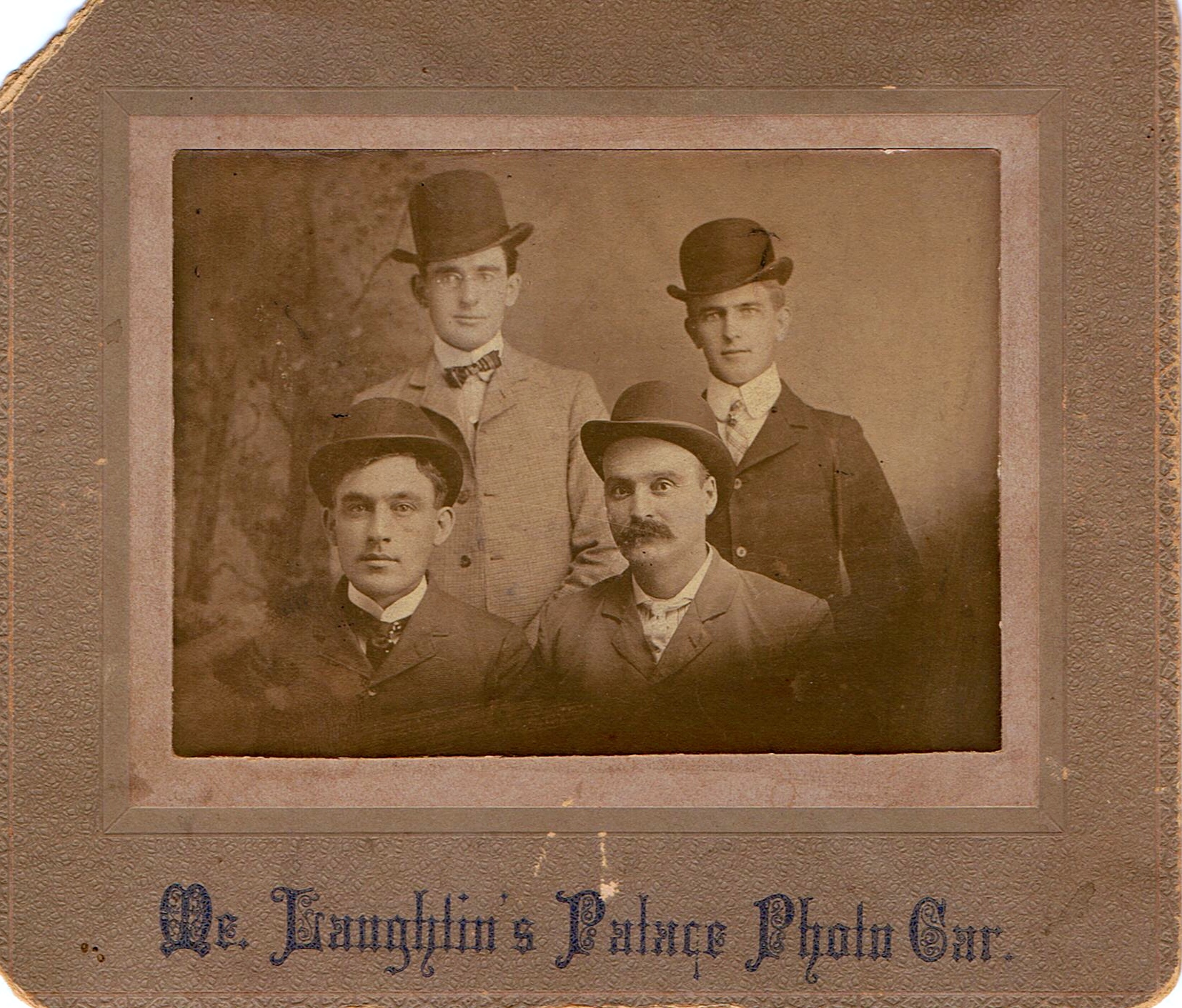
Coleridge, in 1900, had a population of just under five hundred people; Belden, seven miles south, was even smaller, with a population under two hundred. The George Neilson of Belden mentioned in this account was in fact George Hiram Thoma (1880-1966), a native of Clayton County, Iowa, who had left his home state between 1899-1900 and assumed, for reasons unknown, an alias. As George A. Neilson, he was an employee of the Edwards & Bradford lumber company, and can first be found mentioned in Nebraska as a resident of Coleridge on 01 March 1900. The Coleridge Blade reported then, “G. A. Neilson is at Concord this week attending to E. & B.’s yard while the regular man is taking a vacation.” By April, George was prepared to relocate to Belden, as the Coleridge Blade reported from The Belden News on 05 April 1900, “George Nielson of Coleridge is here to take charge of the hardware store purchased this week by Edwards & Bradford from E. T. Crelim.”
George had gotten his start in the hardware business at the age of seventeen as a clerk in Postville, Allamakee County, Iowa, the same small town in which he attended high school. Perhaps it was some associated connection that brought him to Nebraska a year or two later, although the reason for him to have assumed an alias is unknown. Notably, in the 1900 U.S. census for Belden, Cedar County, Nebraska, which was recorded in June of that year, he gave his true name of George Thoma to the census enumerator; perhaps he was uncomfortable being untruthful in a federal document, despite being known locally, and apparently both socially and professionally, by the name Neilson.
A search for George in The Coleridge Blade in the months prior to March 1900 revealed no results; the short-lived newspaper The Belden News does not appear to have been digitized at this point in time. However, in 1900 and 1901, George received mention in Coleridge a number of times, several of those times in association with Art Knapp, a fellow boarder who must have been a close friend, as their presence was noted at several local parties and banquets. By 1902, George had moved on to Center, Knox County, Nebraska, where he continued to be an employee of Edwards & Bradford.
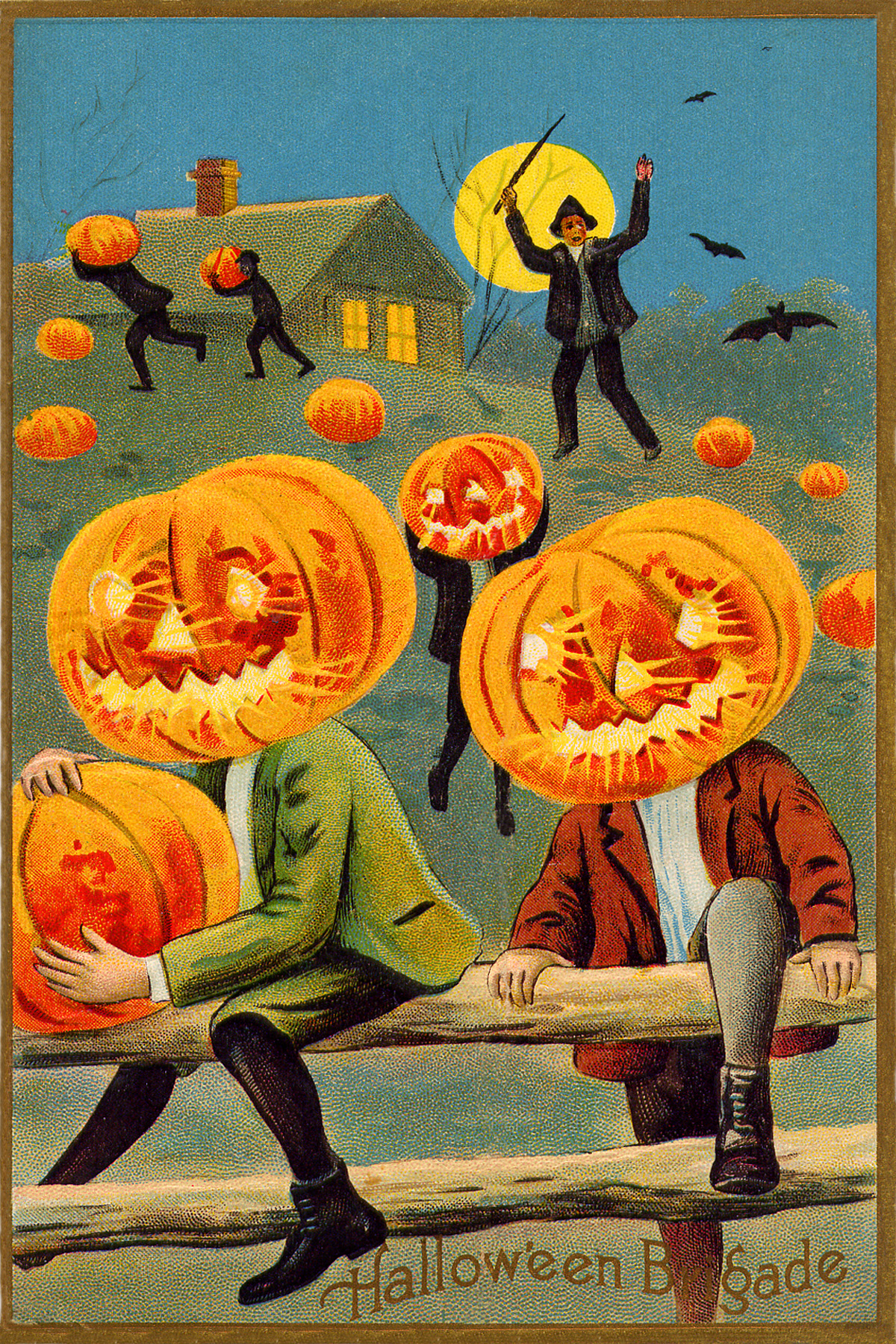
So, how might a group of young adults have celebrated Halloween in small-town Nebraska in 1900? Bonfires, pranks, or parlor games seem likely possibilities; the newspaper’s reference to “a hot time” presumably hearkens to the popular 1896 ragtime song, “There’ll Be a Hot Time in the Old Town Tonight.” Halloween was not widely celebrated in the United States at the turn of the last century, and certainly not in the way that it is celebrated today. Furthermore, contrary to the newspaper’s misspelled reference to “St. Hollow’een,” the name comes not from a saint but from All Hallows’ Eve, celebrated the day prior to All Saints’ Day.
There was no further mention of the holiday in The Coleridge Blade in 1900, but the following year, it was reported, “”A few wagons, buggies and farm implements were piled in the town square Hallow’een, but no damage was done in anyway of a malicious nature.” Perhaps this was a repeat of the activities of the previous year. It was apparently a different story in nearby Belden, however, as The Coleridge Blade quoted from The Belden News on 07 November 1901:
“Considerable devilment was perpetrated in this village on hallowe’en [sic] night. Windows were broken out of the creamery, the K. C. grain office and N. I. Nelson house; Blenkirons’ and Mitchells’ cattle and hogs were turned out of the feed yards and were found next morning running at large; quite an amount of stone tiling was broken and demolished for Edwards & Bradford lumber company; buggies and wagons were upset, and broken. Many dollars worth of damage was done and citizens generally were in favor of making it warm for somebody; however no arrests have been made and the matter will probably blow over without further trouble.”
George had likely already moved out of the area by this point, and even if not, it seems much more plausible that he would have celebrated again in Coleridge with harmless pranks rather than inflicting damage at his place of employment in Belden—particularly as he would remain an employee of Edwards & Bradford for several years thereafter! By Halloween 1902, George was a married man, and late nights out conducting boyish pranks on Halloween were more than likely behind him.
Copyright © 2026 Melanie Frick. All Rights Reserved.
Continue reading
