Tag Archives: Stilley

Who Was Jordan Stilley?

Jordan Stilley was a southern Illinois settler of the early nineteenth century who had a family of twelve children. His name appears on only a smattering of records, and at a time and place where efforts to keep vital records were scant if not entirely nonexistent, developing a picture of his life is not unlike attempting to assemble a jigsaw puzzle with only a few of the pieces available.

Born in either 1797 or 1799 in Hyde County, North Carolina, Jordan Stilley was one of nine known children of Hezekiah Stilley and Sarah Davis. No record exists of Jordan’s birth, and no record has been located that documents the marriage of his parents; this information has been pieced together thanks to transcriptions of a faded nineteenth-century family Bible by the late genealogist Peggy (Stilley) Morgan, the 1802 will of Jordan’s maternal grandfather, and early census records.

Jordan likely made his first appearance in federal records as a tick mark in the 1800 United States census. Hezekiah Stilley was recorded as the head of a household of eight individuals in Hyde County, North Carolina that included a male and a female between the ages of 26-44, two males between the ages of 10-15, three males under the age of 10 (one, presumably, being Jordan), and one female under the age of 10.

Before Jordan was ten years old, he had trekked eight hundred miles west with his parents and siblings as well as members of his extended family. Their destination was the Illinois Territory, and it was there that his father’s name appeared on a petition for three hundred and twenty acres of land in what is now Cave-in-Rock Township, Hardin County, Illinois. This petition indicated that Hezekiah, among others, had been squatting there prior to a legislative act which took place on 03 March 1807.

Cave-in-Rock, located on the Ohio River, would have been a rough place for a child to grow up, as it was known at the time as a hotbed of river pirates, outlaws, and highwaymen. In the winter of 1811-1812, when Jordan was twelve years old, he would have felt the rumblings of the New Madrid earthquakes, the epicenter one hundred-some miles away. Did his family’s frontier home survive, or was destruction such that they were forced to rebuild or relocate?

“The Great Earthquake at New Madrid,” ca. 1877, woodcut, artist unknown; Wikimedia Commons.

In December of 1812, Jordan’s eldest brothers—Davis, John, and Stephen, all of whom were over the age of twenty-one—are believed to have signed a petition put forth by residents of the Big Creek Settlement in Illinois Territory. Jordan’s father’s name was not included on this petition; if he were still living, which he may not have been, he would have been around fifty years of age at this time.

Jordan Stilley made his first appearance in the United States census by name in 1820 as “Jourdan Stilly,” head of a household in the area of Frankfort, Franklin County, Illinois that included one male and one female between the ages of 16-25 and one female under the age of 10. The age of the adults and presence of only one young child suggests that Jordan was relatively recently married, and it is notable that he was enumerated next to the household of his brother Davis Stilley. Also notable is the presence of both a William Farris and a John Farris in Franklin County. Although the county’s marriage records are incomplete, it is believed that Jordan Stilley married Phoebe Farris here circa 1818.

According to recent research, Phoebe Farris, whose name is known only from the obituary and cemetery records of her youngest daughter, appears to have been the daughter of Virginia-native William Farris and his presumed wife Mary “Polly” Bunnell. Genealogist George J. Farris has indicated that all of the children of brothers William Farris and John Farris have been identified with the notable exception of one daughter of William, who was acknowledged via tick mark in the 1810 United States census in Green County, Kentucky. This daughter would have been born between 1797-1800—and it now seems likely that this daughter was Phoebe, as she lived in the right place at the right time to have become the wife of Jordan Stilley. DNA connections between Farris/Bunnell and Stilley/Farris descendants tentatively support this relationship.

Jordan relocated with his family at least once again between 1820 and 1830, at which time he was enumerated in the United States census in Washington County, Illinois. His household now included one male and one female 30-39, two males under 5, one male 5-9, one female under 5, one female 5-9, and one female 10-14—a total of two adults and six children. His brothers Davis and Hezekiah resided nearby. Little is known about Jordan’s life in the next decade save for the fact that in January of 1838, there is record of his purchase of one bay mare, one yoke of oxen, one wagon, one sorrel mare, and one colt from his brother Davis Stilley, who operated a mill.

In 1840, Jordan remained in Washington County where he was enumerated in the United States census with a household that included one male and one female 40-49, one male under 5, one male 5-9, two males 10-14, one male 15-19, one female under 5, one female 5-9, one female 10-14, and one female 20-29. This equates to nine children at home; his two eldest daughters were known to have married before 1840 and were no longer living at home. The household of Mary Stilley, who was the widow of his brother Hezekiah, was recorded next on the census, and, according to The History of Washington County, Illinois, both Jordan and Mary were constituent members of the Concord Baptist Church at the time of its founding in 1841. The Baptist tradition was strong in the Stilley family; Jordan’s paternal uncle was Elder Stephen Stilley, who was a missionary and founder of the Big Creek Baptist Church, not far from Cave-in-Rock, in 1806.

Tragedy befell Jordan’s family when his son, also named Hezekiah, enlisted to serve in the Mexican-American War and died in Buena Vista, Mexico, in the spring of 1847. The following year, Jordan was involved in a bounty land transaction for one hundred and sixty acres of land in Pettis County, Missouri; this was due to the service of his late son, who died without wife or children, and confirms that “Jourdan Stilley” was “father and heir at law of Hezekiah Stilley deceased, late a Private in Capt. Coffey’s Compy. 2nd Regt. Illinois Vols.”

Jordan must have lost his wife Phoebe at some point between 1844-1850; their youngest child was born in 1844, and on 19 March 1850, Jordan married Malinda (White) Vaughn, a young widow who had a four-year-old child of her own. Oddly, Jordan and Malinda do not appear in the 1850 United States census with Jordan’s youngest children nor her young son, and some of Jordan’s children can be found living in the households of their adult siblings. Although no will has been located, it is believed that Jordan died circa 1854. It was in that year that Jordan’s apparently disabled daughter Sarah Ann—who was documented as being “idiotic” and “insane” in the 1860 and 1870 United States censuses—was entered into the guardianship of an older brother, and Jordan himself signed with an X. In 1857, Sarah Ann, “minor heir of Jordon Stilley,” was entered into the guardianship of Ebenezer Davis of Washington County, Illinois.

Based on research by genealogists William D. Stilley and the late Dr. Bernard “Bud” Hall, as well as information compiled from census records, land records, newspapers, military pension files, and personal correspondence, the following twelve individuals are believed to be the children of Jordan Stilley and his first wife, Phoebe Farris:

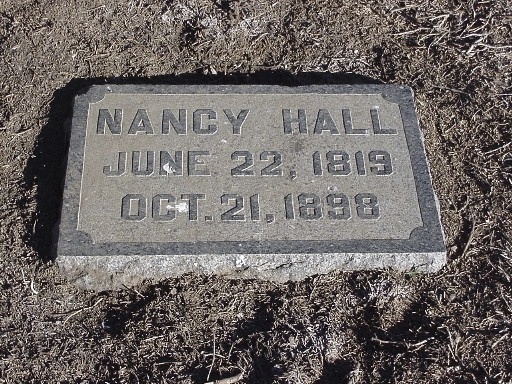
  1. Nancy (Stilley) Holman Edwards Hall, born 22 June 1819, died 21 October 1898
  2. Hester Ann (Stilley) Rogers, born about 1821, died before 1860
  3. Hezekiah Stilley, born about 1823, died 19 April 1847
  4. William J. Stilley, born about 1825, died about 1857
  5. Robert M. Stilley, born about 1827, died 1856
  6. Mary A. (Stilley) West, born about 1829, died March 1870
  7. Jeremiah Stilley, born about 1832, died 1876
  8. Mary Jane (Stilley) Dennis, born 16 March 1835, died 31 October 1914
  9. James Albertus Stilley, born 18 June 1837, died 15 December 1890
  10. Sarah Ann Stilley, born about 1839, died after 1870
  11. Isabelle (Stilley) Nicolay, born 23 September 1841, died 03 December 1905
  12. Wilson Stilley, born 22 February 1844, died 18 February 1899

The birth order of the children is not set in stone due to the absence of birth dates of more than half; however, there is some evidence of common naming conventions having been followed, such as the potential eldest son being named for the paternal grandfather and the potential second eldest son being named for the maternal grandfather. In any case, it is not a linear process to establish familial relationships between individuals when there is an absence of vital records, and the twelve inferred children of Jordan Stilley make for a particularly tangled web.

The most definitive piece of evidence regarding the Stilley family structure is a 1905 obituary of Isabelle (Stilley) Nicolay which names her as the youngest daughter of the twelve children of “Judson Stilley and Phoebe Farris” and as a sister of Mary Jane (Stilley) Dennis. However, a Marion County, Illinois cemetery index lists Isabelle’s parents as Jordan Stilley and Phoebe Farris. Considering the lack of evidence of the existence of a Judson Stilley in southern Illinois in the nineteenth century, it stands to reason that the name Judson was printed in her obituary in error and should have been Jordan.
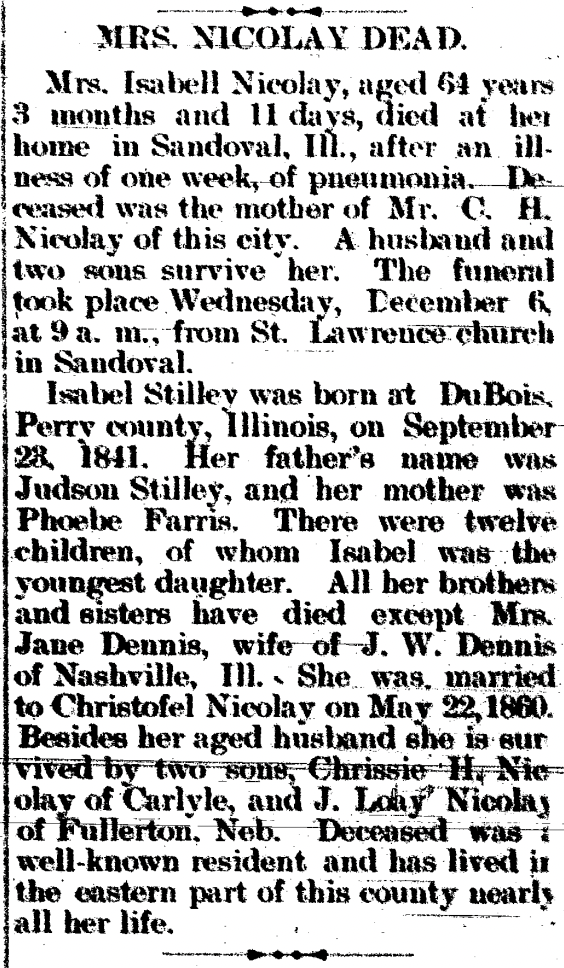
“Mrs. Nicolay Dead,” Carlyle [Illinois] Constitution, 08 December 1905; digital image, Abraham Lincoln Presidential Library (https://presidentlincoln.illinois.gov/ : accessed 17 July 2019).

Another striking piece of evidence is a handwritten letter from a son of Wilson Stilley to his first cousin, a son of Nancy (Stilley) Hall, after Wilson’s death in 1899, which establishes that Nancy and Wilson were brother and sister, and that “Aunt Bell” (Isabelle), “Aunt Jane” (Mary Jane), and “Uncle Jerry” (Jeremiah) were their siblings as well. Some of these connections are also supported through the obituaries of both Wilson Stilley and Nancy (Stilley) Hall, which link them as siblings of Mary Jane (Stilley) Dennis, as well as through newspaper social columns, which connect Nancy, Mary Jane, and Isabelle as sisters. In those it was noted that Isabelle (Stilley) Nicolay visited “her sister” Nancy (Stilley) Hall in Saline County, Kansas in 1890 and 1892, as well as “her sister” Mary Jane (Stilley) Dennis in Washington County, Illinois in 1903.

Federal records also provide clues. The aforementioned 1848 bounty land record confirms that Hezekiah Stilley, who died while serving in the Mexican-American War, was the son of “Jourdan Stilley.” The Civil War pension files of both Wilson Stilley and James Albertus Stilley include handwritten depositions that link Wilson, James, Isabelle (Stilley) Nicolay, and Hester (Stilley) Rogers as siblings.

In addition, an 1854 Washington County, Illinois guardians’ bond held at the Illinois Regional Archives Depository at Southern Illinois University places Sarah A. Stilley, a minor, into the guardianship of William J. Stilley, presumably her brother, in a document signed also by “Jorden Stilley” and witnessed by Robert West, presumably the husband of her sister Mary A. Stilley. An 1857 court record from the same county names Sarah Ann Stilley as a “minor heir of Jordon [sic] Stilley, late of said county, deceased.”

It is highly unlikely that a singular smoking gun, so to speak, that clearly defines the relationships between Jordan Stilley, his wife, and all of his children, will ever be revealed, due to both scant documentation and an 1843 fire at the Franklin County, Illinois courthouse that destroyed many early records. However, their story has been slowly but surely puzzled together through a range of sources and an understanding of the norms of the time that make it possible to infer relationships with a reasonable level of confidence. To have raised twelve children to adulthood on the Illinois frontier was no small feat, and Jordan and Phoebe (Farris) Stilley, though their graves are unmarked and the details of their stories lost to time, are worth remembering.

Copyright © 2025 Melanie Frick. All Rights Reserved.

Continue reading
Hezekiah Stilley in the First Census of the United States

Just three of my sixty-four fourth great-grandparents were born in America.

Of those three, only two have ancestral lines that have so far been traced—hesitantly—as far back as 1790.

And only one of those two lines has been found to have been documented in the 1790 United States Federal Census, the first census of the United States.

That line begins with homesteader Nancy Stilley, who is believed to have been the daughter of Jordan Stilley, who in turn is believed to have been the son of Hezekiah Stilley.

Hezekiah Stilley, whose name was also spelled Ezekiah, was born circa 1760, and is believed to have married Sarah Davis circa 1784 in Hyde County, North Carolina. In January 1786, he appeared in a North Carolina census as head of a household in Hyde County that included one white male between the ages of twenty-one and sixty, and two white females of any age. That same year, his name appeared on a land grant that was entered for fifty acres of land in what was then Hyde County, located on the west side of the Pungo River. (The portion of Hyde County located west of the Pungo River has since been annexed to Beaufort County.) The land grant was issued in November 1789.

The 1790 United States Federal Census, which was recorded during George Washington’s presidency, was the first of its kind. According to the United States Census Bureau:

“Under the general direction of Thomas Jefferson, the Secretary of State, marshals took the census in the original 13 States, plus the districts of Kentucky, Maine, and Vermont, and the Southwest Territory (Tennessee). Both George Washington and Thomas Jefferson expressed skepticism over the final count, expecting a number that exceeded the 3.9 million inhabitants counted in the census.”

One can hardly help imagining the roadblocks and grueling conditions that the intrepid census enumerators must have encountered in their attempts to make record of each and every American. There were almost certainly individuals who simply did not want to be found, and others who may have been suspicious as to the motives of the government in recording their names and the numbers of their households. There were undoubtedly difficulties in reaching the inhabitants of far-flung communities, particularly on the frontier, but elsewhere as well. The Pungo River, for example, upon with Hezekiah Stilley dwelled, had its source in the Great Dismal Swamp, and according to a 1775 map was in fact on the fringes of what was then called the “Great Alligator Dismal Swamp”—surely not an easy place to traverse. It seems that a dramatic undercount in the nation’s first census was all but guaranteed.

In Hyde County, North Carolina, however, the 1790 United States Federal Census did include the household of one “Ezekiel Stilley.” If it can be assumed that the formal handwritten census schedule was based off of notes taken by the census enumerator as he visited each household, it can easily be surmised that the name Ezekiah could have been erroneously transcribed as Ezekiel. Both Hezekiah’s land grant and the fact that the names of many neighbors are consistent with the North Carolina census recorded in 1786 suggest that Ezekiah and Ezekiel were one and the same person.

In this household lived one adult male over the age of sixteen, three males under the age of sixteen, and two females of any age. This suggests a family unit consisting of Hezekiah, Sarah, three sons, and a daughter, although it is possible that other individuals, related or not, could have made up their household. No other free persons or enslaved people were present.

Hezekiah Stilley was recorded in a federal census for the last time in 1800. At that time, by then perhaps about forty years of age, he was still a resident of Hyde County, and his household now numbered eight individuals. Shortly thereafter, he and his family would leave North Carolina for good.

In 1807, Hezekiah submitted a squatter’s petition for three hundred and twenty acres of land in what is present-day Cave-in-Rock Township, Hardin County, Illinois, located near the Ohio River on the border with Kentucky. Notably, his name was absent from an 1812 petition that bore the names of several members of his extended family who had settled in Illinois as well. It has been assumed that he died in Illinois Territory prior to this date, far from the Carolina coastal region where he had spent most of his married life.

Copyright © 2020 Melanie Frick. All Rights Reserved.

Continue reading

A Glimpse of Hyde County

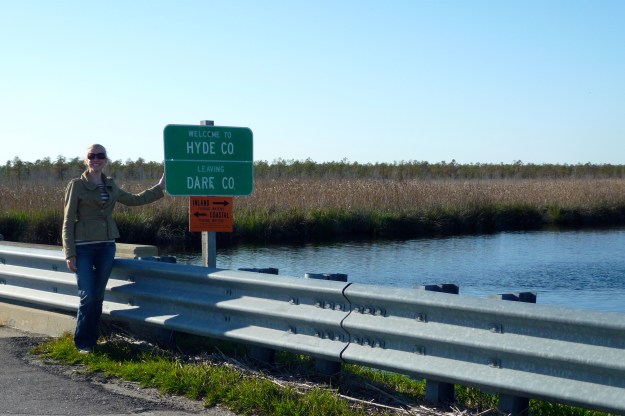
Three years ago, my husband and I were in our final year of graduate school and in search of something to do over spring break. We lived in Northern Virginia at the time, so my husband suggested exploring the Outer Banks – about a five hour drive south. As soon as I determined that the Outer Banks were only a stone’s throw from mainland Hyde County, North Carolina, I was on board.

Why the fuss about Hyde County? I knew that this was the place from which my Stilley ancestors – who settled on the Illinois frontier in the early nineteenth century – had likely hailed. And for me, the ideal vacation includes at least some genealogical or historical element, paired, of course, with beautiful scenery, good local food, plenty of photo ops, and a travel companion willing to humor me.

P1050418

My direct ancestor Nancy Stilley, born in 1819 in Franklin County, Illinois, can almost certainly be linked to the other Stilleys scattered throughout southern Illinois who had roots in Hyde County, North Carolina. Nancy is believed to have been a granddaughter of the Hezekiah Stilley who was a resident of Hyde County as late as 1800 and whose numerous children – later residents of southern Illinois – are named in a family Bible.1 In the interests of full disclosure (I’m looking at you, Ben Affleck), I will add that Hezekiah Stilley likely married the daughter of Hyde County landowner and enslaver William Davis, who died there circa 1803.2 His will named eight enslaved individuals, Jemima, Gabrel, Joseph, Moses, Kesiah, Cate, Judith, and Silard, all of who were to remain with his wife and selected children after his death.3

P1050417

We had only a couple of hours to spend driving through the Inner Banks of Hyde County, but while this was not an in-depth research venture, it was still incredible to get a feel for the landscape that would have been familiar to my ancestors. I was glad to find that the county is still very rural; according to the 2010 census, the population is under six thousand people, comparable to its size two centuries ago. I believe we drove for an hour through the swamps and marshes without seeing another human being, and the only signs of civilization for much of our drive were an untended boat and an abandoned but well-kept ghost town.

P1050422

Hyde County, North Carolina also encompasses Ocracoke Island, a popular tourist destination on the Outer Banks that we visited via ferry. The island boasts quaint shops, stunning herds of wild horses, and locals who speak a distinct Ocracoke brogue that traces back to the dialect of the early colonists. It’s a must-see along the Outer Banks. The Inner Banks, in sharp contrast, are on the road less traveled – but one I would most definitely like to travel again.

Copyright © 2015 Melanie Frick. All Rights Reserved.

Continue reading

Tombstone Tuesday: Nancy Stilley

Nancy Stilley was raised on the Illinois frontier, and died a pioneer in Kansas. From what little I know about her life, she’s a perfect example of a “Fearless Female” whose story should be shared in honor of National Women’s History Month.

nancy_stilley_hall

Grave of Nancy (Stilley) Holman Edwards Hall (1819-1898), Gypsum Cemetery, Gypsum, Saline County, Kansas, image date unknown, privately held by V.S.H. [personal information withheld], 2014.

According to her obituary, Nancy Stilley was born 19 June 1819 in Franklin County, Illinois.1 It’s likely that she never attended school,2 although she was said to have joined the Baptist church at the age of thirteen.3 Records suggest that she may have married as many as three times. Her first marriage took place in 1836; she married Thomas Holman of Hamilton County, Illinois.4 Her second marriage took place in 1843; she married Joseph Edwards of Washington County, Illinois.5 Her third and final marriage took place in 1847; she married Elithan Hall of Washington County, Illinois.6 This marriage, too, was short-lived. After her husband’s death in May of 1860,7 Nancy, still just forty years old, was left a widow with nine children at home.8 This time, she did not remarry.

Although it must have been difficult, Nancy seems to have managed her household and farm through the tumultuous years of the Civil War. Following the settlement of her husband’s estate in 1868,9 she relocated to Kansas with her children, including those who now had families of their own.10

By 1870, Nancy had settled in Solomon, Saline County, Kansas, where she held a respectable amount of real estate worth $1100 and personal property worth $600.11 Four children, between the ages of twelve and sixteen, were at home.12 Nancy was to remain in Kansas for the remainder of her life, eventually joining the household of her eldest son.13 She lived to the age of seventy-nine, her death the result of an unfortunate accident during what was likely a routine visit to her children and grandchildren:

“Last Friday morning, October 21, 1898, Mrs. T. G. McCance hitched a team to a buggy for the purpose of driving her mother, Mrs. Nancy Hall, to the residence of her son, E. L. McCance. Just as the ladies started the team suddenly turned the vehicle enough to throw the occupants to the ground. Mrs. Hall struck the ground with sufficient force to tear the flesh from one side of the face, break the cheek bone and inflict internal injuries, from which she died in a few hours.”14

Nancy was buried two days later, her burial attended “by a large number of friends and relatives,” in the Gypsum Cemetery in Gypsum, Saline County, Kansas.15

Continue reading

The Citizens of the Big Creek Settlement: From Reconstructed Census Records to a Legislative Petition

In September, I attended the Illinois State Genealogical Society’s free webinar, “’To the Honorable, the General Assembly’ – The Treasure Trove in Legislative Petitions,” presented by the always informative Judy G. Russell of The Legal Genealogist.1

Judy’s advice about how and where to find legislative petitions was helpful, as was her point that one won’t often find an indexed list of the names of all of the signers of a given petition (darn!). Instead, she suggested, look specifically for petitions that were created where your ancestor lived, and that concerned a cause that your ancestor was likely to have cared about.2

It was also emphasized how handy petitions can be when they fall between a census year.3 In fact, the names of the signers on some petitions have also been used to reconstruct early census records. I recently noticed an instance of this when searching for my Stilley ancestors of southern Illinois on Ancestry.com. My search brought me to “U.S. Census Reconstructed Records, 1660-1820.”4

In one example, several men with the surname Stilley are listed as having resided at the Big Creek Settlement, Illinois Territory, in 1810. However, a closer look at the entry shows that the men were named on a petition dated 6 December 1812.5 This petition concerned the desire of the “poor Industrious Inhabitants, faithful Citizens of the United States” to acquire land west of the Ohio and Mississippi rivers, and a proposition for the sale of no more than 200 acres of said land to each male citizen over the age of eighteen, or each female head of household, for a cost of twelve and a half cents per acre. Allowing the inhabitants to acquire land, the petitioners continued, would further serve to “prevent Rebellions, remove animosities, Cement an union, and promote happiness” throughout the United States.6

Although, to my knowledge, none of these particular Stilleys were my direct ancestors, the presence of these names on the petition suggests to me that, at the very least, some of the extended family had started to settle in this western territory as early as 1812, perhaps paving the way for other members of the Stilley family to follow.


SOURCES
1 Judy G. Russell, “’To the Honorable, the General Assembly’ – The Treasure Trove in Legislative Petitions,” Illinois State Genealogical Society: ISGS Webinars, 2013.
2 Judy G. Russell, “’To the Honorable, the General Assembly’ – The Treasure Trove in Legislative Petitions.”
3 Judy G. Russell, “’To the Honorable, the General Assembly’ – The Treasure Trove in Legislative Petitions.”
4 “U.S. Census Reconstructed Records, 1660-1820,” database, Ancestry.com (http://www.ancestry.com : accessed 3 December 2013); citing Territorial Papers of the United States, vol. 16, p. 274.
5 “U.S. Census Reconstructed Records, 1660-1820,” database, Ancestry.com (http://www.ancestry.com : accessed 3 December 2013), entries for David Stilley, John Stilley, and Stephen Stilley, 1810, Big Creek Settlement, Illinois Territory; citing Territorial Papers of the United States, vol. 16, p. 274.
6 “To James Madison from the Citizens of the Big Creek Settlement, 6 December 1812 (Abstract),” Founders Online, National Archives (http://founders.archives.gov/documents/Madison/03-05-02-0396 : accessed 3 December 2013); The Papers of James Madison, Presidential Series, vol. 5, 10 July 1812–7 February 1813, ed. J. C. A. Stagg, Martha J. King, Ellen J. Barber, Anne Mandeville Colony, Angela Kreider, and Jewel L. Spangler (Charlottesville: University of Virginia Press, 2004), pp. 485–486.