Category Archives: Uncategorized

An Ancestor with an Alias

When I learned that George Hiram Thoma of Garnavillo, Clayton County, Iowa used an alias as a young man, it took me by surprise. He was born to Fred and Matilda (Hammond) Thoma in 1880,1 and the state census indicates that he remained in his home county in northeastern Iowa at least until 1895.2 At some point thereafter, according to family lore, George left home and bicycled across Iowa. Whether he went by bicycle or not, it was said that his move may have been spurred on by his poor relationship with his father.3

GeorgeHiramThoma

George Hiram Thoma, seated left, with an unidentified young man, ca. 1900; digital image 2013, privately held by Melanie Frick, 2014.

Records place George across the state in northwestern Iowa on 23 March 1902, at which time, using the name George A. Neilson, he married Anna Leota Fenton in Ashton, Osceola County, Iowa.4 This was no trick of penmanship or recorder’s error; three affidavits, written by George, his mother, and his younger brother, were attached to the marriage document decades later, each attesting to the fact that George A. Neilson and George Hiram Thoma were one and the same person.5 It is worth noting that George still named his correct place of birth and even the correct names of his parents on the original marriage document, with the exception, of course, of assigning the Neilson surname to them as well.6 Evidently, he was not prepared or had no reason to invent an elaborate backstory regarding his origins.

None of the affidavits, however, explained why George had married under an assumed name.7 One has to wonder whether his wife even knew what she was getting into! Prior to his marriage, I suspect that he might be found in the 1900 U.S. census as George Thoma, a clerk in Belden, Cedar County, Nebraska. Notably, he boarded with a family by the name of Nelson, and a Nielsen also resided in the household.8 Although this may or may not be the correct George Thoma, we do know that within weeks of his marriage, he moved to Center, Knox County, Nebraska, where he was an employee of the Edwards and Bradford Lumber Company.9

Within a few years of his marriage, George relocated with his family to Sioux City, Woodbury County, Iowa. There, his daughter’s birth was recorded with the surname Neilson,10 and according to the city directories, George continued to use his assumed name at least until 1909.11 I have been unable to locate the family in the 1910 U.S. census – they had likely left Sioux City by that time to return to Nebraska, where they moved from place to place for the next decade. However, they had certainly reverted to the use of the Thoma surname no later than World War I.12

Was this alias purely symbolic, in order to emphasize George’s separation from his father, or, perhaps, the ties that he forged with another family? Or was it part of an effort to hide, whether from his father, from love, or from the law? This is one family mystery that I would love to solve!

Continue reading

A Yearbook from the Southern State Normal School, Springfield, South Dakota, 1916

The Southern State Normal School in Springfield, South Dakota, also called the Springfield Normal School, offered a college education for those who had completed high school. A First Grade Teaching Certificate could be acquired in just one year of study, while a State Certificate and Life Diploma could be acquired in two years.1 If your ancestor was a teacher in South Dakota, he or she may have attended the Southern State Normal School or a similar institution of higher learning.

Echo1916SouthernStateNormalSchool

The Echo, Vol. 1 (Springfield, South Dakota: Southern State Normal School, 1916); private collection of Melanie Frick. This volume was generously shared with the author by a relative.

I am fortunate to have a copy of The Echo, a yearbook put forth by the Southern State Normal School in 1916. The Echo offers a treasure trove of information about those who were affiliated with the school from 1915-1916, as it includes photographs of most of the students and faculty as well as details about everything from an individual’s year of study, to school clubs and organizations, to inside jokes among classmates shared in the form of clever poems and quotations.2

For example, I learned that when sisters Andrea and Louise Nelson attended college there, they were both members of the Y.W.C.A. and the Southern Normal Literary Society, where Andrea served a term as Secretary.3 What startled me, however, was a class poem that named, “Louise, so dumpy and fat.”4 I do hope that was a joke well taken, because while Louise didn’t necessarily have a willowy figure, she was quite pretty and stylish! The Echo shared that she also played on the girls’ basketball team.5

As copies of The Echo are likely not accessible to most researchers, I would like to offer look-ups for anyone seeking information about the individuals listed below, who were named in The Echo as faculty, students, or graduates of the Southern State Normal School at Springfield, Bon Homme County, South Dakota:

Continue reading

The Citizens of the Big Creek Settlement: From Reconstructed Census Records to a Legislative Petition

In September, I attended the Illinois State Genealogical Society’s free webinar, “’To the Honorable, the General Assembly’ – The Treasure Trove in Legislative Petitions,” presented by the always informative Judy G. Russell of The Legal Genealogist.1

Judy’s advice about how and where to find legislative petitions was helpful, as was her point that one won’t often find an indexed list of the names of all of the signers of a given petition (darn!). Instead, she suggested, look specifically for petitions that were created where your ancestor lived, and that concerned a cause that your ancestor was likely to have cared about.2

It was also emphasized how handy petitions can be when they fall between a census year.3 In fact, the names of the signers on some petitions have also been used to reconstruct early census records. I recently noticed an instance of this when searching for my Stilley ancestors of southern Illinois on Ancestry.com. My search brought me to “U.S. Census Reconstructed Records, 1660-1820.”4

In one example, several men with the surname Stilley are listed as having resided at the Big Creek Settlement, Illinois Territory, in 1810. However, a closer look at the entry shows that the men were named on a petition dated 6 December 1812.5 This petition concerned the desire of the “poor Industrious Inhabitants, faithful Citizens of the United States” to acquire land west of the Ohio and Mississippi rivers, and a proposition for the sale of no more than 200 acres of said land to each male citizen over the age of eighteen, or each female head of household, for a cost of twelve and a half cents per acre. Allowing the inhabitants to acquire land, the petitioners continued, would further serve to “prevent Rebellions, remove animosities, Cement an union, and promote happiness” throughout the United States.6

Although, to my knowledge, none of these particular Stilleys were my direct ancestors, the presence of these names on the petition suggests to me that, at the very least, some of the extended family had started to settle in this western territory as early as 1812, perhaps paving the way for other members of the Stilley family to follow.


SOURCES
1 Judy G. Russell, “’To the Honorable, the General Assembly’ – The Treasure Trove in Legislative Petitions,” Illinois State Genealogical Society: ISGS Webinars, 2013.
2 Judy G. Russell, “’To the Honorable, the General Assembly’ – The Treasure Trove in Legislative Petitions.”
3 Judy G. Russell, “’To the Honorable, the General Assembly’ – The Treasure Trove in Legislative Petitions.”
4 “U.S. Census Reconstructed Records, 1660-1820,” database, Ancestry.com (http://www.ancestry.com : accessed 3 December 2013); citing Territorial Papers of the United States, vol. 16, p. 274.
5 “U.S. Census Reconstructed Records, 1660-1820,” database, Ancestry.com (http://www.ancestry.com : accessed 3 December 2013), entries for David Stilley, John Stilley, and Stephen Stilley, 1810, Big Creek Settlement, Illinois Territory; citing Territorial Papers of the United States, vol. 16, p. 274.
6 “To James Madison from the Citizens of the Big Creek Settlement, 6 December 1812 (Abstract),” Founders Online, National Archives (http://founders.archives.gov/documents/Madison/03-05-02-0396 : accessed 3 December 2013); The Papers of James Madison, Presidential Series, vol. 5, 10 July 1812–7 February 1813, ed. J. C. A. Stagg, Martha J. King, Ellen J. Barber, Anne Mandeville Colony, Angela Kreider, and Jewel L. Spangler (Charlottesville: University of Virginia Press, 2004), pp. 485–486.

A South Dakota Thanksgiving

How did your ancestors celebrate Thanksgiving? As the cooking commences, I can’t help but wonder when Thanksgiving truly became a tradition among the different branches of my family tree, and how the celebrations might have varied.

NelsonFamilyFarm

Fred and Christine (Schmidt) Nelson Family Farm, Yankton County, South Dakota, ca. 1911-1917; digital image 2013, privately held by [personal information withheld].

I do know that the family of Fred and Christine (Schmidt) Nelson of Tabor, Yankton County, South Dakota celebrated the holiday more than a century ago. In 1908, their daughter Anna, seventeen, wrote in her diary, “Nov. 26, Thanksgiving day. Uncle Andrew, Aunt Mary and little cousins, also John S[ch]neider came down and had dinner with us and spent the day. It was cloudy most of the day and a rather cold wind.”1

Her guest list indicates that they had quite a crowd for dinner. By 1908, the Nelson family numbered ten,2 so with the addition of John Schneider and Andrew and Inger Marie “Mary” (Schmidt) Schmidt, who came with their three young children,3 the number at the table was brought to sixteen.

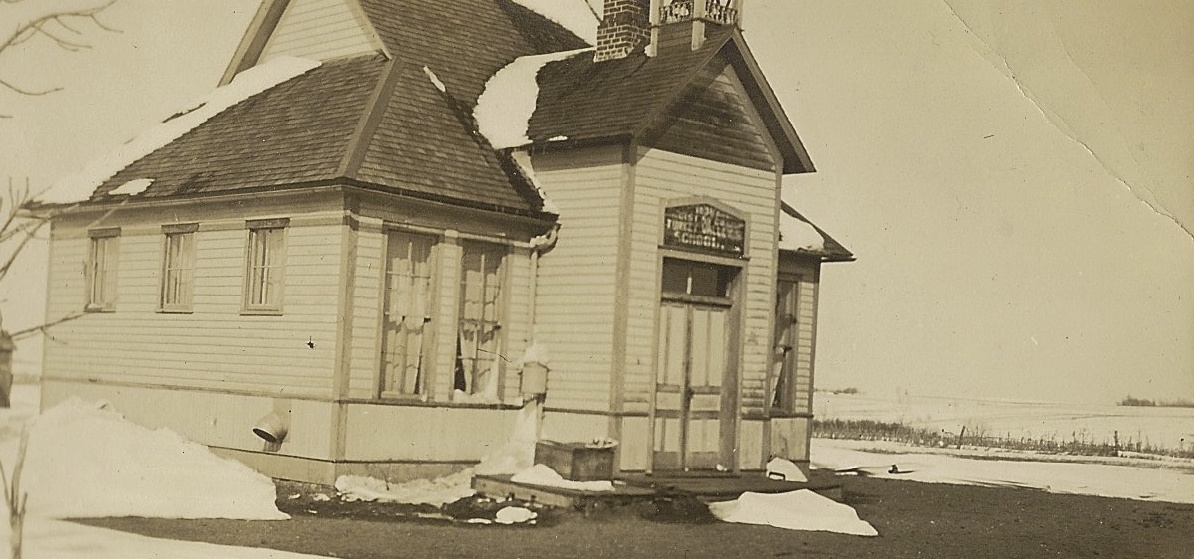
TurkeyValleySchool

Turkey Valley School, date unknown, Turkey Valley, Yankton County, South Dakota; digital image 2010, privately held by [personal information withheld].

As the Nelson children grew and completed school, several of the six daughters scattered about the county on teaching assignments. In the fall of 1916, Andrea, age nineteen, boarded with the Skov family in Turkey Valley. Andrea was in the midst of her first term as a schoolteacher, having recently graduated from the Springfield Normal School.4

On 18 November 1916, Andrea wrote to her parents, explaining that she had spoken to the members of the local school board to ask if she could take off the day after Thanksgiving:

“Mr. Hinseth said that for his part he didn’t care how many we took off as he had no kids to send and Mr. Mikkleson said sure we could take the day then could see later about making it up. […] I haven’t asked Mr. Andreason about the day but it won’t do him much good to kick as it’s three against one.”5

Andrea was pleased, as this meant that she could return home for Thanksgiving and the three days following. No doubt she was eager to show off her new overshoes, purchased the previous afternoon in Irene. Although she reported woefully that they had made a dent in her monthly “warrant,” she continued, “Mr. Skov gave his ‘womenfolks’ a scolding because we hadn’t gotten overshoes a week ago Sat. when we were in town so I thot [sic] I had better get me a pair yesterday or I’d be scolded again, ha!”6

With these overshoes, Andrea would have been prepared for the blustery winter days on the eastern South Dakota prairie, and she would have stayed warm for the duration of the forty-mile journey home for the holidays. Now, if only we knew what was served for dinner!


SOURCES
1 Nelson, Anna. “Diary.” MS. Yankton County, South Dakota, 1908. Privately held by [personal information withheld].
2 1910 U.S. census, Yankton County, South Dakota, population schedule, Township 93 Range 57, enumeration district (ED) 447, sheet 2-A, p. 186 (stamped), dwelling 24, family 24, Fred Nelson; digital image, Ancestry.com (http://www.ancestry.com : accessed 26 November 2013), citing National Archives microfilm publication T624, roll 1489.
3 1910 U.S. census, Yankton County, South Dakota, population schedule, Township 93 Range 57, enumeration district (ED) 447, sheet 3-A, p. 187 (stamped), dwelling 46, family 48, Andrew Schmidt; digital image, Ancestry.com (http://www.ancestry.com : accessed 26 November 2013), citing National Archives microfilm publication T624, roll 1489.
4 The Echo, Vol. 1, “Andrea Nelson,” Springfield, South Dakota, 1916; privately held by [personal information withheld].
5 Andrea Nelson to Fred and Christine (Schimdt) Nelson, letter, detailing Thanksgiving plans, 18 November 1916; privately held by [personal information withheld].
6 Andrea Nelson to Fred and Christine (Schmidt) Nelson, letter.

His Last Trip to Germany, Part II

Read “His Last Trip to Germany, Part I” here.

In the summer of 1938, Mathias Noehl of Holsthum, Rheinland-Pfalz, Germany, who had immigrated to America as a young man in 1886,1 returned for a final visit to the place that he considered to be the paradise of his youth. He wrote of his experiences in his memoirs, excerpted here.2
P1000417

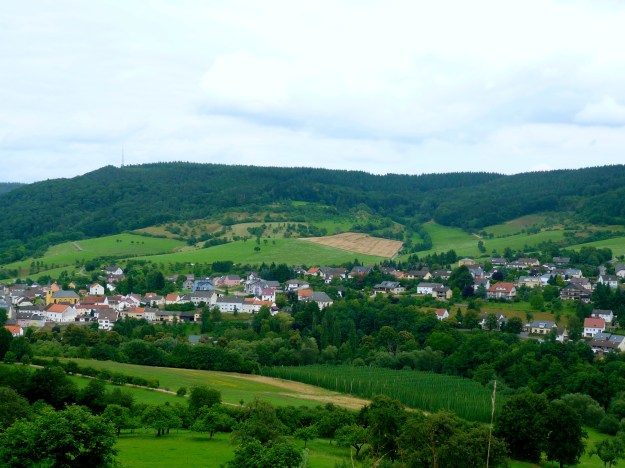
Holsthum, Rheinland-Pfalz, Germany photograph, 2009; privately held by Melanie Frick, 2013.

When Mathias reached the town of Trier, near his home village, he exclaimed, “Oh joy without end! Is it a reality, or only a dream? After forty-four years, back to Trier.” Mathias entered a restaurant, and wrote, “I was served a good meal by a girl from the Mosel, who looks very much like my wife, when fifty years ago she offered her garden products for sale in the market place of Trier. The drinks were also good, but when I made known to her that I came from America, the friendly features of her face froze up and all my hopes to be treated kindly vanished.”3

Although his spirits were dampened by the encounter, Mathias continued, “As I was desirous to reach as quickly as possible my native village, which was five miles distant to the west, I went to an auto-livery. They brought me over the hills of the forefront of the Eifel, to Holsthum.” He reunited with his relatives, and was disheartened to note the absence of those who were lost in the World War:

“The sadness written on their faces gave me to understand how much they had suffered from the shortness of provisions after the World War. Our creator will judge severely those nations who let mountains of foodstuff spoil rather than to help their fellow man, especially the children.”4

Mathias’ return to Holsthum was wrought with emotion. He wrote, “God has helped me to find the way to my old home, but the hour of meeting my relatives again was full of sorrow. Reaching hands, shaking hands, tears of joy running to the earth, I asked myself, ‘Has God spared me no suffering?’ Oh, if only I had remained hidden in my exile in North America.”5

He continued, “Through the lines of the living I hurried to the cemetery, more than one thousand years old, to the kingdom of the dead, to the graves of my parents and brothers. In our house at home, I found all the pieces of furniture […]. There was the old kitchen range in its old place, on which my mother had prepared so many good meals for her seven boys, and shed also many a drop of sweat, and wept tears for her children who were scattered now in all parts of the world.”6 Mathias also visited the Shankweiler Klause, a church located in the forest, for a religious holiday:

“It was very beautiful, especially the singing, which could be heard from the heights of the rock, in all the adjoining valleys. It was so good that I had the privilege to sing with my comrades for the last time in that memorable church. May the echo of our singing be heard from that rocky height for many generations, till the end of time.”7

However, Mathias noted, “The mood of the people was not as joyful among the visitors as in my childhood days. The many baskets of cherries, which on that occasion were formerly sold there, were not there. A late frost had killed all the fruit blossoms, a hard blow for all the Rhineland. Of the many tents, where formerly toys were sold, there was only one left. But the thirst was well taken care of; there was plenty of beer to be had. Though the fruit harvest was a failure, the wheat crop was so much better due to the artificial fertilizer, which was not known formerly in my younger days. They now produced a double crop.”8

Mathias wrote of his time in Holsthum with a sense of wistful melancholy, stating, “I knew well that my stay could not be of long duration, so I made use of every hour to view once more the paradise of my youth, with all the objects of interest that had remained.” He described the two rivers, the beautiful forests, and the fruit trees which he had helped to plant decades before. At one point, Mathias settled down for a nap beneath those trees, admiring the fields before him.9

He wrote, “Awaking from sleep, I did not remember right away where I was […]. The river, flowing close by, threw off its disguise, and proved to be the Enz, and a shout addressed to me from the hill, ‘Heil Hitler,’ recalled me from my condition of drowsiness, into normal consciousness.” Mathias revived himself with coffee, and, “After that, being out of tobacco, I went to the store to buy the much-coveted tobacco, but tobacco is so loaded with taxes that it has to go up in smoke mixed with many herbs and leaves.10

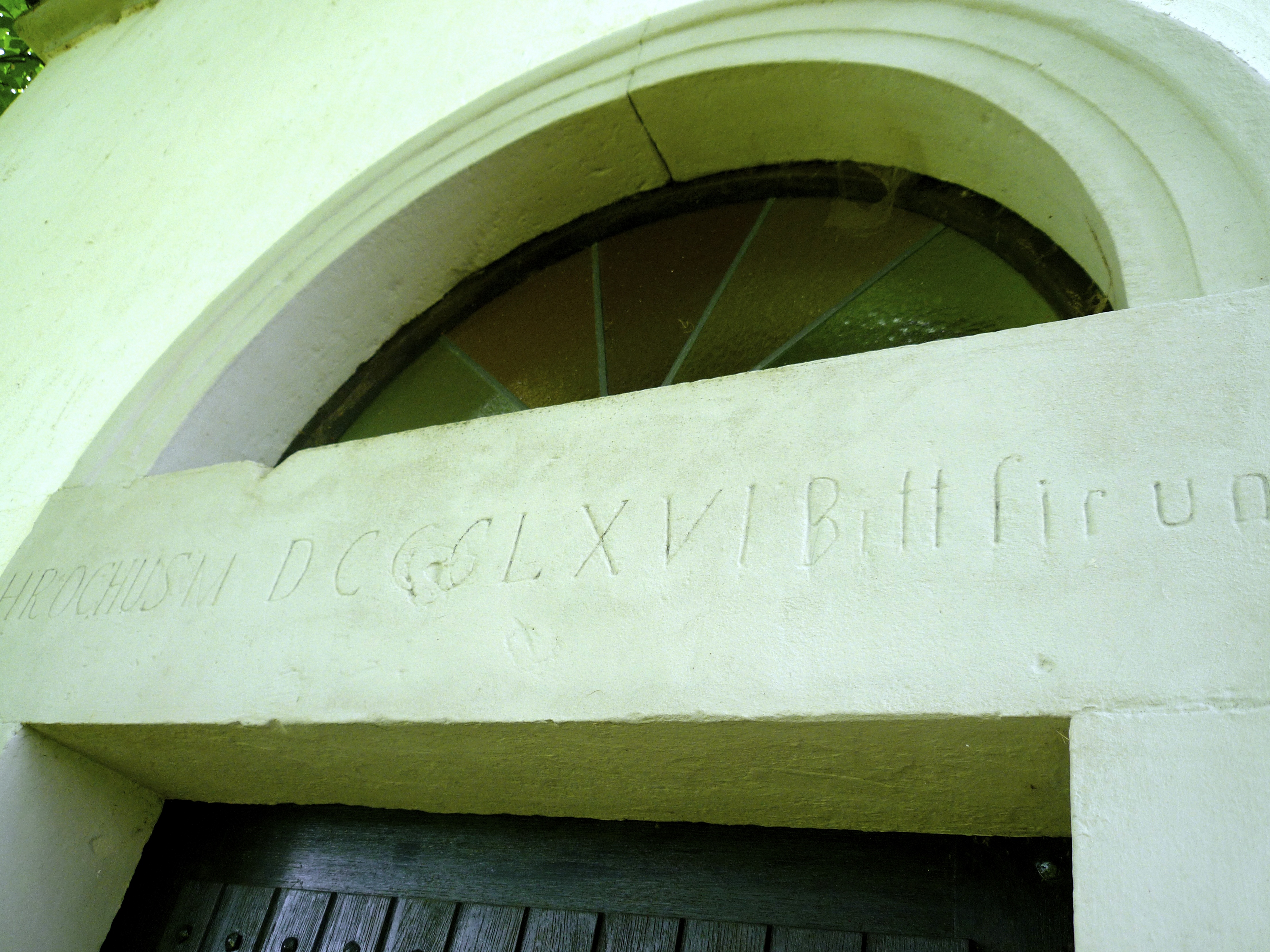
P1000444.JPG

St. Rochus, Holsthum, Rheinland-Pfalz, Germany photograph, 2009; privately held by Melanie Frick, 2013.

“Next day I paid a visit to the chapel of St. Rochus. It was clean, in good repair in spite of its age of 500 years; Christ’s chapel built on a lovely road. May yet many pilgrims enter into thy roof to seek and find consolation. Then I visited the fields which were once the property of my parents and grandparents, and were now divided among brothers and cousins.”

“At last I came to the most beautiful valley of our district. To hear once more the echo, I sang, I called, I shouted, all in vain. The inhabitants of the mountain opposite remained silent, and Theresa Miller, the dairymaid of the same age as myself, whom I saw sixty years ago tending the cows, was not to be seen. Only an eagle flying over a high rock pierced the quiet landscape with its pitiful cries, as though complaining to the misfortune of the Fatherland.”11

Mathias paused to reminisce at a mighty walnut tree under which he recalled his elderly grandfather would enjoy his afternoon naps. Then, “Saying farewell to the paradise of my grandfather, I turned towards the village and suddenly found myself face to face with my old dairymaid, Theresa.” This was a bittersweet reunion, as they exchanged news of long-lost friends.12

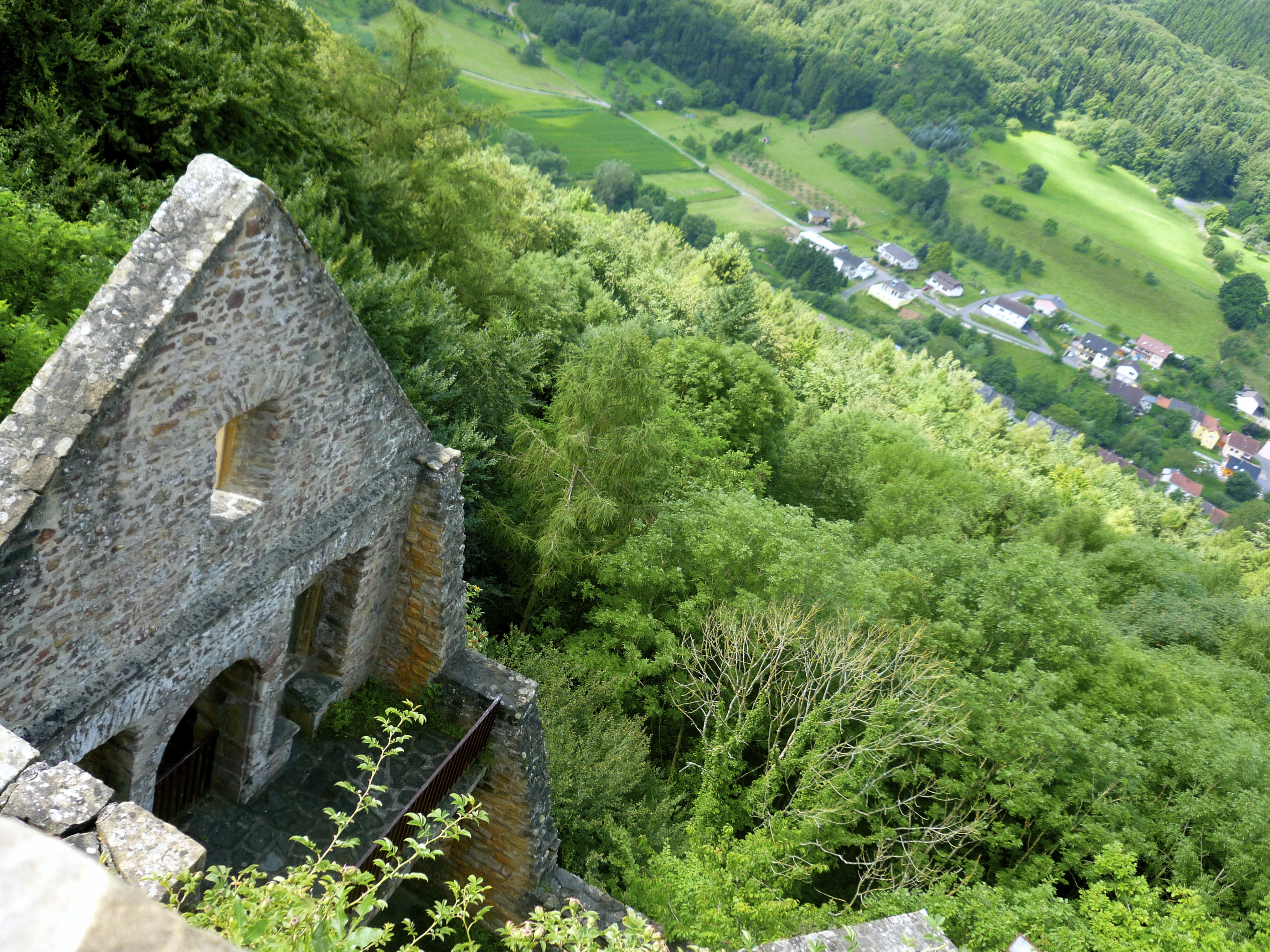
Mathias attempted to visit his godmother in Allsdorf, a village four miles away, but he faced difficulties: “The road to this place had been changed during my absence […], and so I lost my way in the beautiful forest. For three hours I ran over roads that were prohibited […] on account of army maneuvers, trying to find my way out.” Mathias happened upon the ruins of the Castle Prümzurlay, where, in the eighteenth century, his grandfather had conducted an orchestra to entertain the noble inhabitants.13

Pruemzurlay.JPG

Prümerburg and Prümzurlay, Rheinland-Pfalz, Germany photograph, 2009; privately held by Melanie Frick, 2013.

The next day, Mathias was able to find his way to Allsdorf, and he was pleased to find his relatives well. However, upon his return, he had to avoid the army maneuvers that were taking place in the river valley by cutting through the forest:

“I saw trees freshly cut, to widen the road lying over the way, without seeing any woodcutters. I also saw a red and white flag, diagonal across the road, which frightened me more than any object I had seen in the forests of America or the plains of Canada. Halting for a few moments, I dared to cross the road, and ran as fast as I could towards the valley below.”14

It is evident that although Mathias was deeply sympathetic to the plight of his homeland following the World War, he looked upon Germany’s new direction with suspicion. Indeed, despite his feelings of goodwill towards his kin, he faced intense scrutiny as an American in a land that he could no longer call his own. However, Mathias was determined to make the most of his time there, and although his relatives warned him against it, he made up his mind that he would cross the border into Luxembourg:

“I came at the border of Echternacherbrück into the dreaded crossfire of the German customs official. I showed my traveling papers as well as the sum of money I carried with me, which, according to the customs regulations, was too large to be taken across the border. As a consequence, I was bombarded with questions as never before, since our field watchman had caught me sitting in our neighbor’s apple tree!

“All the money I carried with me, except ten marks, I had to leave behind in the hotel. Then I received permission to cross the frontier. In Echternach, Luxembourg, I found the people very much depressed, on account of the prohibition of the people on the German side to do any trading in their border city of some six thousand inhabitants. In the beautiful marketplace, I thought I saw grass growing between the pavement stones.”15

Finally, Mathias was able to visit his relatives in the village of Bastendorf, with whom he had an emotional reunion. Before Mass with his relatives the following morning, he strolled through the village to collect his thoughts:

“My parents, brothers, and other relatives had promised me everything that was necessary to establish myself as an independent man. But no, as though driven by an invisible power, I stumbled along the steep street as if I was going to a funeral. And now, on the 12th day of July, 1938, I am standing once more at the same crossroad and feel compelled to leave once more the beautiful woods and meadows to return to the land of the dollar.”16

After parting, Mathias wrote that he felt, “Lost in my dream, half this side and half the other side of the Atlantic.” At the border, he gave his remaining 4 Francs to the Luxembourg customs official, in order to ease his crossing, and reported, “I was fairly well treated by the custodians of the law.” He retrieved his money from the hotel and treated five laborers to beer and cigars, “for which they thanked, but they did not enter into any conversation.” Finally, Mathias wrote, “After I had worked myself through all the red tape at Echternacherbrück and received a moral lesson out of the proceedings, I took the stagecoach and arrived at Holsthum.”17

Mathias’ memoirs ended abruptly as he described visiting an abandoned Franciscan hermitage the following day. We know that he returned to northeastern Iowa, where he and his wife had raised nine children. He surely shuddered as he followed the news of World War II in the years to follow, and likely realized how fortunate he had been to return to his childhood home while he still had the chance. However, his memoirs were left incomplete. Mathias passed away on 31 January 1950 at the age of eighty-one.18

Continue reading

Finding Your Danish Immigrant Ancestors

KathrineChristensen03

Kathrine Christensen at the Christensen family home photograph, 1905, Vestervig, Thisted, Denmark; digital image 2013, privately held by [personal information withheld].

When searching for Danish immigrant ancestors, you might feel as though they have been lost in a sea of Scandinavians. Nielsens, Larsens, and Hansens abound. Given names might be different than those used in American records. Family members might not have traveled together. All of these factors, on top of the typical transcription errors that make life exciting for genealogists, can make Danish immigrants difficult to track down.

I met a challenge of this nature when attempting to locate the siblings of my mother’s grandmother, who carried the woefully common Christensen surname. As it turned out, between approximately 1889 and 1906, at least six of the nine surviving children of Laust and Ane (Nielsen) Christensen of Vestervig, Thisted, Denmark1 left the thatched roof of the only home they had ever known for America, traveling one or two at a time over a period of seventeen years. All came, at least temporarily, to Newell, Buena Vista, Iowa.

Else Marie Christensen was the first to arrive in northwestern Iowa. It was there that she married Anton Mikkelsen in the summer of 1889, when she was seventeen.2 Fully ten years later, in 1899, Niels H. Christensen and Ane Petrine “Anine” Christensen journeyed together to join their older sister in Newell.3 Niels settled there, where he married Kathrine “Katie” Larson;4 Anine moved west to the urban center of Sioux City, Woodbury, Iowa, where she married John P. Hansen.5

In 1900, their brother Laurits Anton “Louis” Christensen arrived.6 He too settled in Newell, and married Anna Marie Godfredson.7 Kristine “Christina” Christensen came to America in 1905, along with her husband, Jens C. Pedersen, and her young niece,8 the daughter of her widowed brother Christen Christensen, who had remained in Denmark.9 They settled first in Newell, before moving to Sioux City.10

The following year, in the summer of 1906, Kathrine Christensen, my great-grandmother, was the last to leave home,11 leaving only her aforementioned brother and sisters Johanne Christensen and Ane Marie Christensen in Denmark.12 Kathrine, twenty, also joined her siblings in Newell before moving on to Sioux City. It is there that she married Jens “James” Jacob Walsted in 1909.13

Where can you find Danish immigration records? If you’ve been over- (or under-) whelmed with your search results on databases such as Ancestry.com or Ellis Island’s Passenger Search, I recommend visiting the Dansk Demografisk Database. By selecting “Emigrants,” you will be able to access an index of Danes who traveled via Copenhagen or Hamburg. The search options are flexible; try searching for everyone of a particular surname who originated in the same parish, or search for anyone bound for the same destination. It goes without saying to be creative with spellings, although, in my experience, this index remains truer to the original Danish spellings than others. With the information you find here, you might just have luck turning up a passenger list with your ancestor’s name!


SOURCES
1 “Denmark, Marriages, 1635-1916,” index, FamilySearch (http://www.familysearch.org : accessed 30 October 2013), entry for Laust Christensen and Ane Nielsen, 1868.
2 “Iowa, County Marriages, 1838-1934,” index, FamilySearch (https://familysearch.org : accessed 30 Oct 2013), Anton Mikkelson and Elsa Marie Kristensen, 1889.
3 “New York, Passenger Lists, 1820-1957” digital images, Ancestry.com (http://www.ancestry.com : accessed 30 October 2013), manifest, S.S. Paris, Liverpool, England to New York, arriving 13 February 1899, Niels Christensen and Anine P. Christensen; citing National Archives microfilm T715, roll 47.
4 “Iowa, County Marriages, 1838-1934,” index, FamilySearch (https://familysearch.org : accessed 30 Oct 2013), Niels Christensen and Kathrine Larson, 1901.
5 1920 U.S. census, Woodbury County, Iowa, population schedule, Sioux City, Enumeration District (ED) 232, p. 4857 (penned), sheet 6-B, dwelling 129, family 129, Anine Hanson; digital image, Ancestry.com (http://www.ancestry.com : accessed 30 October 2013), citing National Archives microfilm T625, roll 521.
6 “Border Crossings: From Canada to U.S., 1895-1956” digital images, Ancestry.com (http://www.ancestry.com : accessed 30 October 2013), manifest, S.S. Parisian, Liverpool, England to Quebec, arriving 9 June 1900, Laurids Christensen; citing National Archives microfilm M1464, roll 6.
7 “Iowa, County Births, 1880-1935,” index, FamilySearch (https://familysearch.org : accessed 30 Oct 2013), Lewis A. Christensen and Anna Marie Godfredsen in entry for Ludvig Arnold Christensen, 1907.
8 “New York, Passenger Lists, 1820-1957” digital images, Ancestry.com (http://www.ancestry.com : accessed 30 October 2013), manifest, S.S. Helig Olav, Liverpool, England to New York, arriving 24 July 1905, Karoline M. Pederson; citing National Archives microfilm T715, roll 602.
9 [personal information withheld], to Melanie Frick, Ancestry.com message, 7 August 2013, “Cecelia,” Christensen Family File; privately held by Melanie Frick.
10 1920 U.S. census, Woodbury County, Iowa, population schedule, Sioux City, Enumeration District (ED) 234, p. 5951 (penned), sheet 5-A, dwelling 90, family 97, Christina Peterson; digital image, Ancestry.com (http://www.ancestry.com : accessed 30 October 2013), citing National Archives microfilm T625, roll 521.
11 “New York, Passenger Lists, 1820-1957” digital images, Ancestry.com (http://www.ancestry.com : accessed 30 October 2013), manifest, S.S. Cedric, Liverpool, England to New York, arriving 22 July 1906, Kathrine Kristensen; citing National Archives microfilm T715, roll 744.
12 “Public Member Trees,” database, Ancestry.com (http://www.ancestry.com : accessed 30 October 2013), “Christensen Twete,” entries for Christen Christensen (b. 1869), Johanne Christensen (b. 1876), and Ane Marie Christensen (b. 1879); submitted by [personal information withheld], citing Vestervig Church Book.
13 Sioux City, Iowa, Marriage Register, Book E: 1906-1910, James Walsted and Kathin Christinsen, 1909.

An Iowa Farmer: Clues from the Agricultural Schedule

When Hiram H. Hammond of Postville, Allamakee, Iowa died in 1896 at the age of eighty-three, the local newspaper stated, “By constant application to his farm and frugal habits, Mr. Hammond acquired a comfortable competency.”1 Although it is believed that he was born in Belmont County, Ohio, little is known about Hiram Hammond before his debut as a farmer in northeastern Iowa.2 It is there that the paper trail begins, and agricultural schedules, an underutilized resource, offer fantastic detail about his experience.

HiramHammondAgriculture1850

1850 U.S. census, Jackson County, Iowa, agriculture schedule, Jackson, p. 299 (penned), line 29, Hyram Hammons; digital image, Ancestry.com (http://www.ancestry.com : accessed 23 October 2013), citing “Selected U.S. Federal Census Non-Population Schedules, 1850-1880.”

An 1848 land transaction placed Hiram Hammond in Jackson County, Iowa, which is located along the Mississippi River.3 In 1850, Hiram, 37, was recorded as a laborer in another household.4 He did not own any land, but he had five horses and one milch cow, together valued at $260. His farm machinery and implements were valued at $20. Hiram had harvested 100 bushels of wheat, 60 bushels of Indian corn, 75 bushels of oats, 10 bushels of peas and beans, and 6 tons of hay. He had also produced 100 pounds of butter, and the value of his animals slaughtered came to $20.5

By 1854, Hiram had moved on to nearby Clayton County, Iowa, where he married a German immigrant, Eva Margaret Stöhr, and started a family. In the years to come, Hiram saw success as a farmer,6 and, although seemingly absent in 1860, he appeared in the 1870 and 1880 U.S census and agricultural schedules.

In 1870, Hiram, 57, lived with his wife and five children under the age of twelve.7 His farm was valued at $2500 and his livestock at $1400; he possessed 180 acres of land, the majority of which was woodland. Hiram also owned fourteen sheep, eight horses, seven swine, seven cattle, and six milch cows. He produced 300 pounds of butter, and 75 pounds of honey.8 In 1880, his farm was valued at $3240; although his acreage was smaller than in 1870, more land was in use. The value of his farm productions of the past year came to $1461.9 All told, this was a far cry from Hiram’s first appearance in the agricultural schedule.

Hiram continued to farm throughout his seventies. Eventually, he and his family moved to nearby Fayette County, before, as Hiram neared eighty, he and his wife retired to town.10 In 1893, he advertised the sale of his farm, “comprising 200 acres, situated two and a quarter miles from Postville on the Clermont road.”11

How can you learn more about your ancestor’s farm? Agricultural Schedules were recorded from 1850-1880, and provide a wealth of information about the land, livestock, crops, and other farm productions, from butter and cheese to maple syrup and honey, of your ancestor. Search for your ancestor through “Selected U.S. Federal Census Non-Population Schedules, 1850-1880” on Ancestry.com. Be aware that the agricultural schedules may span two pages, and consider comparing your ancestor’s farming operation to those of their neighbors. How did they measure up?


SOURCES
1 “Gone to Their Rest,” The Graphic (Postville, Iowa), 27 August 1896, p. 1, col. 3; digital images, Newspaper Archive (http://www.newspaperarchive.com : accessed 23 October 2013).
2 “Gone to Their Rest,” The Graphic (Postville, Iowa), 27 August 1896, p. 1, col. 3.
3 U.S. Bureau of Land Management, “Patent Search,” database, General Land Office Records (http://www.glorecords.blm.gov : accessed 23 October 2013), entry for Hiram Hammond, Dubuque land office, doc. no. 4358.
4 1850 U.S. census, Jackson County, Iowa, population schedule, Jackson, sheet 294-B, dwelling 187, family 187, Hiram Hammons; digital image, Ancestry.com (http://www.ancestry.com : accessed 23 October 2013), citing National Archives microfilm M432, roll 124.
5 1850 U.S. census, Jackson County, Iowa, agriculture schedule, Jackson, p. 299 (penned), line 29, Hyram Hammons; digital image, Ancestry.com (http://www.ancestry.com : accessed 23 October 2013), citing “Selected U.S. Federal Census Non-Population Schedules, 1850-1880.”
6 “Gone to Their Rest,” The Graphic (Postville, Iowa), 27 August 1896, p. 1, col. 3.
7 1870 U.S. census, Clayton County, Iowa, population schedule, Volga, p. 6 (penned), dwelling 39, family 40, Hiram Hammond; digital image, Ancestry.com (http://www.ancestry.com : accessed 23 October 2013), citing National Archives microfilm M593, roll 383.
8 1870 U.S. census, Clayton County, Iowa, agriculture schedule, Volga, line 28, Hiram Hammond; digital image, Ancestry.com (http://www.ancestry.com : accessed 23 October 2013), citing “Selected U.S. Federal Census Non-Population Schedules, 1850-1880.”
9 1880 U.S. census, Clayton County, Iowa, agriculture schedule, Garnavillo, p. 7 (penned), line 7, Hiram Hammond; digital image, Ancestry.com (http://www.ancestry.com : accessed 23 October 2013), citing “Selected U.S. Federal Census Non-Population Schedules, 1850-1880.”
10 “Gone to Their Rest,” The Graphic (Postville, Iowa), 27 August 1896, p. 1, col. 3.
11 “Farm for Sale,” The Graphic (Postville, Iowa), 29 June 1893; digital images, Newspaper Archive (http://www.newspaperarchive.com : accessed 23 October 2013).

The Little Postmaster on the Prairie

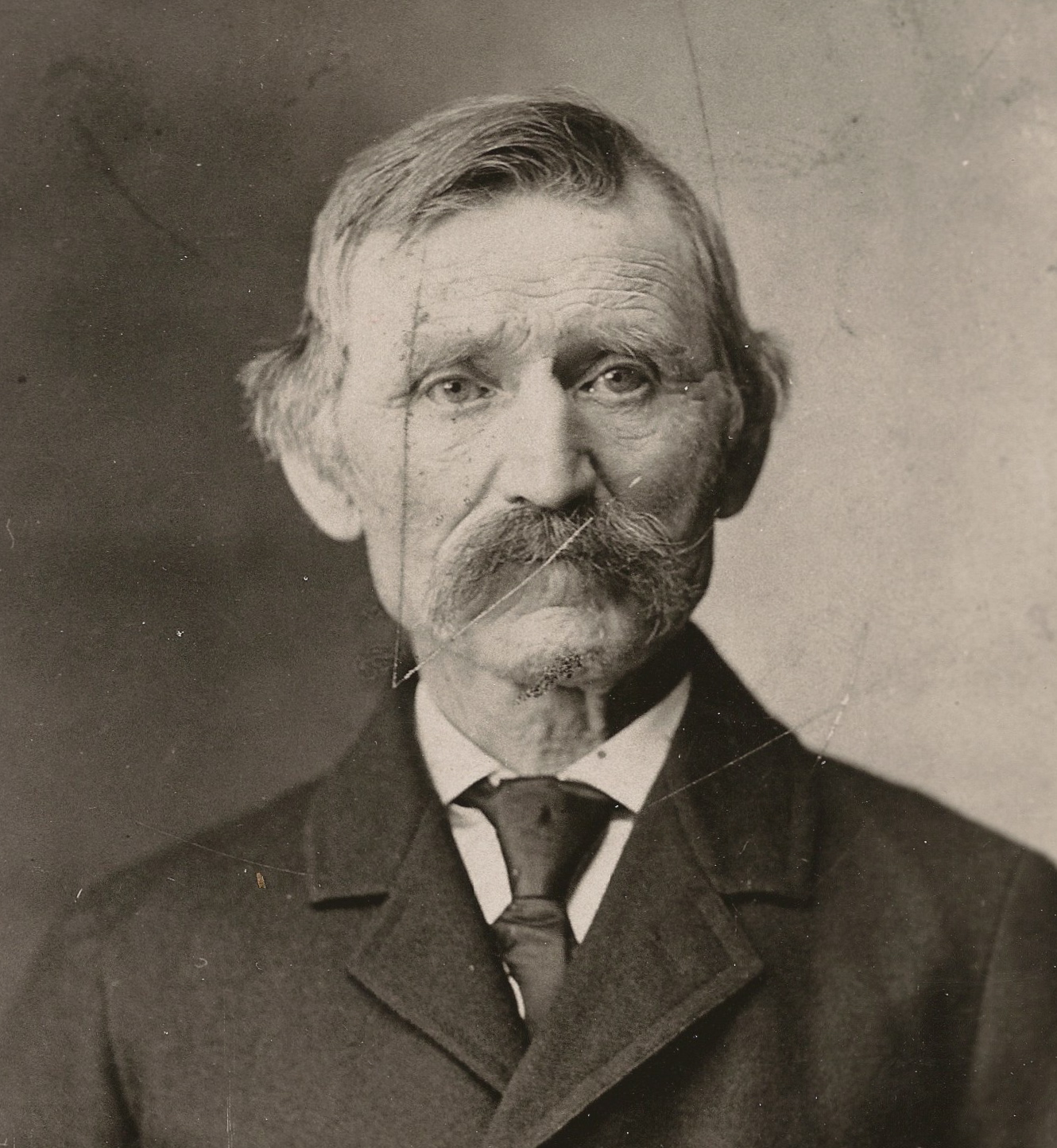
After reading today that the cost of stamps could rise yet again, I was reminded that my third great grandfather, Niels Olsen of Lakeport, Yankton County, South Dakota, once served as a postmaster.

Niels Olsen photograph, 1893, Yankton, South Dakota; digital image 2010, privately held by Melanie Frick, 2013.

Niels Olsen (1827-1908) photograph, 1893, Yankton, South Dakota; digital image 2010, privately held by Melanie Frick, 2013.

Niels Olsen emigrated from his native Denmark in 1874,1 settling on a farm in what is now southeastern South Dakota. His wife and six children accompanied him on the ocean crossing; his two eldest sons had already left Denmark, paving the way, and another daughter was born the following year.2

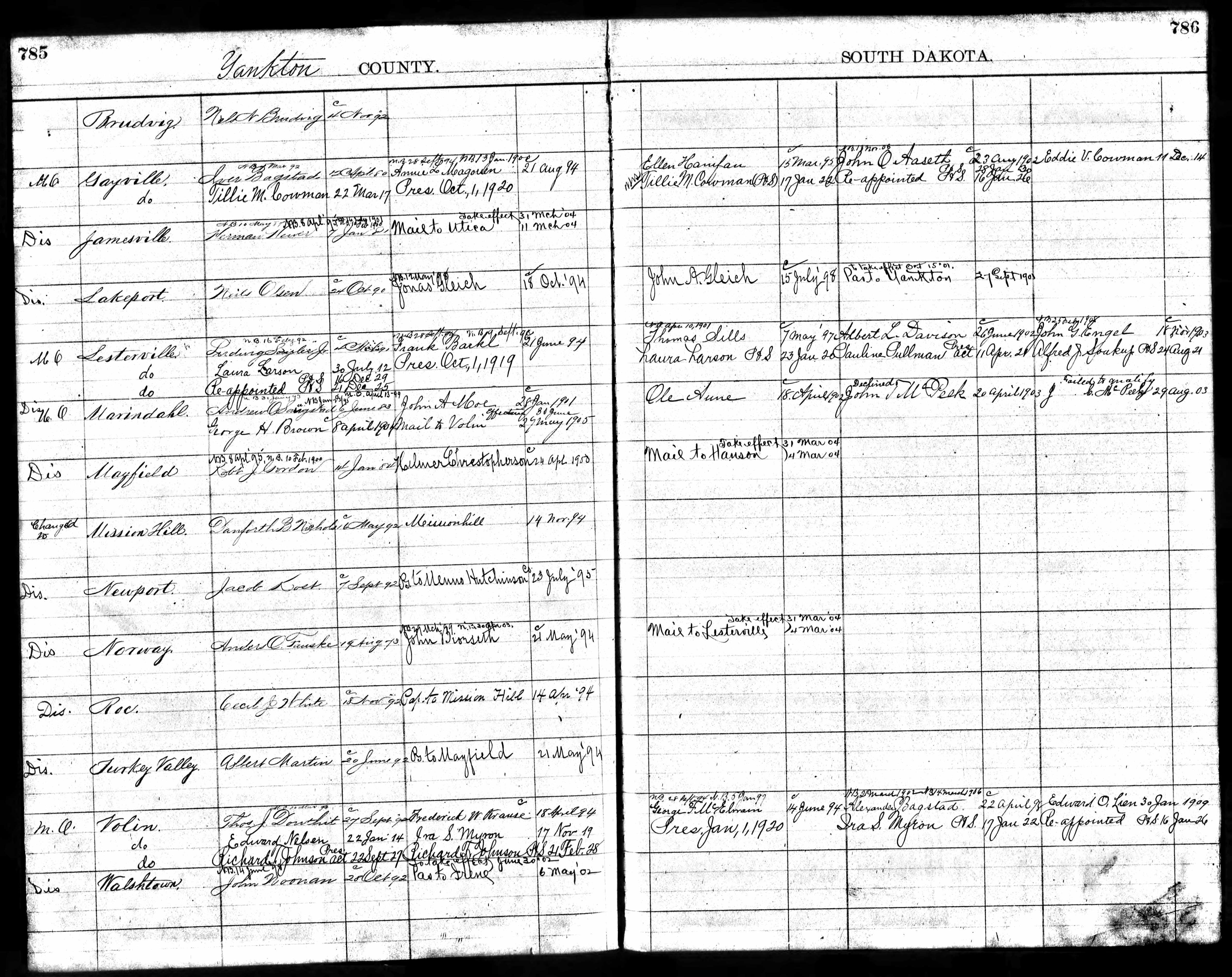
In the fall of 1890, Niels would have been sixty-three. With two grown sons and a daughter still at home to assist him and his wife, Juliane, with the farm, Niels may have found himself with some extra time on his hands. Lakeport, an unincorporated village, was the nearest place to buy supplies and receive mail; it even boasted a hotel for weary stagecoach travelers. While the post office did not seem to have a permanent location, as it reportedly bounced between the hotel, the general store, and a grocery store, regular mail deliveries were undoubtedly a major attraction for the Czech and German settlers of the area.3 On 24 October 1890, Niels Olsen signed on as postmaster of Lakeport, a position he held for four years.4

nielsolsenlakeportpostmaster02

“U.S., Appointments of U.S. Postmasters, 1832-1971,” digital images, Ancestry.com (http://www.ancestry.com : accessed 25 September 2013), entry for Neils Olsen, Lakeport, Yankton, South Dakota; citing National Archives microfilm publication M841, Record of Appointment of Postmasters, 1832-1971.”

Although Lakeport has all but vanished, due to competition from other trade centers and the rerouting of a major highway,5 in the final decade of the nineteenth century, Niels Olsen would have played an integral role in this village as its postmaster. He may have been attracted to the position as an opportunity to earn extra money, or he may have fallen into it if no one else in the community was interested or eligible. At the very least, it tells us that Niels was literate, an American citizen, and that he may have had a sociable personality. I like to think that Niels would have known all of the latest gossip – after all, who else would have had the opportunity to interact with so many members of the community on a regular basis?

How can you find out if one of your ancestors was a postmaster? Ancestry.com makes this easy with the collection, “U.S., Appointments of U.S. Postmasters, 1832-1971.” If you want to locate this collection, you will find it categorized under “Schools, Directories, and Church Histories.” Then, you can search for an ancestor by their name and/or location. Niels Olsen held his position as postmaster until 18 October 1894; it was just a few years later, in 1901, that the Lakeport post office closed its doors for good.6


SOURCES
1 “New York, Passenger Lists, 1820-1957,” digital images, Ancestry.com (http://www.ancestry.com : accessed 25 September 2013), manifest, S.S. Humboldt, Stettin, Germany, to New York, arriving 4 August 1874, Niels Olsen; citing National Archives microfilm publication M237, roll 392, line 149.
2 Harold W. Jorgensen, “Olsen, Niels,” in Ben Van Osdel and Don Binder, editors, History of Yankton County, South Dakota (Yankton, South Dakota: Curtis Media Corporation and the Yankton County Historical Society, 1987), 53.
3 Sister Verena Kaiser, “Lakeport, South Dakota,” in Ben Van Osdel and Don Binder, editors, History of Yankton County, South Dakota (Yankton, South Dakota: Curtis Media Corporation and the Yankton County Historical Society, 1987), 605.
4 “U.S., Appointments of U.S. Postmasters, 1832-1971,” digital images, Ancestry.com (http://www.ancestry.com : accessed 25 September 2013), entry for Neils Olsen, Lakeport, Yankton, South Dakota; citing National Archives microfilm publication M841, “Record of Appointment of Postmasters, 1832-1971.”
5 Kaiser, “Lakeport, South Dakota,” 54.
6 “U.S., Appointments of U.S. Postmasters, 1832-1971,” digital images, Ancestry.com, entry for Neils Olsen, Lakeport, Yankton, South Dakota.

A Sad Accident: The Death of George W. Fenton

George W. Fenton of Saline County, Kansas, was a young father of three when he was accidentally shot and killed by his brother-in-law on 9 October 1880.1

MarriageRecordGeorgeFentonSarahHall

Saline County, Kansas, “Marriage Affidavits, 1873-1879,” p. 43-44, George W. Fenton and Sarah Hall marriage, 11 June 1873; digital images, FamilySearch, “Kansas, County Marriages, 1855-1911,” (https://www.familysearch.org : accessed 18 September 2013).

George, the American-born son of English immigrants, was raised in Ohio and Illinois and was orphaned around the age of ten. He ventured to Kansas as a young man, no doubt seeking opportunity and adventure on this new frontier. In 1873, at the age of twenty-two, George married Sarah Ellen Hall, who was barely sixteen, though she claimed to be a year older.2 They settled near her mother and siblings by Gypsum Creek in Saline County, Kansas, and it was there that they raised three daughters: Minnie Bell, Alpha Doretta, and Anna Leota Fenton.3

The tenth of October 1880 was a Saturday. Farm chores were put aside for the afternoon, as George, Sarah, and their young daughters gathered at Sarah’s mother’s home with a crowd of neighbors and kin. Perhaps they were celebrating a successful harvest, or perhaps it was simply a good time to enjoy the early autumn weather, to catch up, and to let the children play.

Also in attendance that afternoon was Sarah’s elder brother, Elithan Davis “Bud” Hall, who fell between Sarah and George in age, and no doubt thought well of George as he, as Sarah’s oldest living male relative, had granted permission for their marriage seven years before.4 He and George were talking of hunting when he reached for the double-barreled shotgun behind the door, teasing his nieces Bell, six, and Alpha, four, that he was going to shoot their dog. His niece Leota, at seven months old, was still too young to play along, as was Bud’s own daughter, Gracie, just over a year.5 As Bud raised his shotgun in jest, however, presuming it to be unloaded, it discharged – sending a bullet straight above George’s heart.6

George was mortally wounded, and lived only an hour more on that fateful October afternoon. His death was ruled purely accidental at the inquest held two days later, when five witnesses testified in front of a jury. The Salina Herald headlined the incident as a “Sad Accident,” and added, “The thing to be condemned [is] the careless handling of firearms.”6 The Journal (Salina), detailed, “Hall is nearly distracted over the result of his carelessness. The brothers-in-law were the best of friends – no trouble ever having occurred between them.” The frequency of such accidents was noted with sorrow, and it was questioned, “Will people never learn better?”7

George W. Fenton was buried at McQuary’s Graveyard on Gypsum Creek.8


SOURCES
1 Saline County, Kansas, Coroner’s Records, “Fenton, George,” filed 10 October 1880; database, Smoky Valley Genealogical Society, “Saline County, Kansas Coroner’s Records” (http://www.rootsweb.ancestry.com/~kssvgs/ : accessed 18 September 2013).
2 Saline County, Kansas, “Marriage Affidavits, 1873-1879,” p. 43-44, George W. Fenton and Sarah Hall marriage, 11 June 1873; digital images, FamilySearch, “Kansas, County Marriages, 1855-1911,” (https://www.familysearch.org : accessed 18 September 2013).
3 1880 U.S. census, Saline County, Kansas, population schedule, Eureka Township, enumeration district (ED) 300, p. 204 (stamped), dwelling 102, family 110, George W. Fenton; digital image, Ancestry.com (http://www.ancestry.com : accessed 18 September 2013), citing National Archives microfilm publication T9, roll 396.
4 Saline County, Kansas, “Marriage Affidavits, 1873-1879,” p. 43-44, George W. Fenton and Sarah Hall marriage (1873).
5 1880 U.S. census, Saline County, Kansas, population schedule, Gypsum Township, enumeration district (ED) 300, p. 12 (handwritten), dwelling 82, family 90, Elithan D. Hall; digital image, Ancestry.com (http://www.ancestry.com : accessed 18 September 2013), citing National Archives microfilm publication T9, roll 396.
6 “Sad Accident,” The Salina Herald (Salina, Kansas), 16 October 1880, copy of newspaper clipping privately held by Melanie Frick, 2013.
7 “A Sad Accident, The Journal (Salina, Kansas), 14 October 1880, copy of newspaper clipping privately held by Melanie Frick, 2013.
8 “Sad Accident,” The Salina Herald (Salina, Kansas), 16 October 1880.

His Last Trip to Germany, Part I

Very few of my immigrant ancestors ever had the opportunity to revisit the countries they left behind, but Mathias Noehl of Holsthum, Rheinland-Pfalz, Germany did so on two occasions. Mathias came to America as a young man in the spring of 1886, eventually settling in northeastern Iowa.1 Late in life, he began to write a reflective memoir; its tone was frequently melancholy, hinting at tragedies and disappointments, and it was left unfinished. Mathias wrote warmly, however, of the rural village where he had grown up. His first return trip to Germany was in 1894, to visit his aging parents.2 His second and final return trip was decades later, in 1938, when he himself was an old man.3 Mathias was a keen observer and thoughtful writer, and his memoirs offer insight into the emotions of an immigrant now a stranger in his homeland.

Holsthum, Rheinland-Pfalz, Germany photograph, 2009; privately held by Melanie Frick, 2013.

Holsthum, Rheinland-Pfalz, Germany photograph, 2009; privately held by Melanie Frick, 2013.

As his memoirs are lengthy, today I want to share an excerpt concerning his journey from Iowa to Germany in the summer of 1938. Mathias began, “After having longed for forty-four years to see my old home again, and to visit the land, at the bosom of which I had enjoyed my youth, I was permitted to carry out my desire.” He traveled by train from New Hampton, Chickasaw County, Iowa, to “the indestructible city of Chicago,” before transferring to another train. He wrote, “I met companions who were bound for the same goal, New York, and who created with their singing a joyful frame of mind. The number of homesick travelers increased, from station to station, and the words of the song ‘at last the long desired hour has arrived,’ sounded louder and louder […]. There was an excitement as if we were going to a wedding. We saw roses on every thorn, and when we returned, only the thorns were left.”4

Once arrived in New York, Mathias prepared to board the ship Hamburg:

“A Frenchman advised us not to entrust ourselves on the ocean on such a small boat like the Hamburg (22,000 tons). An Englishman spoke of the short time it would take their steamer to cross the Atlantic. A German warned us of both. And on the streets of New York, a Greek offered us his food wares, and praised the Germans, which was no disadvantage to his business.”5

The chaotic scene at the docks made a lasting impression on Mathias. He wrote, “A dense crowd of human beings, who were tired of America, hustled over the landing bridge with the slogan ‘England or Death!’ Away from the ‘Fortune Wheel’ of America, where they had drawn only blanks. […] They hoped for better things, because no American misfortune could force them out of the ranks of those who struggled for survival. They were followed by young girls from Scotland who were homesick, or who had found bad luck in love. Whichever the motive, they longed to return to the laps of their mothers in Edinburgh. Then came women carrying weeping children, while boys were being dragged along on the coattails of their fathers. Then I saw young married women embracing their husbands with tears in their eyes. Men saying farewell to their wives, tearing themselves away from their embraces, to disappear into the lower part of the boat. Perhaps they had not the means to make the trip jointly. Then came the last reserve of the Knights of Fortune of America. Carrying their small possessions on bent shoulders, with their knees tottering, plunging into the belly of the ship, and blessing the wheel-of-fortune of America with a curse. Queen Mary, Queen of all the boats, sailed on, laden with joy and grief.”6

Noehl, Mathias. “Memoirs.” MS. New Hampton, Iowa, ca. 1938-1950. Privately held by Melanie Frick. Note: Excerpts from an unpaginated German to English translation. Information about the translator and date of translation to come at a future date.

Noehl, Mathias. “Memoirs.” MS. New Hampton, Iowa, ca. 1938-1950. Privately held by Melanie Frick. Note: Excerpts from an unpaginated German to English translation.

He continued, “The sight of the steamer Isle de France was different. When the happy-go-lucky Frenchmen marched down the planks into the rooms of the ship, here you could view and examine all the modern fashions of others, and not so modern, from the latest Parisian costumes to the costume of Adam. […] Fare-thee-well you gay Frenchmen. We once fought with you at our side. […] If all goes well, we may still join hands across the Atlantic, and not as hereditary enemies.”7

“At last we had to go where the German steamer [Hamburg] was anchored. At both entrances there were double guards, looking downcast, which I could not understand. Neither could I understand the police force of twenty-four men marching up and down the landing place. […] After a short while, we one thousand passengers were ordered on board the ship. Tired as we were, we sought our berths […]. It was a nerve-wracking job for our stewards to tell each one the room assigned for him, but as always, we found everywhere the friendliest service. Kindness, goodness, and the friendly, ‘Oh pray, please,’ of the North German were heard in all corners of our steamer, and then I could not help noticing everywhere the German love for order, punctuality, neatness, cleanliness, and kindness. No cross words or unclean talk. All ready to obey. All ready to serve. We had left all our cares behind us in America.”8

The passage was not without a scare, however: “On June 26, we left the Gulf Stream behind us and came into cool water. On the northeastern sky, we noticed a copper coloring, which indicated storm. […] Fishes jumped out of the sea, and our steamer began to heave ominously, and to sink again. Waves high as a house descended upon one another, and plunged into the awful abyss […]. Women made desperate attempts while vomiting to maintain their equilibrium on the boat, heaving to and fro. Seasickness on board, tables were knocked to the floor, someone broke a leg on the deck. I myself, in order not to be thrown over, grasped several chairs and rolled over against the iron wall, while the thunder was rolling. A speech to be made by the captain was cancelled. Seamen loaded with life belts rocked to the high fore deck where we had to assemble, in case the worst would come. I had picked an Englishwoman with whom I should share a life belt, in order to become a solitary food for the big fish, in case I should not be spared the jump into eternity. But, as on Lake Genesareth long ago, the storm abated […].”9

Mathias also wrote of the friendships forged with the other passengers – English, Irish, French, Swiss – throughout the ocean crossing. At each stop, more passengers disembarked:

“Thus reducing more, our family of one thousand passengers, without hope of seeing each other again. Although we had faced each other as enemies in the World War, we had become fast friends during our brief sojourn on the boat. And, many left us with tears in their eyes. Unbelievable, for those who have never seen such a scene. The anchors are lifted, the band plays ‘Farewell,’ whistles sound as signals, handkerchiefs are waved.”10

At last, Mathias’ voyage came to an end: “Land in sight: the Fatherland! The new Germany dressed in its best summer clothes, June 30, 1938, and now we began nervously to pack our clothes, to present our passports, to receive our railway tickets, to give tips to our stewards, to thank for congratulations, etc. At the command of the Captain, our steamer jerked into its landing place, where a thousand years before, St. Bernard had preached; where Rembrandt had painted his pictures; where the poets had sung their songs.”11

Of course, as it turns out, Mathias Noehl had impeccable timing when planning this last trip to Germany, just months before Kristallnacht and a year before the invasion of Poland. I will share the next chapter of his memoir another day, which details his experiences revisiting his beloved Holsthum, and his dismay at the inevitable changes that were brought upon his home district of Bitburg-Prüm.

Read “His Last Trip to Germany, Part II” here.

Continue reading