Tag Archives: Hall

A Sad Accident: The Death of George W. Fenton, Revisited

Sometimes, there’s more to the story.

Eleven years ago, when I first wrote about the accidental death of Kansas pioneer George W. Fenton, the number of historic newspapers that were readily available to search online was still relatively slim. I was aware that George’s death had made the news—but at that time, I was not yet aware that several differing accounts of the incident had circulated, nor that the news had spread throughout Kansas and beyond.

George W. Fenton—a son of English immigrants who was orphaned at the age of ten when his father perished in the Civil War—had overcome his difficult childhood in Ohio and Illinois and settled down to a farmer’s life near Gypsum Creek in Saline County, Kansas. He had been married for seven years and was the father of three young daughters when, at the age of twenty-eight, he was accidentally shot and killed by his brother-in-law.

As it turned out, George had had another brush with misfortune with a firearm only days before his death. On 02 October 1880, the Salina Herald reported: “Mr. George Fenton had his eyes badly burned by the premature discharge of a gun last week. He is now able to see out of one of them, and hopes they are not seriously injured.”

Perhaps George was still taking things easy on the afternoon of Sunday, 10 October 1880, when he and his family visited at the homestead of his mother-in-law, Nancy (Stilley) Hall. However, that is when tragedy struck. The following Thursday, the Saline County Journal reported:

A Sad Accident. A very painful accident happened last Saturday which resulted in the death of George Fenton, of Gypsum creek. Mr. Fenton with his family was upon a visit to his mother-in-law, who resides about eighteen miles south-east of town, and with whom was residing “Bud” Hall, her son and brother-in-law of Mr. Fenton. During the afternoon while those two persons were engaged in some boyish pranks, Hall playfully presented a shot gun at Fenton (which Hall supposed was unloaded), cocked it and snapped the hammer. A charge of shot was lodged in Fenton’s breast, which proved his death wound. He lived for only an hour after the shot. He leaves a wife and three children. How the charge came in the gun is a mystery, as everybody about the house supposed the gun to be unloaded. Hall is nearly distracted over the result of his carelessness. The brothers-in-law were the best of friends—no trouble ever having occurred between them. The occurrence was so clearly a case of accidental shooting that no coroner’s jury was summoned. Mr. Frank Wilkeson came to town for surgical aid and Dr. Switzer hastened quickly to the scene of the accident, but arrived after Fenton’s death. The moral to be drawn from the careless habit of handling “unloaded guns” is too plain to be commented upon here. Will people never learn better?

The Saline County Journal, 14 October 1880

On the same day that the news was first reported in The Saline County Journal, the McPherson Republican printed the following:

Again we are called upon to listen to the sad results of carelessness with fire-arms. On Sunday, October 10, in the south-eastern part of Saline county, Mr. George Fenton  was accidentally shot by his brother-in-law, Bud Hall. They were both playing with the children, little dreaming of the great calamity that was about to befall one of them. Mr. Hall wishing his gun, reached through the door, and not looking at what he was taking in his hand, took hold of a gun that belonged to a person who was visiting him. Thinking it was his own gun and knowing that it was not loaded, he drew it towards him more carelessly than he would have done had he known it was not his own gun. The hammer of the gun struck against the door side and discharged it; the shot striking Mr. Fenton in the left breast and ranging upward lodged under the shoulder blade. Mr. Andrew Sloop, who had passed a moment before, was called back, and sent post haste to Roxbury for a physician. Doctor Zawadsky hastened at the call, but it was of no avail. The results were fatal, he having expired about one and a half hours after the accident, and before the Doctor arrived. Mr. Fenton leaves a wife and three children to mourn his sad loss. Mr. Hall is almost crazed, and does nothing but rave and call with endearing entreaties to the departed one. All the neighbors sympathize with the distressed family, as they show by their willing assistance. – E. October 11, 1880

McPherson Republican, 14 October 1880

Perhaps Bud had not, in fact, been so cavalier as to actually point a gun at George. The McPherson Republican account eliminates some of the blame he might otherwise have assumed by explaining that the gun—which belonged not to Bud but to an unnamed visitor—discharged accidentally when Bud reached for it behind a door. The account also informs us that medical assistance was sought not only by Frank Wilkeson, who went for Dr. Switzer of Salina, but also by Andrew Sloop, who fetched Dr. Zawadsky of Roxbury. However, both physicians arrived after George’s death, which was said to have occurred either one or one and a half hours after he was shot.

The following day, The Canton Monitor printed the following version of the events:

“We are informed by Mr. Banks, of Roxbury, that an accident occurred about five miles north of that place, by which Mr. George Fenton lost his life. The way it happened was this: Mr. Hall, a brother-in-law of Mr. Fenton, went to see him, Fenton, last Sunday. Mr. Hall was sitting in the door watching the children playing with the dogs, when he told one of them, jokingly, that he would shoot his dog, and at the same time reaching behind the door to get a shotgun, where two were standing. As he was taking one, the hammer of the gun caught some way, causing it to go off, the charge striking Mr. Fenton in the breast, killing him almost instantly. The shooting was entirely accidental, as they were the best of friends. Mr. Hall has went crazy from the accident, thus leaving two families as good as fatherless.

The Canton Monitor, 15 October 1880

This account contradicts the first in that it suggests that Bud was visiting George, when in fact The Saline County Journal was most likely correct that George was at the home of his mother-in-law, which is where Bud also resided with his family. (Frank Wilkeson, who went for the doctor, was a neighbor of the Halls.) This account also states that George died almost instantly, which is unlikely as otherwise there would have been no call to send for a doctor. However, The Canton Monitor does give a very specific and perhaps more believable account of what initiated the chain of events that resulted in George’s death. Like in the McPherson Republican, it is indicated that George and Bud were playing with the children at the time of the accident, but The Canton Monitor goes on to say that Bud was joking with the children that he would shoot his dog. (At a time when “mad dogs” were a more commonplace concern and livestock needed to be protected, this joke may have come across as slightly less alarming than it would to a modern audience!) Furthermore, the account agrees with the McPherson Republican that there was more than one gun standing behind the door, and that the hammer of the gun was caught in a way that caused it to unintentionally fire in George’s direction.

The next day, the Salina Herald printed another account of the events of October 10, more closely following the version published in the McPherson Republican and The Canton Monitor:

Sad Accident. Another sad result from the careless handling of guns occurred on Gypsum last Sunday. It appears that Geo. Fenton, living on the west branch of Gypsum creek went over to visit his mother-in-law, Mrs. Nancy Hall, who lived a short distance from him. While there himself and brother-in-law Bud. Hall were talking of hunting. Their gun was standing behind the door. Bud. Hall reached for it to shoot a dog, when the hammer caught in some way, and discharged the load in Fenton’s breast just above the heart. Mr. Wilkinson being near was informed and immediately came in for a physician, but whose service were too late, as Fenton lived only about an hour. The shooting was purely accidental, the thing to be condemned being the careless handling of firearms. Death often appears to be no warning, and almost daily is recorded sad accidents like this. Geo. Fenton was 27 years old and leaves a wife and three children to mourn his loss. He was buried Monday in McQuary’s graveyard on Gypsum Creek.

Salina Herald, 16 October 1880

The same edition of the Salina Herald also noted the following:

Mr. George Fenton, who was killed on Sunday last by the accidental discharge of a gun, was buried on Tuesday. There was a large attendance at the funeral and much sympathy expressed for the widow and her three children so suddenly bereaved of a husband and father. This adds one more instance of the criminal folly of playing with fire arms under any circumstance. Guns and [sic] playthings, but very serious matter of fact implements that carry death and destruction in their path whether accidentally or intentionally used.

Salina Herald, 16 October 1880

News of George’s death reached the Topeka papers before the end of October, and in November, it was reported in Wichita as well as in the Daily Illinois State Register in Springfield, Illinois: “George Fenton, a former resident of Buckeye Prairie, late of Saline county, Kansas, was accidentally shot and killed last week through the criminal carelessness of a a brother-in-law, who snapped a gun at him, not knowing that it was loaded.”

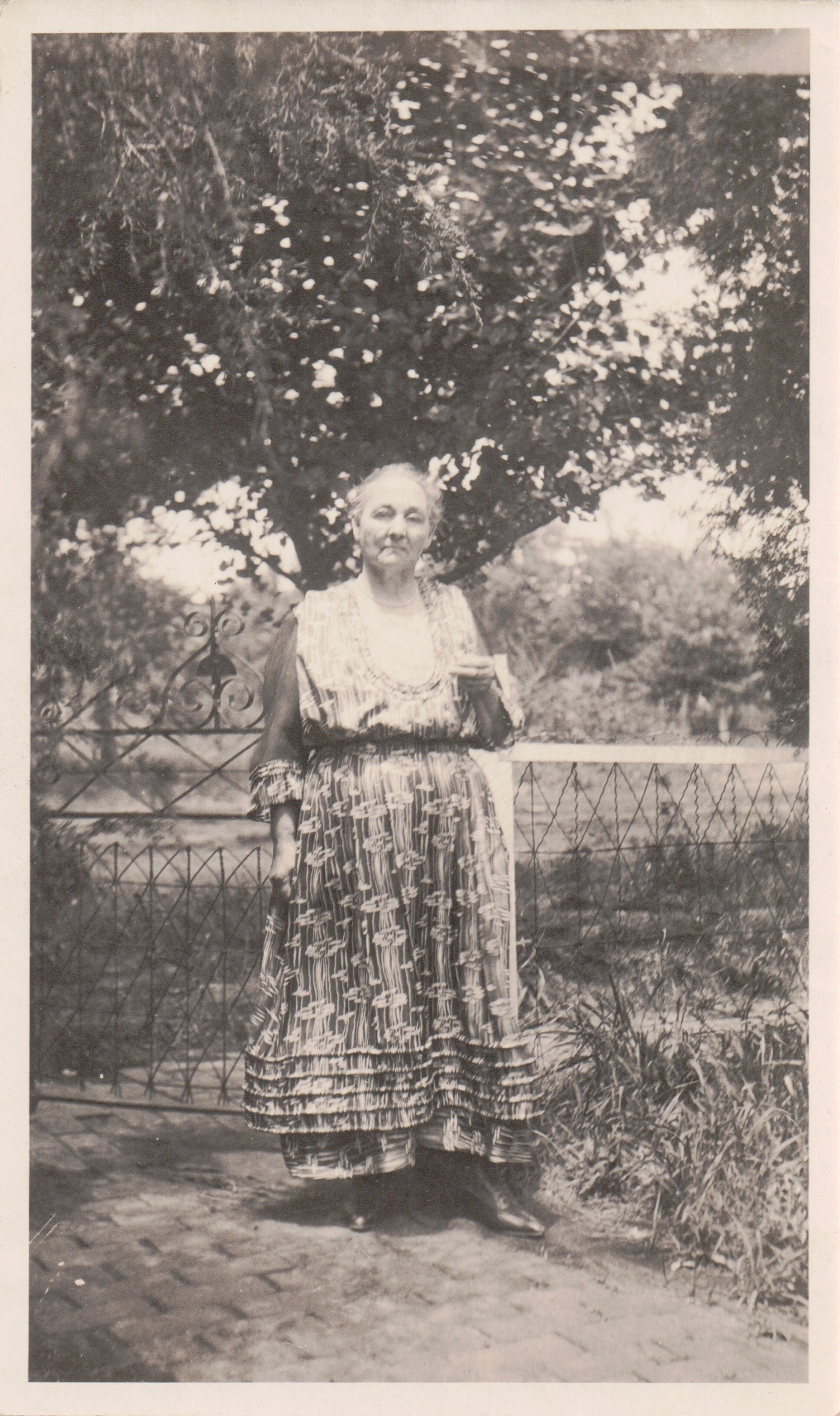
Elithan Davis “Bud” Hall with grandson Armond Beetch, Enid, Oklahoma Territory, circa 1905; digital image 2019, privately held by Iva Foster, 2024.

Elithan Davis “Bud” Hall did apparently recover from the grief and guilt he experienced at the loss of his brother-in-law and close friend. He went on to raise a family a family of four children and lived out his life on the Hall Homestead in Gypsum. A photograph of him as an older man with a grandchild by his side shows him with a kindly expression, and the laughter lines around his eyes make it easy to imagine him as a good-natured, fun-loving young man whose attempt at a joke went awry.

However, George’s young widow, Sarah, may never have fully recovered from the trauma of the loss of the young man she had married at the age of sixteen. Just twenty-three when she was widowed, she would remarry not once but three more times, with each marriage ending in divorce.

It is interesting that no account makes clear whose gun it was that was left loaded. A final report of the inquest held stated the following:

On Oct. 10, 1880, justice of the peace E.W. Mering was summoned to the home of E.D. Hall “near Frank Welkeson’s farm” to ascertain the circumstances stances of a man’s death. In the event that the county coroner could not attend an investigation (which turned out to be the case), Mering named six citizens to serve as jury: John C. Fahring, John M. Crumrine, Simeon Ellis, Jerome Swisher, D.C. Williams and M.M. Root.

The next day when the inquest was held at the Hall place, Mehring subpoenaed the following witnesses:  W. C. Jackson, Alonzo Gosso, Mrs. William Stahl, Mrs. E.D. Hall, Elisha Davidson and James Gaultney. All appeared to testify except Elisha Davidson, who was sick.

Witnesses revealed that George Fenton was shot in the chest by a double barreled shotgun at two in the afternoon of the previous day. The gun had been in the hands of E.D. Hall, Fenton’s brother-in-law. The shooting was ruled accidental.

Whether the double barreled shotgun in question belonged to Bud, George, or one of the witnesses—other neighbors and close kin—who were present at the Hall home that October afternoon is ultimately unknown, but as the gun was in Bud’s hands, he bore full responsibility for the accident.

Copyright © 2024 Melanie Frick. All Rights Reserved.

Continue reading

An Old Settler of Illinois

When Mary (Hall) Rhine, the wife of William Rhine, both of Washington County, Illinois, died on 20 May 1898 at the age of eighty-nine, she was the mother of fourteen, grandmother of thirty-one, great-grandmother of thirty-nine, and great-great-grandmother of four children. 

Mary is presumed to be the daughter of Isaac Hall (1776-1852) and sister of Jonathan, Isaac, and Elithan Hall, all of whom ultimately settled in Washington County, Illinois. Her identity—both as a Hall and as a member of this particular Hall family—remains unconfirmed, but there are compelling connections.

Mary was said to have been born in Montgomery County, Tennessee, in 1809, and married William Rhine circa 1825 in what is now Saline County, Illinois, where they spent the first years of their married life. Her presumed eldest brother, Jonathan, owned a neighboring parcel of land, and another neighbor, James Hampton, husband of Mary Elizabeth Hall, was believed to be kin. In 1832, William Rhine served with James Hampton’s Company in the Black Hawk War, enlisting in Gallatin County—as did Jonathan Hall, Mary’s presumed brother.

In the 1840s, William and Mary acquired land in what was known as Three Mile Prairie in Washington County. The first parcel purchased was located catercorner from land owned by Isaac Hall (whether this was Mary’s presumed father or brother is unknown) and the additional parcels that they purchased in the years to come were all located within the vicinity of land owned by Mary’s presumed brothers Jonathan, Isaac, and Elithan Hall. Worth note is that in 1868, following Elithan’s death, William Rhine received approximately ten dollars owed to him from his estate. Indeed, the Hall brothers, like Mary, all lived out the rest of their lives in Washington County, and she was not the only one to live to an advanced age; Isaac, too, lived well into his eighties and was said to have enjoyed long walks even in his later years. 

Rhine_Mary_Hall

Mary (Hall) Rhine, Washington County, Illinois, circa 1860; courtesy of the Nashville (Illinois) Public Library.

Even if it turns out that Mary was not a member of this Hall family, her obituary relates experiences that may have been common among southern Illinois settlers of the 1810s:

“Mrs. Rhine was one of our county’s and state’s oldest settlers, having come to the state with her parents, who settled in Salene [sic] county before Illinois was admitted to statehood. The relating of her experiences during the early days in this state would make interesting pages of history. She had seen the great state of Illinois in its natural and undeveloped state. She had witnessed the scalping of her playmates and neighbors by the unruly Indians when the settlers were compelled to live in forts as a protection against the Red Men.”

Mary and her family, of course, were among those whose westward movements displaced and antagonized local Indigenous communities. If she was indeed a daughter of Isaac Hall, it is estimated that she and her family remained in Tennessee at least until 1813, when Mary’s presumed brother Elithan was said to have been born there, and arrived in Illinois at some point before it achieved statehood in 1818. 

A number of Mary’s descendants appear as autosomal DNA matches to descendants of her presumed brothers Jonathan, Isaac, and Elithan Hall, lending further credibility to their connection. However, additional research is necessary to confirm their relationship and formally add to the Hall family story.

Copyright © 2021 Melanie Frick. All Rights Reserved.

Continue reading

A Birthday Celebration

Several days after Nancy (Stilley) Hall of Gypsum, Saline County, Kansas celebrated her seventieth birthday on 19 June 1889, a large crowd of family members and friends gathered to honor her.1 A warm account of the affair was printed in the Gypsum Advocate:

A Birthday Social

Last Saturday evening about the time the Sun was taking its good night leave, and later on, a good many persons were seen wending their way toward the west part of the city. The residence of E. D. Hall seemed to be the objective point. After about seventy persons had gathered there, consisting of the aged, the middleaged [sic], youths and children Mrs. Nancy Hall was congratulated on having reached the alloted [sic] years of three score and ten. She is still blessed with reasonably good health and clearness of mind. Mrs. Hall came to this Valley 20 years ago when there were but few settlers in it. She was a widow with 8 children, but two of them boys, aged 9 and 15 years, viz E. D. and John Hall. She located on a quarter section 4 miles south of this city with but one or two settlers in sight. The five daughters that came with her to Kansas, now all married and in good and comfortable circumstances, to wit; Mrs. Wm. Stahl, Mrs. McCance, Mrs. Hoffman, Mrs. Gaultney, and Mrs. Geo. Miller were present and most all of their children. Mrs. H. has 8 children, 33 grandchildren and 4 Great grand children. The other portion of the assembly was composed of members of the baptist church of which Mrs. H. has long been a member, and neighbors and acquaintances. Elder Stitt made an address very appropriate to the time and occasion. Several suitabl [sic] gifts were made Mrs. Hall and presented by Mr. Amos, who alluded to the fact that they came mostly from dutiful and grateful children who knew and appreciated her best. Mrs. Hall very feelingly expressed her thanks and gratitude for the evidence and indications of respect that had been shown her. A bountiful supper was served by the daughters and grand daughters. The baptist chior [sic] furnished good music and singing. The occasion was a pleasant one and will long be remembered, as celebrating the 70th birthday of Mrs. Nancy Hall.2

Pioneer Mother Memorial (Kansas City, Kansas) by Chris Murphy is licensed under CC BY-NC-ND 4.0.

Nancy had indeed ventured from Illinois to Kansas in 1869 as a fifty-year-old widow, and in 1872, she filed for a one hundred and sixty acre homestead nestled against that of the expansive cattle ranch of author and historical figure Frank Wilkeson.3 With the help of her children, she settled into life as a Kansas pioneer at her home near Hobbs Creek, where she farmed crops including wheat, corn, and oats and looked out from her homestead upon a view of the rolling plains.4 She was likely a charter member of the First Baptist Church of Gypsum, the choir of which provided musical entertainment at her birthday celebration.5

Nancy died nine years later due to an accidental fall from a buggy.6 The Gypsum Advocate reported at that time that “Grandma Hall” was “a general favorite with young and old.”7

Copyright © 2019 Melanie Frick. All Rights Reserved. Continue reading
The Unexpected Witness: An Application of a Woman Homesteader

I was intrigued when I learned that one of my ancestors had homesteaded as a widowed woman on the Kansas frontier. After reviewing a copy of her homestead application, I was further intrigued to find that, as fascinating as her experience as a homesteader must have been, the application itself contained clues to another story.

When Nancy (Stilley) Hall of Washington County, Illinois ventured to Kansas in 1869 at the age of fifty, she had her mind set on land.1 She had lost three husbands and would not marry again; land would provide the stability needed on the frontier. The Homestead Act of 1862 allowed any head of household over the age of twenty-one to claim one hundred and sixty acres, and women—single, divorced, or widowed—were therefore eligible.2

By the summer of 1872, having become familiar with the area, Nancy chose to settle in Gypsum Township, Saline County, Kansas.3 There, she claimed her quarter section of land and dutifully filed her homestead application at the Salina Land Office.4

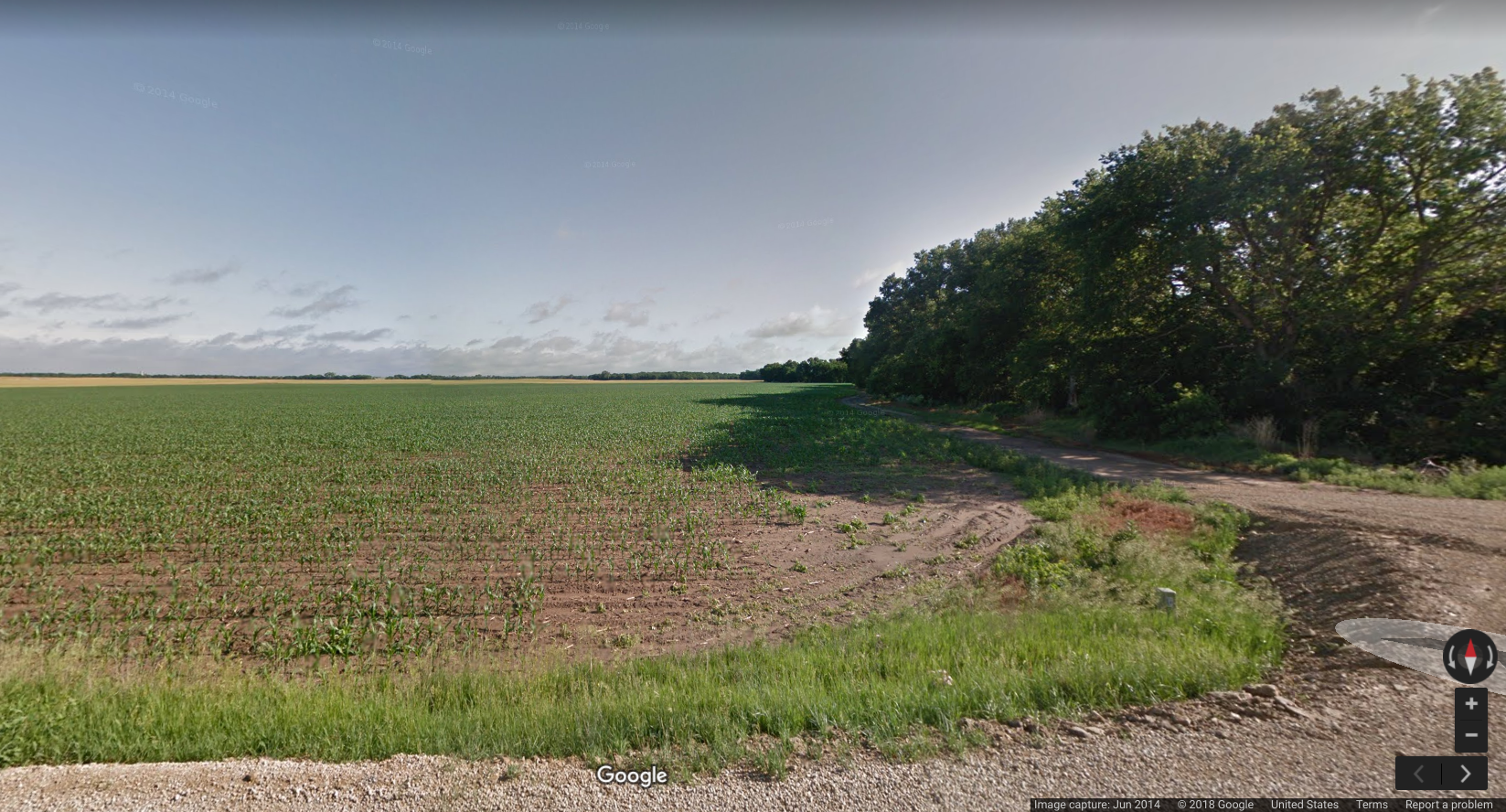
After reviewing a Saline county plat map courtesy of the Kansas Historical Society, I turned to Google Maps for a glimpse of Nancy’s former land, located along the winding Gypsum Creek:

Although just five years of residency were required for one to file the deed on a homestead, it was seven years before Nancy submitted her proof of residency.5 As was typical, this was provided in the form of testimony from Nancy as well as two witnesses.

On 27 May 1879, these two witnesses testified that Nancy Hall, by then sixty years of age, had resided upon this land for the past seven years and that she had made the necessary improvements thereon, including: “house stable granary well forest trees &c.”6 In addition, Nancy had cultivated fifty acres and had raised wheat, corn, and oats.7

Interestingly, the witnesses’ statements in their individual testimonies were so nearly identical that it begs the question of whether, despite the notation indicating that witness testimony must be taken separately, they might have testified at the same time. At the very least, they might have collaborated to ensure that their recollections matched.

But why might these witnesses have cared so much about providing flawless testimony?

The first witness, William Stahl, was Nancy’s son-in-law, who had married into the family in 1865.8 While he had claimed land of his own and did not share Nancy’s homestead, he still may have skirted the issue of his relationship to Nancy and his ties to the homestead when he stated that he had known Nancy for just ten years and that he had no interest in her claim.

The second witness, Elithan Davis Hall, was twenty-five years old and recently married.9 Notably, he was Nancy’s own son. However, when faced with the question, “Are you well acquainted with Nancy Hall the claimant in this case, and how long have you known her?” Elithan replied, “I am and have known her ten years.”10 Of course, Elithan had known his own mother for his entire life—not merely for the past decade! He also stated that he had no interest in her claim, when his labors certainly must have helped to bring the homestead to its success.

In fact, it seems quite likely that Nancy might have claimed the homestead with Elithan, her eldest son, in mind. Just eighteen in 1872, Elithan was not yet old enough to claim a homestead of his own—but he would certainly have been old enough to take the lead in clearing, tilling, and cultivating the land while his mother managed the household and gardens. Furthermore, unlike his younger siblings, Elithan would remain on the homestead after his marriage; as early as 1880, he was considered the head of household, with Nancy also residing in his home, and an 1884 plat map clearly named the residence on Nancy’s property as his own.11

While the witness statements provided by William Stahl and Elithan Davis Hall stretched the truth in terms of the particulars of their relationships to Nancy and her homestead, it seems unlikely that any truly nefarious deception was intended. Perhaps the guidelines were misunderstood, or perhaps no witnesses who were not also related to Nancy, whether by marriage or blood, were available to provide the statements. It seems possible that William and Elithan might have escorted Nancy to town and stepped in at the last minute in order to expedite the filing process.

Whatever the case, no obstacles were identified in this final paperwork, and the patent was successfully filed with the General Land Office on 29 April 1882.12

Copyright © 2018 Melanie Frick. All Rights Reserved.
Continue reading
Y-DNA and the Hall Family of the Colonial Carolinas

When confronted with a common surname and the patchy records of the post-colonial south, it’s all too easy to despair that a family line might never be conclusively traced. This is the scenario I’ve grappled with for years when faced with the vague details of the lives of my presumed fifth-great-grandfather, Isaac Hall, and his son, Elithan Hall. Both spent the later years of their lives in Washington County, Illinois, where Isaac died in 1852 and Elithan died in 1860.1 Their earlier years, however, were spent further south; Isaac was allegedly born in 1776 in Anson County, North Carolina,2 while Elithan was said to have been born in 1813 in Tennessee.3

As in the case of another elusive male ancestor, I knew that Y-DNA would be key in determining the origins of the Hall family. Family Tree DNA explains that as the Y chromosome “is passed almost unchanged from father to son,” it can be useful in determining the origins of a surname and can establish connections with cousins who share the same chromosome.4 I am descended from a daughter of Elithan Hall, so I turned to a direct male-line descendant of one of his sons, who, fortunately, was willing to submit his DNA sample per my request.

The Y-DNA results were more extensive than the results I’d received when pursuing the Hammond surname; clearly, a number of Halls are curious about their origins! In the Hall Families DNA Project, my cousin now has a number of matches who share the Y-DNA haplogroup E-M96 and trace their origins to the border region of colonial North Carolina and South Carolina. An e-mail exchange with several matches reinforced the idea that both DNA and the faint paper trail pointed to a connection.

Anson_County_North_Carolina

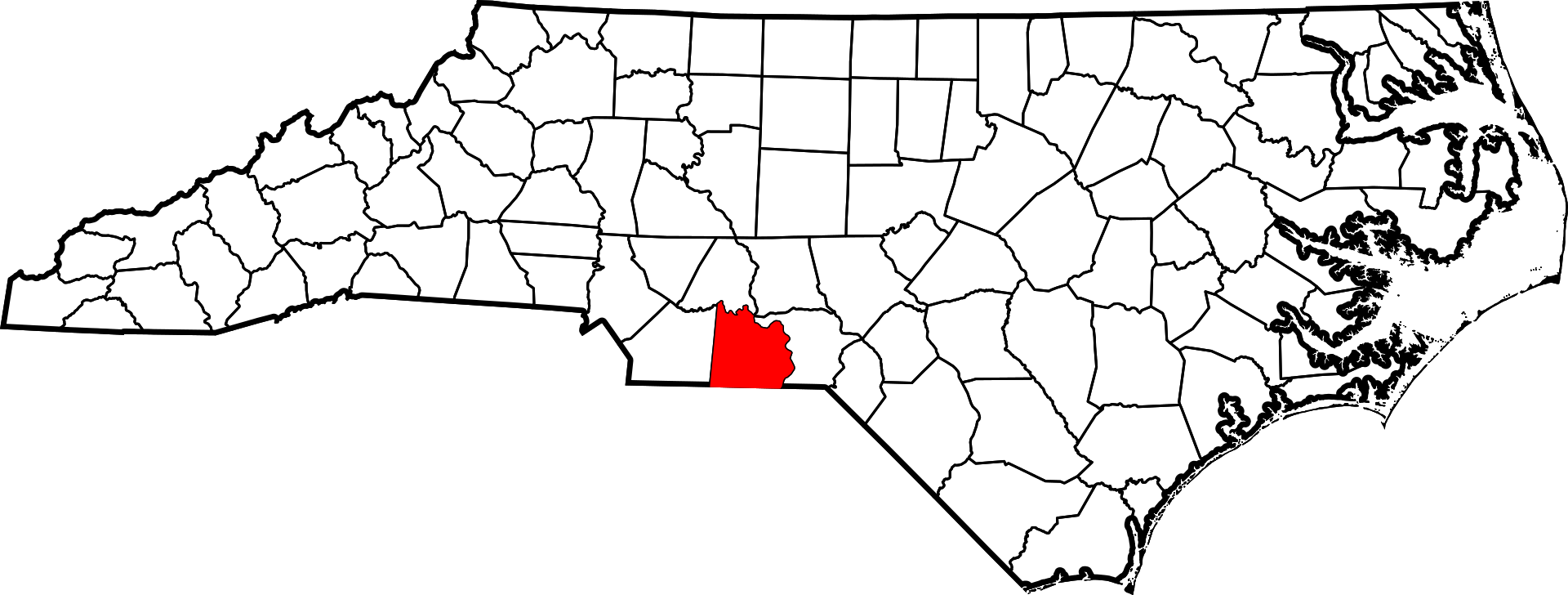
Anson County, North Carolina; Wikipedia, Public Domain. At the time of the birth of Isaac Hall in 1776, Anson County encompassed portions of several surrounding counties.

Although little is known about Isaac Hall’s early years in Anson County, North Carolina, I managed to uncover his affidavit for the Revolutionary War pension of one John Hall, who, like Isaac, also migrated from North Carolina to Illinois with a stopover in Tennessee. When called upon to provide an affidavit in 1847, Isaac, then seventy-one, recalled John’s return from the army “with his camp clothing on to wit a black ragged and greedy garment.”5 He also stated that he was present at John’s marriage, which took place around 1784.6 Both of these events occurred when Isaac was still a child, leading me to believe that the shared Hall surname between the men was no coincidence—surely they were related in some way, whether John was Isaac’s older brother, uncle, or perhaps a cousin. I was intrigued to see that a descendant of the same John Hall appeared as a match on Family Tree DNA, but at that point still wasn’t quite sure what to do with so much new information.

It was timely, then, when in February I learned that I was to be the recipient of a DNA analysis by Legacy Tree Genealogists, a prize generously provided for the Salt Lake Institute of Genealogy’s 2016 Tagline Contest. (I had shared that SLIG was “the perfect way to kick off the year on a genealogical high note,” and in more ways than one, it certainly was!) It took me no time at all to decide that the Hall family DNA would be ideal for the analysis, and the project was undertaken by genetic genealogist Paul Woodbury.

From the completed report, which I could hardly wait to receive, I was introduced to the concept of STRs, or “short tandem repeats,” a type of genetic mutation. According to the report, “Occasional mutations that are introduced in the Y-DNA help to distinguish different lineages, some of which are ethnically and geographically specific.”7 It was noted that my cousin’s DNA sample might share a mutation in particular with several other Hall DNA samples, suggesting a potential recent common ancestor who might be uncovered through recommended further, higher-level testing.8 In addition, by reviewing the lines of descent of other matches, Hall family roots in the Carolinas were confirmed along with suggested distant origins in the British Isles.9

The report also included a review of key matches and further suggestions to pursue the identity of the father of Isaac Hall.10 With so many new ideas and leads to follow, I look forward to learning more about how best to interpret and apply this wealth of information to the Hall family while attending the Southern California Genealogical Society Jamboree this week!

Copyright © 2016 Melanie Frick. All Rights Reserved.

Continue reading

A Goodly Bit of Romance

The newspaper headline must have brought a few chuckles: “OLD FOLKS HAVE ROMANCE.” The story continued, “Romance is not all reserved for young people, as the marriage of Isaac N. Holman, aged 70, of Decatur, Neb., to Mrs. Sarah E. Fenton, aged 51, of Springdale, in Sioux City, will testify. […] This is the third marriage for each of the contracting parties. Both are well along the avenue of life and to them the marriage represents good judgment as well as a goodly bit of romance. They have known each other a long time and the mutual admiration they have entertained has grown gradually until the marriage yesterday placed its happy seal upon their growing affection.” Following their marriage on 24 August 1908 at the home of the Reverend W. H. Montgomery of the Haddock Methodist Episcopal Church in Sioux City, Woodbury County, Iowa, the couple was to visit Omaha. They would settle in Decatur, Burt County, Nebraska, where Holman, “said to be quite well to do,” made his home.1

That evening, their story appeared in another Sioux City newspaper: “LOOKING FOR LAND HE FINDS HELPMATE.” This version of the story was written with a level of flowery detail that, while entertaining, I don’t quite trust:

“I.N. Holman, a wealthy retired farmer of Decatur, Neb., came to Sioux City several months ago on a land deal. At the office of a real estate dealer he met a charming black-eyed widow, Mrs. Sarah E. Fenton, who had chanced in there on business. When they were introduced, he immediately lost all interest in Sioux City property or any property for that matter, and devoted all his time to the widow. Holman is 70 years old, and he pressed his suit with such ardor that before he returned to Decatur he had made a contract for something which he wouldn’t trade for all the farms in Iowa, namely the attractive widow. Today he returned to close the deal, which he says is the best he ever made. A license was issued this afternoon, the bride giving her age as 51. They will be married this evening and after a two weeks’ wedding trip will make their home at Decatur. “Maybe people think we’re foolish,” said the bride, blushing like a school girl, “but we don’t, we’re too happy.”2

This is far from the whole story. First, there are, in fact, two stories presented by these competing news articles. Did the couple meet at the land office, or had they been acquainted for years? This we may never know for sure; it seems unlikely, but not impossible, that the couple had crossed paths before meeting in Sioux City. Second, the “attractive widow” most likely did not have the black eyes of Bess the landlord’s daughter, charming as the description may be.3 And was she even a widow? Well, yes and no. Her first husband, George W. Fenton, died tragically in 1880 when accidentally shot by her brother-in-law.4 Her second husband, however, was still alive and well at the time of her third marriage; Sarah had divorced John Hoffman in 1902 citing his drunkenness and death threats.5 However, it would have been far from unusual for a woman to claim widowhood over divorce.

SarahEHall

Sarah Ellen (Hall) Fenton Hoffman Holman Eklof, Iowa or Nebraska, ca. 1908; digital image 2001, privately held by Melanie Frick, 2015.

Finally, would Isaac and Sarah live happily ever after? Unfortunately not. Isaac was granted a divorce from Sarah in 1914;6 a probate petition filed by his son the previous year, while suggesting that Isaac “indulged in intoxicating liquors to excess” and was “changeable, forgetful, and stubborn,” also stated that “the amount of money demanded from him by his current wife annoyed him considerable.”7 Oh dear. Isaac did not remarry before his death in 1922,8 but Sarah would marry – and divorce – once more.9 She resumed the use of the Holman name and at the time of her death in 1930, she was referenced as the widow of Isaac Newton Holman. Her short-lived marriage to this “wealthy landowner” was, perhaps, her one claim to local fame and financial stability.10

Lesson learned? Never assume. I had assumed that because this was the couple’s third marriage, and because they married in a community with a population greater than thirty thousand, that no mention would be made of their marriage in the local newspaper. In fact, I didn’t bother to check until their names turned up in the Findmypast database featuring a newspaper from across the state, and then learned that more than one version of the story existed. As it turns out, you never know what details of your ancestor’s experience might have made a compelling story deemed worthy of reprint!

Copyright © 2015 Melanie Frick. All Rights Reserved.

Continue reading

The Proud Owners of a New Piano

You never know what might have made the news a century ago. In Iowa, for example, news might have been made when someone acquired a piano. Although mail-order catalogues like Sears, Roebuck & Company made owning a piano more affordable than ever thanks to convenient financing options,1 such a substantial purchase was still of great interest to those in rural communities and small towns across America.

These were the years before Victrolas became widespread.2 Pianos were a ready source of music and entertainment, and people of all ages might have enjoyed gathering at the home of a friend or family member with a piano for an evening of playing and singing.

pianoloc

“A Pleasant Evening at Home,” Prints & Photographs Online Catalog, Prints & Photographs Reading Room, Library of Congress, Washington, D.C. (http://www.loc.gov/pictures/item/90709337 : accessed 5 August 2015).

In the northwestern corner of Iowa, The Sibley Gazette reported on 24 May 1900:

John Hoffman and family are the proud owners of a new piano.3

And in the northeastern corner of the state, The Guttenberg Press reported on 25 June 1909:

Miss Roselyn Thoma is the happy and proud possessor of a new piano.4

John Hoffman was the second husband of Sarah Ellen Hall; married since 1883, they would undergo a tumultuous divorce in 1902. At the turn of the century, however, they were still married with a twenty-year-old daughter and a sixteen-year-old son at home.5 Their acquisition of a piano adds a bit of brightness to what was painted in their divorce proceedings as a rather dim time. Although Sarah led a difficult life, her granddaughter remembered that she had loved fine things; this piano was likely a prized possession.6 As she was said to be a religious woman, perhaps she enjoyed hymns played on the piano either by herself or her children.

Roselyn Thoma was the daughter of Fred and Matilda (Hammond) Thoma and was seventeen years of age in 1909.7 She was the last of four surviving children still at home, her younger sister having been lost to a diphtheria outbreak three years prior.8 Perhaps it was with a newfound appreciation to seize the moment that her parents supported such an extravagance for their daughter, or perhaps the same inheritance that had recently spurred them to purchase a farm made the purchase of a piano possible as well.9 Roselyn would marry two years later, and one can imagine that her piano might have accompanied her to her new home.10

Whether the Hoffman and Thoma families enjoyed idyllic moments crowded around their pianos à la Little Women or not, it is clear that the addition of a piano to a household in their humble Midwestern communities was worthy of note – and pride. However, even in these rural areas, it would be only a matter of time before new forms of entertainment overtook the novelty of owning a piano.

Copyright © 2015 Melanie Frick. All Rights Reserved.

Continue reading
Tombstone Tuesday: Nancy Stilley

Nancy Stilley was raised on the Illinois frontier, and died a pioneer in Kansas. From what little I know about her life, she’s a perfect example of a “Fearless Female” whose story should be shared in honor of National Women’s History Month.

nancy_stilley_hall

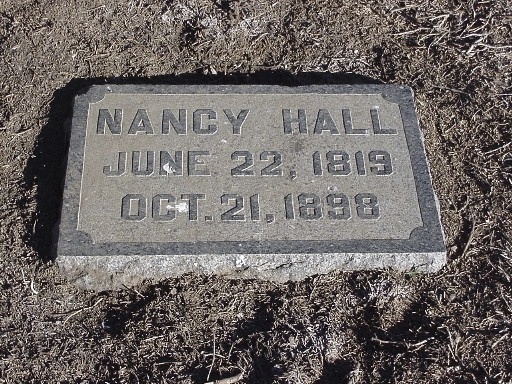
Grave of Nancy (Stilley) Holman Edwards Hall (1819-1898), Gypsum Cemetery, Gypsum, Saline County, Kansas, image date unknown, privately held by V.S.H. [personal information withheld], 2014.

According to her obituary, Nancy Stilley was born 19 June 1819 in Franklin County, Illinois.1 It’s likely that she never attended school,2 although she was said to have joined the Baptist church at the age of thirteen.3 Records suggest that she may have married as many as three times. Her first marriage took place in 1836; she married Thomas Holman of Hamilton County, Illinois.4 Her second marriage took place in 1843; she married Joseph Edwards of Washington County, Illinois.5 Her third and final marriage took place in 1847; she married Elithan Hall of Washington County, Illinois.6 This marriage, too, was short-lived. After her husband’s death in May of 1860,7 Nancy, still just forty years old, was left a widow with nine children at home.8 This time, she did not remarry.

Although it must have been difficult, Nancy seems to have managed her household and farm through the tumultuous years of the Civil War. Following the settlement of her husband’s estate in 1868,9 she relocated to Kansas with her children, including those who now had families of their own.10

By 1870, Nancy had settled in Solomon, Saline County, Kansas, where she held a respectable amount of real estate worth $1100 and personal property worth $600.11 Four children, between the ages of twelve and sixteen, were at home.12 Nancy was to remain in Kansas for the remainder of her life, eventually joining the household of her eldest son.13 She lived to the age of seventy-nine, her death the result of an unfortunate accident during what was likely a routine visit to her children and grandchildren:

“Last Friday morning, October 21, 1898, Mrs. T. G. McCance hitched a team to a buggy for the purpose of driving her mother, Mrs. Nancy Hall, to the residence of her son, E. L. McCance. Just as the ladies started the team suddenly turned the vehicle enough to throw the occupants to the ground. Mrs. Hall struck the ground with sufficient force to tear the flesh from one side of the face, break the cheek bone and inflict internal injuries, from which she died in a few hours.”14

Nancy was buried two days later, her burial attended “by a large number of friends and relatives,” in the Gypsum Cemetery in Gypsum, Saline County, Kansas.15

Continue reading

The FAN Principle: Finding Family in Southern Illinois

Isaac_Hall_Probate01

Washington County, Illinois, Isaac Hall probate file, Box 22, County Court; Illinois State Archives, Springfield.

Of course, it would have been too easy if Isaac Hall of Washington County, Illinois had named all of his surviving children in his last will and testament. Although probate records can be excellent resources for genealogists, they don’t always provide all of the details that one would hope. When Isaac dictated his wishes to two witnesses in January of 1852, he stated only that his “eldest son,” Jonathan Hall, was to receive all of his lands, goods, and chattels.1 He named this same son as the sole executor of his estate. Isaac made his mark, and went on to live less than two months more; his will was filed on 15 March 1852.2

Fortunately, there are other resources that provide clues as to who at least some of the other children of Isaac Hall may have been. Among them is the 1850 U.S. census for District 20, Washington County, Illinois, which counts three Hall households in a row. In the first lived Elathan Hall, thirty-seven, a farmer from Tennessee.3 In the second lived Isaac Hall, forty-five, also a farmer from Tennessee.4 In the third lived Jonathan Hall, fifty, a farmer who was a native of North Carolina,5 as was the only other adult male resident of the household, Isaac Hall, seventy-four.6 Although relationships between members of a household were not recorded in the 1850 census, based on the information provided, it seems logical to assume that the senior Isaac was Jonathan’s father, and that they were, in fact, the same Isaac and Jonathan of the aforementioned probate record. Their living arrangement suggests why Isaac may have felt so indebted to his eldest son when it came time to pen his will. Perhaps he had spent many years in the care of his son’s family.

And what of the younger Isaac Hall and Elathan Hall who lived next door, or, rather, on neighboring farms? No, they had not been born in North Carolina – but Tennessee falls between North Carolina and southern Illinois, making it a likely stop for a family that may have gradually migrated west. The thirteen-year age span between Jonathan, the younger Isaac, and Elithan suggests a possible sibling relationship. An exploration of additional records indicates that these families were closely linked for decades.

This is a perfect example of the importance of Cluster Research, also called the FAN Principle – an awareness of an ancestor’s Friends, Associates, and Neighbors – explored by Elizabeth Shown Mills.7 I should note that my dad stressed the importance of this principle to me in my research long before we knew that it had a name! How have you used the FAN Principle in your research?

Continue reading

Drunkenness, Death Threats, and a Divorce Petition

On the 5th of February 1902, Sarah Ellen (Hall) Hoffman of Ashton, Osceola County, Iowa, who was then forty-four years old, signed her name to a petition that she sincerely hoped would grant her a divorce. John Hoffman was her second husband; her first husband had died of an accidental gunshot wound, and it was now eighteen years since she had remarried. As detailed in the statement of facts prepared for the court by her attorney, O. J. Clark, this marriage was now in shambles.1

It was established that the plaintiff and the defendant had lived together since the time of their marriage – except recently, as “the defendant has been away from home considerable.”2 It was added, “At times he will work and earn money, but will not use any of his earnings to or for the support of the family, but will stay at home most of the time helping to eat up what the plaintiff and children earn.”3 Then, the chilling details of their marriage spilled forth:

“That the plaintiff has always conducted herself toward the defendant as a loving and dutiful wife, but that the defendant, disregarding his duties towards your petitioner, has always been abusive and ugly towards her, and of late years has become brutally coarse, violent and vulgar towards your petitioner, often calling her the most vile names in the presence of her children and so does without any cause therefore, often striking, kicking and otherwise abusing your petitioner, without cause, often leaving black and blue marks on the person of your petitioner for weeks at a time as the result thereof. That at times the defendant, without cause, threatens to kill your petitioner, threatens to put a hole through your petitioner’s body, threatens to cut her heart out and to kill your petitioner with a knife. That on one occasion said defendant attempted to carry out his threat of killing your petitioner with a butcher knife, and attacked her therewith, when her daughter in attempting to prevent defendant’s harming your petitioner, received the blow with the knife herself on the hand, cutting the cord to one of her fingers off and otherwise injuring her hand, so that she has very little use of said finger, and thus, to that extent has made her a cripple for life. That the threats thus made, the kicking and striking are of very frequent occurrence when he is at home, that he sleeps with his clothes on, and at times in the night will begin his abuse of your petitioner without cause, and threaten to kill her with his knife, and will begin to open and shut his knife so that the plaintiff can hear it click and thus frighten her and worry her all night at a time.”4

OsceolaCountyIowaDivorce1902

Osceola County, Iowa, Circuit Court File 3036, Sarah E. Hoffman v. John Hoffman, for “Petition in Equity,” 20 March 1902; Clerk of District Court, Sibley. The surname Hoffman appeared in this text as Huffman, but in some instances the “u” was overwritten with an “o.” Thus, I have transcribed the name as Hoffman.

In recent years, the defendant had become “addicted to the use of intoxicating liquors, and is an habitual drunkard, which habit he has acquired since their said marriage.”5 The statement continued, “That the plaintiff’s health has become undermined and broken, and if this treatment continues her health will give out entirely and she fears she will die there from – if the defendant does not in fact kill her outright.”6 It’s truly appalling to think what my third great-grandmother must have endured, and it’s to her credit that she had the strength to initiate a divorce at this time.

It would be interesting to learn what grounds for divorce were required in Iowa in 1902; apparently, in this case, habitual drunkenness, horrific abuse, and failure to provide support were sufficient. The divorce was granted in March of that year, at which time Sarah received custody of the couple’s teenage son, possession of the kitchen and household furniture, a return to her former name, and, most importantly, a chance for a better life.7

Continue reading