Category Archives: Uncategorized

Disturbing the Peace: A Skirmish at a Secret Society

Two days after the birth of his second child, Henry Joseph Adam of Sioux City, Woodbury County, Iowa got himself into a scuffle. On 26 August 1913, the Sioux City Journal reported:

After the Goat, Maybe

H. J. Adams [sic], 218 Market street, was taken into custody at 10 o’clock last night by Patrolman William Dempsey, who declared that Adams tride [sic] to break up a lodge meeting in a hall near Fifth and Douglas streets. Adams said that trouble started when he forgot the password. When the police arrived at the scene a battle was being waged between Adams and the other lodge members. He was charged with disturbing the peace.1

Henry, a carpenter by trade who was at that time thirty-two years old, was slight of build and no more than five feet five inches tall.2 Any further details of his encounter with the lodge members are unknown, including the identity of the lodge itself. The 1912 Sioux City Directory lists a number of “secret societies,” also known as fraternal organizations, located at or near Fifth and Douglas streets. The night of Henry’s encounter was a Monday, and assuming the locations and meeting times did not change between 1911, when the directory was printed, and August 1913, the only lodge meeting held on Monday nights at Fifth and Douglas streets was the Improved Order of Red Men.3 Why Henry was desperate to gain entrance to the meeting is anyone’s guess; perhaps he had a prior conflict with the organization, or perhaps he simply stumbled upon the meeting when out for a night of carousing away from the squalls of a newborn baby.

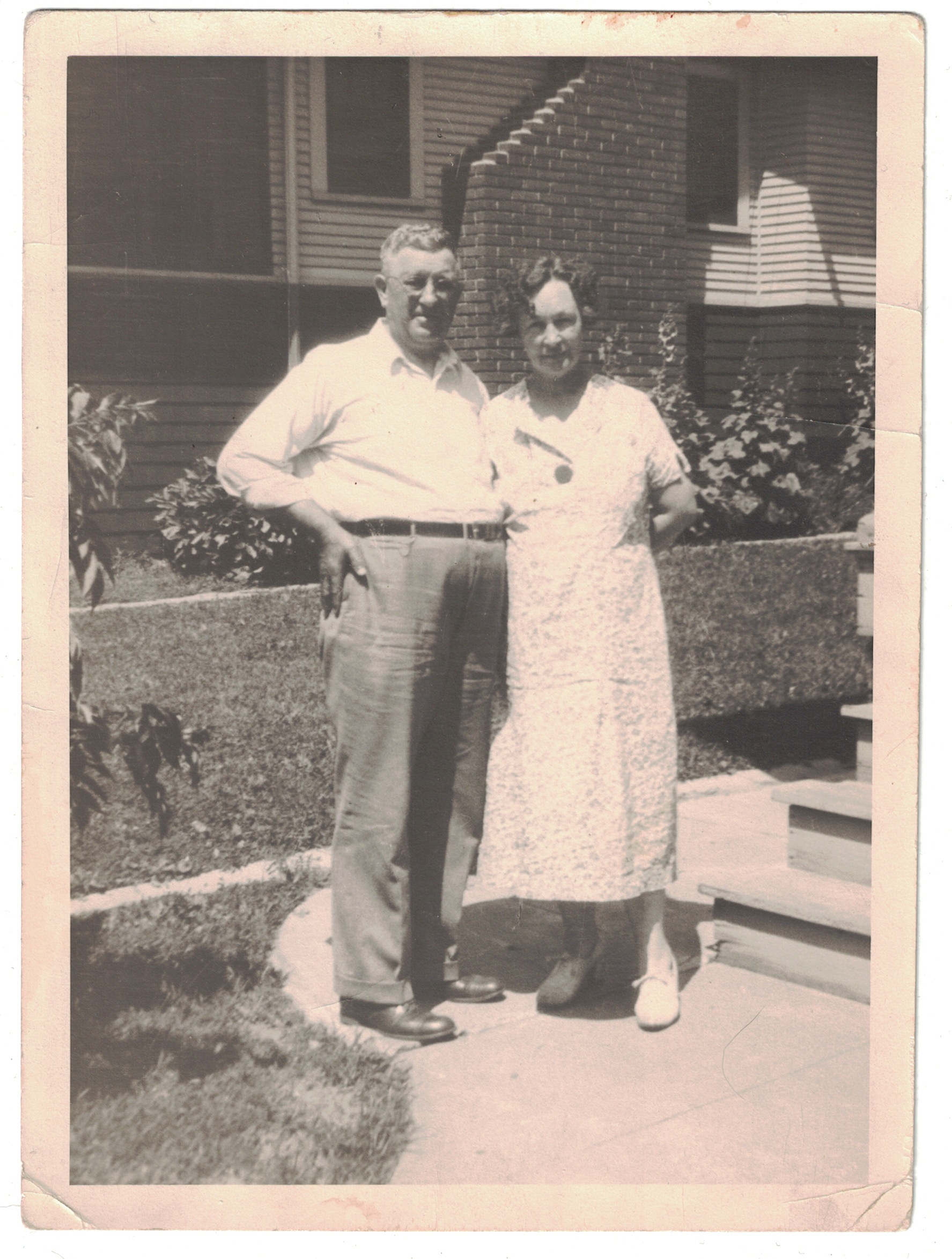
From left: Melanie (Lutz) Adam, son Gerald Joseph Adam, Henry Joseph Adam, and son Leon Francis Adam, Sioux City, Woodbury County, Iowa, circa 1916; digital image 2010, privately held by Melanie Frick, 2019.

In any case, however, Henry was let off easy. A newspaper headline the next day announced “LENIENCY FOR HUSBAND,” and the subheading stated: “Wife Recently Became Mother, and Man Gets Freedom.” It was reported that Henry had been released the previous day out of “sympathy toward the wife.”4

Henry’s wife of almost eight years, Melanie Veronica (Lutz) Adam, must have been sincerely embarrassed by this turn of events, particularly as she was an upstanding member of a fraternal organization herself. Both Henry and Melanie were also active members of Sioux City’s Saint Jean Baptiste Catholic Church, not to mention the parents of two young children.5 However, if no news—meaning no more headlines—truly meant good news, it seems that Henry may have been able to avoid further trouble with the law for many years to come. As for whether he ever found a place within one of Sioux City’s secret societies, he did, in fact, with the Knights of Columbus.6

Copyright © 2019 Melanie Frick. All Rights Reserved.
Continue reading

A Danish Marriage in Sioux City

It was 09 December 1909 when Jens Jacob “James” Walsted and Kathrine Christensen were married by Reverend Julius A. Larson of the Danish Evangelical Lutheran Church in Sioux City, Woodbury County, Iowa.1 Both James and Kathrine had been born in Denmark; both had left their native country several years prior, James in 1902 and Kathrine in 1906.2 At the time of their marriage, James was twenty-nine years old and Kathrine was twenty-three.3

Sioux City’s sole Danish church, located at 1113 12th Street, was organized in 1890, and met in a former Norwegian Lutheran Church that was moved to this site in 1892.4 While what may well be this original building, a modest one-story frame structure situated in a residential neighborhood, still stands to this day, it is now the Iglesia de Dios Evangelio Completo Pentecostes. At the time that James and Kathrine were married, however, it was home to a congregation of nearly two hundred and sixty Danish Lutherans, and it seems quite likely that it was through this immigrant community that James and Kathrine had the opportunity to meet.5 There is no known account of their marriage, nor any known photographs.

The couple settled in Sioux City, where in 1910, within a few months of their marriage, they could be found rooming at a property on the corner of 7th and Pearl Streets in downtown Sioux City, a location that is now a parking lot across the street from a children’s museum.6 James worked as a bricklayer, and family lore suggests that he may have helped lay the brick for St. Boniface Catholic Church at this time.7 Kathrine, who before her marriage had been a servant at a house that stood on what is now the campus of Bishop Heelan Catholic High School, was at home.8 The couple’s first child, Roy Louis Christian, would be born in 1911.9

Kathrine (Christensen) Walsted and son Roy Walsted, Sioux City, Iowa, 1911; digital image 2010, privately held by Melanie Frick, 2018.

The congregation of the Danish Evangelical Lutheran Church eventually outgrew their space on 12th Street, and in 1922 a new church, located at 1924 Jones Street, was dedicated.10 In 1930, the church was renamed Our Savior’s Lutheran Church, and within a few years, Danish language services ceased.11 Some seventy years later, the church once again introduced bilingual services, this time in Spanish, but soon after, in 2009, the church closed its doors.12

At the time that James and Kathrine married, Sioux City’s population was nearly forty-eight thousand, and included a diverse immigrant population represented in its many foreign-language churches.13 For recent immigrants James and Kathrine, it must have been a great comfort to find there a close-knit Danish community that shared their native language and cultural heritage.

Copyright © 2018 Melanie Frick. All Rights Reserved.
Continue reading

The Curious Case of Alfred Adam

In the fall of 1895, just a year after his older brother died as a result of epilepsy, Alfred Adam collapsed on the street in the midst of a seizure.1 Twenty-two at the time, Alfred, the son of Timothy and Odile (Millette) Adam, was an employee of the wholesale grocer Tolerton & Stetson in Sioux City, Woodbury County, Iowa.2 The Sioux City Journal reported the following:

“Fred Adams, a young man in the employ of Tolerton & Stetson, fell in Water street last night in what at first appeared to be an epileptic fit. Symptoms of hydrophobia soon developed and he had the actions of a dog attacked with the rabies. He barked and snapped and was in great agony. It took the combined strength of four men to hold him. The fit lasted almost an hour. The sufferer was taken to the police station and placed in a cell. He finally became calm and said he was bit by a dog thirteen years ago. He believed the fit was the result of that bite. When he talked Mr. Adams seemed to be all right.”3

It of course seems highly improbable that a dog bite more than a decade prior was the reason for Alfred’s “fit,” particularly as his own brother had been similarly afflicted with seizures. Indeed, epilepsy is known today to have a genetic link. However, Alfred may have had good reason to want to downplay this incident: his brother was committed to an asylum as a young adult and died at the age of twenty-five. Unlike his brother, Alfred seemed able to live out a normal life.

Alfred G. “Fred” Adam, Des Moines, Iowa, 1898; image privately held by Jeanette Borich, 2018.

In May of 1898, shortly after the outbreak of the Spanish-American War, Alfred apparently felt well enough to volunteer to serve in Company H of the 52nd Iowa Volunteer Infantry.4 In a portrait that was likely taken shortly after he mustered in at Camp McKinley, which was located at the Iowa State Fairgrounds in Des Moines, he posed proudly in uniform, nearly dwarfed by his musket. Alfred saw no action during the course of the three-month conflict; after time spent stationed in both Des Moines and in Chickamauga, Georgia, the 52nd Iowa Volunteer Infantry was mustered out of service in October of that year.5

His brief time in service, however, may have sparked feelings of wanderlust, as his whereabouts for much of his thirties are unknown. Notes in the margins of his mother’s information card for the 1905 Iowa Census suggest that he headed west to Seattle in 1903, but no more than that is known.6 After eventually resettling in Sioux City, he was employed for many years as a freight checker for the Chicago and North Western Railroad.7

At the age of forty-seven—although he claimed to be fifty—Alfred married Margaret Nelson, a widow with two teenage daughters.8 He is not known to have had any children of his own. Two years after his marriage, in 1923, Alfred filed a patent for an electronic swivel connection, a notable accomplishment for a man who had only attended school through the third grade.9 His application read in part:

“My present invention has for its objects the production of an improved electrical swivel connection adapted to be interposed in a multiple electrical conductor cord, as a telephone or lamp cord to effectually prevent such cord from twisting upon itself and yet form a perfect electrical connection of low resistance.

Furthermore, the invention contemplates a device of this class which is comparatively inexpensive in construction and to and from which the cord conductors may be readily attached and detached.”10

Despite this accomplishment, however, when asked years later about their late uncle Alfred, it was his Springfield rifle that his nephews remembered most.11

Copyright © 2018 Melanie Frick. All Rights Reserved.
Continue reading

Prairie Teacher

“Oh, what a work we teachers have in the molding of the lives of those little ones,” wrote Andrea Nelson in her diary on an autumn evening in 1918.1 At the age of twenty-one, she had just begun her third term as a teacher in southeastern South Dakota.2 She took great delight in her fourteen students, who, she noted, were “in general a bright talkative set.”3 This was her first term at Prairie School District 9, located in Mission Hill, a rural community near the town of Yankton.4

Andrea Mathilda Nelson was born on 31 December 1896, the daughter of Danish immigrants Fred and Christina (Schmidt) Nelson.5 Raised on a farm just west of Yankton, Andrea was the fourth child of nine.6 After completing her grammar school education at a one-room schoolhouse, Andrea, along with her sisters, succeeded in receiving teaching certification from the Southern State Normal School located in nearby Springfield, South Dakota.7 Andrea taught first in Turkey Valley, then at the Dewey School near Lesterville, and finally in Mission Hill, where she was conveniently able to board with her elder sister, Anna, and her husband, Jim.8

With the freedom provided by a small class size and a rural school district, Andrea enjoyed and recorded many memorable moments with her students: she took them on noontime walks to the nearby molasses mill, joined in on games at recess (“Pump Pump Pull Away” and “Ruth and Jacob”), and received invitations to visit them at their homes.9 One evening, she wrote, “Shortly before recess I excused Tim and Royal in order that they might go chase Ficke’s cows out of the nearby cornfield. They came back at recess with two watermelons which Royal brought from home and which we feasted on together.”10

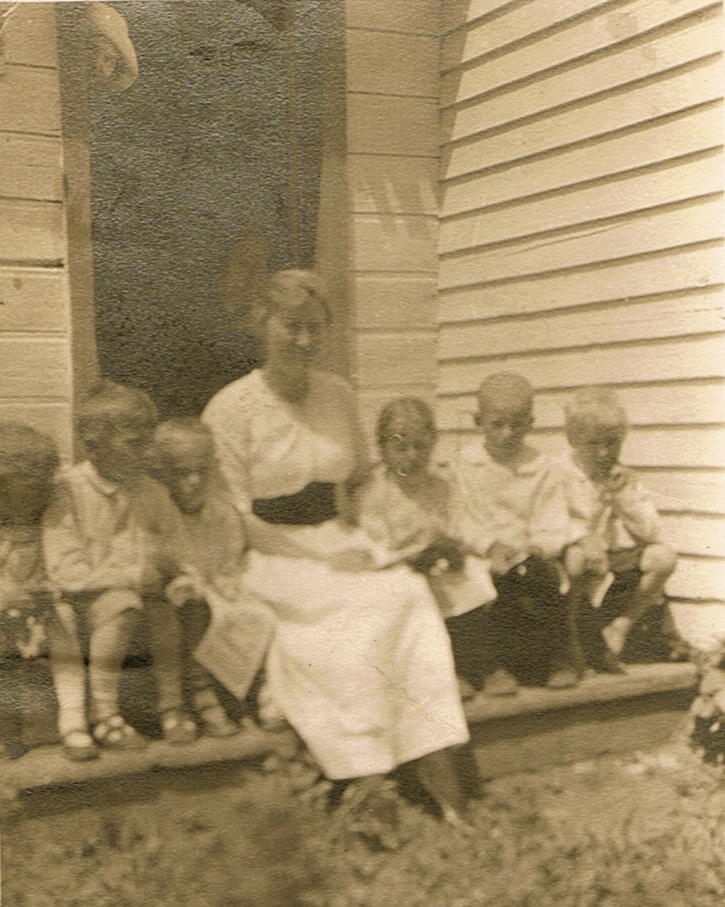
Andrea Nelson at a schoolhouse with her students, Yankton County, South Dakota, ca. 1916-1918; digital image 2012, privately held by Melanie Frick, 2018.

Fond of the outdoors herself, she also recognized its importance to children, even offering an early dismissal one “very fine day.”11 On another occasion, she wrote, “A very beautiful calm autumnal day. But nine at school. We had our drawing lesson outside. At recess the children earnestly requested me to permit them to recite and study outside the remaining hour and fifteen minutes. I consented after which they gleefully clapped their hands. The shade of one tree served as study room while that of another nearby took the place of recitation room. The children did not abuse their privilege. As a result we all fully enjoyed school in the fine October out of doors.”12

The next day, still taking advantage of the autumn weather, she wrote, “After school I hied me to the open. There I helped Jim pick potatoes for about half an hour. He said that I broke a schoolmam’s reputation in taking up such work after a day at school. I replied that he could count on me for doing things out of the ordinary for those in our profession.”13

In late September, Andrea wrote, “Think Spanish Influenza is going about the neighborhood. Only eleven at school.”14 Before long, the number of students in her class dwindled still further as the influenza continued to spread. In early October, just a month into the school year, Andrea recorded in her diary, “Only six at school again. […] I hardly feel that I’m earning my $4.25 per day these days.”15

Tragically, it would be only a matter of time before Andrea was struck with influenza herself, and the final pages of her diary are left blank. Exactly one month after the unexpected death of her father, Andrea died on 28 November 1918 while a patient at St. Bernard’s Hospital in Council Bluffs, Pottawattamie County, Iowa.16 Her younger sister, Helena, a student at Springfield Normal School, took over her teaching position at Prairie School District 9 and completed the sorrow-filled school term with Andrea’s students.17

Copyright © 2018 Melanie Frick. All Rights Reserved.
Continue reading

The Unexpected Witness: An Application of a Woman Homesteader

I was intrigued when I learned that one of my ancestors had homesteaded as a widowed woman on the Kansas frontier. After reviewing a copy of her homestead application, I was further intrigued to find that, as fascinating as her experience as a homesteader must have been, the application itself contained clues to another story.

When Nancy (Stilley) Hall of Washington County, Illinois ventured to Kansas in 1869 at the age of fifty, she had her mind set on land.1 She had lost three husbands and would not marry again; land would provide the stability needed on the frontier. The Homestead Act of 1862 allowed any head of household over the age of twenty-one to claim one hundred and sixty acres, and women—single, divorced, or widowed—were therefore eligible.2

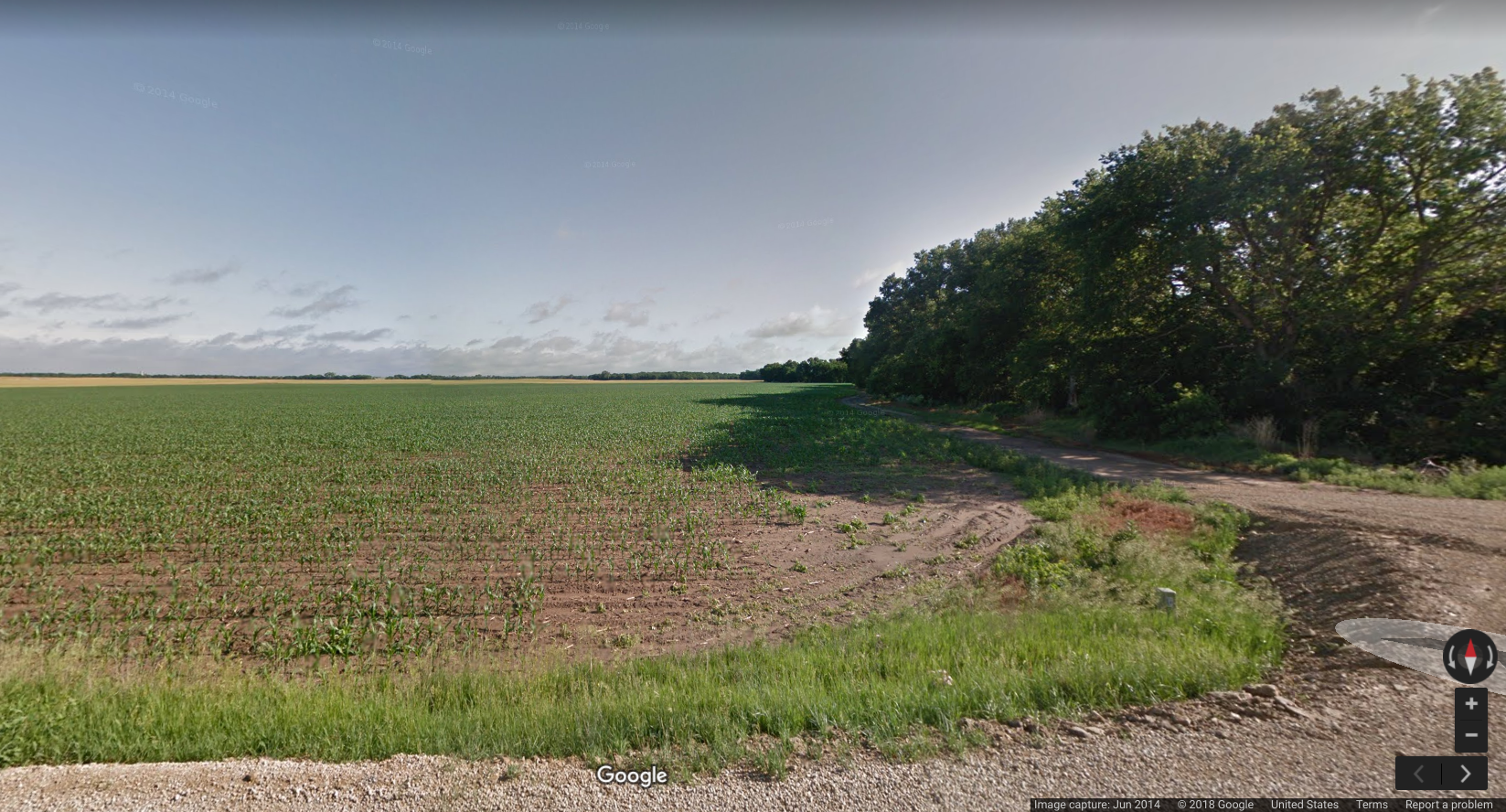
By the summer of 1872, having become familiar with the area, Nancy chose to settle in Gypsum Township, Saline County, Kansas.3 There, she claimed her quarter section of land and dutifully filed her homestead application at the Salina Land Office.4

After reviewing a Saline county plat map courtesy of the Kansas Historical Society, I turned to Google Maps for a glimpse of Nancy’s former land, located along the winding Gypsum Creek:

Although just five years of residency were required for one to file the deed on a homestead, it was seven years before Nancy submitted her proof of residency.5 As was typical, this was provided in the form of testimony from Nancy as well as two witnesses.

On 27 May 1879, these two witnesses testified that Nancy Hall, by then sixty years of age, had resided upon this land for the past seven years and that she had made the necessary improvements thereon, including: “house stable granary well forest trees &c.”6 In addition, Nancy had cultivated fifty acres and had raised wheat, corn, and oats.7

Interestingly, the witnesses’ statements in their individual testimonies were so nearly identical that it begs the question of whether, despite the notation indicating that witness testimony must be taken separately, they might have testified at the same time. At the very least, they might have collaborated to ensure that their recollections matched.

But why might these witnesses have cared so much about providing flawless testimony?

The first witness, William Stahl, was Nancy’s son-in-law, who had married into the family in 1865.8 While he had claimed land of his own and did not share Nancy’s homestead, he still may have skirted the issue of his relationship to Nancy and his ties to the homestead when he stated that he had known Nancy for just ten years and that he had no interest in her claim.

The second witness, Elithan Davis Hall, was twenty-five years old and recently married.9 Notably, he was Nancy’s own son. However, when faced with the question, “Are you well acquainted with Nancy Hall the claimant in this case, and how long have you known her?” Elithan replied, “I am and have known her ten years.”10 Of course, Elithan had known his own mother for his entire life—not merely for the past decade! He also stated that he had no interest in her claim, when his labors certainly must have helped to bring the homestead to its success.

In fact, it seems quite likely that Nancy might have claimed the homestead with Elithan, her eldest son, in mind. Just eighteen in 1872, Elithan was not yet old enough to claim a homestead of his own—but he would certainly have been old enough to take the lead in clearing, tilling, and cultivating the land while his mother managed the household and gardens. Furthermore, unlike his younger siblings, Elithan would remain on the homestead after his marriage; as early as 1880, he was considered the head of household, with Nancy also residing in his home, and an 1884 plat map clearly named the residence on Nancy’s property as his own.11

While the witness statements provided by William Stahl and Elithan Davis Hall stretched the truth in terms of the particulars of their relationships to Nancy and her homestead, it seems unlikely that any truly nefarious deception was intended. Perhaps the guidelines were misunderstood, or perhaps no witnesses who were not also related to Nancy, whether by marriage or blood, were available to provide the statements. It seems possible that William and Elithan might have escorted Nancy to town and stepped in at the last minute in order to expedite the filing process.

Whatever the case, no obstacles were identified in this final paperwork, and the patent was successfully filed with the General Land Office on 29 April 1882.12

Copyright © 2018 Melanie Frick. All Rights Reserved.
Continue reading

Johann Wiese and a DNA Connection

Johann Wiese of Mecklenburg-Vorpommern, Germany was sixty-five years old and a widower when he boarded the Borussia in Hamburg on 31 October 1868.1 He traveled with Caroline Wiese, twenty, as well as with a young man whom Caroline would marry within months of their arrival in America.2 All named Wendisch Baggendorf, a landed estate located near the town of Grimmen in Mecklenburg-Vorpommern, as their place of origin.3

Interestingly, one day later, several other Wieses departed from Hamburg: Carl Wiese, twenty-three, with his wife, both also of Wendisch Baggendorf, and Joachim Wiese, twenty-seven, with his wife and child.4 They resided in Barkow, an estate located near modern-day Klevenow, which is only a few miles from Wendisch Baggendorf.5 Both Carl and Joachim and their families traveled aboard the Electric, which, like the Borussia, was bound for New York.6

“Kirche in Kirche Baggendorf,” 2009, Kirche Baggendorf (near Wendisch Baggendorf), Mecklenburg-Vorpommern, Germany; Wikimedia Commons, copyright Klugschnacker.

I might not have noted the connection between the Wieses who left Hamburg for New York one day apart if it were not for spotting several interesting member matches within the AncestryDNA results for my grandmother, the great-granddaughter of Joachim Wiese. Each of these matches named Caroline Wiese as a direct ancestor, which led me to the ship manifest that revealed that Caroline had traveled with a Johann Wiese of an appropriate age to be her father; appropriate, too, that a father would accompany his yet-unmarried daughter overseas.

Caroline, as stated, married shortly after her arrival in America; she and Gustav Beth were wed on 10 January 1869 in Dundee, Kane County, Illinois.7 Carl and Joachim Wiese, on the other hand, both settled in Chicago’s 15th Ward with their families.8 While Johann Wiese has not been located in the 1870 or 1880 censuses, and does not appear in the households of Caroline, Carl, or Joachim, it is possible he was simply not counted in the census if, for example, he was en route to the home of another child and was missed by the census enumerator, or if a neighbor provided information about the family to the census enumerator and failed to mention him.

Cook County, Illinois, death certificate no. 28339, John Wiese; Cook County Clerk, Chicago.

Ultimately, it appears Johann Wiese spent the final fifteen years of his life in Illinois, although thus far little is known about how he spent those years.9 Similarly, little is known about his life in Pomerania; records note only that he was a laborer, and as serfdom was abolished in the area in 1820, he was perhaps contracted to work on an estate in Wendisch Baggendorf or the vicinity.10

According to his death record, he died on 02 August 1883 at 144 Newton Street in Chicago at the age of eighty.11 His death was attributed to old age.12 Intriguingly, Carl Wiese resided at this address, further strengthening the potential of a connection beyond their shared Wendisch Baggendorf origins and their emigration one day apart.13 It seems logical to assume that Johann Wiese might have been cared for in his last days by his son.

Johann Wiese is buried in Chicago’s Graceland Cemetery; today, while the location of his grave has been identified, it is unmarked.14

Copyright © 2017 Melanie Frick. All Rights Reserved.
Continue reading

The Royal Neighbors of America

When Melanie (Lutz) Adam of Sioux City, Woodbury County, Iowa became a member of her local chapter of the Royal Neighbors of America as a newlywed in 1906,1 she could not have known how much her role as a Neighbor, as members called themselves, would define her adult life.

Founded in 1888 as a social organization, the Royal Neighbors of America incorporated as a fraternal benefit society in 1895 and became known as one of the nation’s first insurers of women.2 Following the 1906 San Francisco earthquake, the Royal Neighbors of America developed a disaster aid program,3 and perhaps it was hearing about these worthy efforts that encouraged twenty-two year old Melanie to join later that year.

Melanie (Lutz) Adam, in hat with dark sash seated center left, on a local outing with the Royal Neighbors of America, Sioux City, Woodbury County, Iowa, 1916; digital image 2010, privately held by Melanie Frick, 2017.

Melanie was first a member of the Evening Star Camp before transferring to Sioux City’s Twilight Camp #6674.4 In 1922, she began her first term as oracle (leader) of the Twilight Camp, a position she held for nine years, and in 1925 began work as a field representative.5 She traveled frequently throughout northwestern Iowa as a life insurance agent, which provided a welcome source of income—particularly when her husband was unable to find steady work as a carpenter and after his death in 1944.6 Melanie retired as District Deputy in 1959, having served a total of fifty-three years with the Royal Neighbors of America.7 Upon the occasion of her retirement, she was honored with a speech, special guests, and the presentation of a scrapbook, “This is Your Life,” assembled by her colleagues.8

Melanie (Lutz) Adam at Royal Neighbors of America retirement, Sioux City, Woodbury County, Iowa, 1959; digital image 2017, privately held by Melanie Frick, 2017.

From her earliest years with the organization, Melanie found a strong circle of female friends among her fellow Neighbors, and photographs showcase countless gatherings, both formal and informal. Called “Mala” by those closest to her,9 notes in her retirement scrapbook call up a number of lighthearted memories within the organization as well as glowing praise for her work:

“You are to be congratulated […] for having accomplished, in good measure, what every person who does much thinking so very much wants: That is, to be remembered for something good they have done. Could you ask for more than – At the end of a cold, snowy day of driving in Monona County, as you drove home late and tired, to know that it had been you who had guided and influenced a young family in the start of a plan that has materially helped to educate their fine children? […] And perhaps that same cold day you had been responsible for the protection that later was the means of keeping together in the home a young mother with her children; because you had urged the young father that night to protect his family with Royal Neighbor insurance.
“We could look into many homes in Sioux City and the counties around, where you find Neighbors to bless you for the little extra you urged them to save. This little, now added to their Social Security, makes the difference between a bare existence and many of the good things of life.
“Perhaps many remember the good times at meetings and conventions and Royal Neighbor trips together. All that has been enjoyable and a happy way of life. And when you can add to it the sure knowledge that you can be remembered in so many places for something truly good, that you have done, you can say with certainty that yours has been a most worthwhile life as a Royal Neighbor Deputy.”10 

The Royal Neighbors of America remains an organization with a rich tradition, and in addition to the scrapbook received upon her retirement, Melanie tucked away a number of other mementos of her time with the organization. One, a book, Rituals for Local Camps, details the many ceremonial aspects of the organization and also notes the tenets of faith, endurance, courage, modesty, and unselfishness upheld by its members.11 As a champion for women and children, the Royals Neighbors of America was known also for their support of the suffragette movement, and Melanie may well have taken part in local efforts to secure the right of women to vote.12

Although enrollment has dwindled in Sioux City, the Royal Neighbors of America remains active nationwide today, a fact that would certainly have pleased Melanie who had a profound appreciation for the friendships, leadership experience, and career opportunities she enjoyed during more than half a century as a Neighbor.

Copyright © 2017 Melanie Frick. All Rights Reserved.
Continue reading

The Thoma Store: Scribner’s Favorite Trading Place

George Hiram Thoma was not the first in his family to open a general store. Decades before, his grandfather, a Bavarian immigrant, had operated a country store in northeastern Iowa, and perhaps it was stories of his success that inspired George to pursue this livelihood. In any case, George first entered the trade when he was about thirty years old, at which time he lived with his wife and children in Decatur, Burt County, Nebraska.1 This small community with a population under seven hundred was located near the border of the Omaha Reservation. It was likely here that George picked up the Omaha-Ponca language as well as Plains Indian Sign Language, with which he communicated with members of the local tribe.2

(Yet another interesting aside to the story of this ancestor with an alias!)

In 1922, after more than a decade in Decatur, George moved with his family some forty miles southwest to the town of Scribner, Dodge County, Nebraska.3 Scribner boasted a population of just over one thousand—several hundred more than in Decatur, perhaps making it a more promising location for a general store despite, or because, of its remote location. The local newspaper, The Rustler, announced the family’s impending arrival in February of 1922:

“George H. Thoma of Decatur, this state, was in Scribner this week and has leased the building which has been occupied by the People’s Co-Operative Store. He will open up about March 1 with a complete line of general merchandise. Mr. Thoma comes well recommended as an up-to-date merchant with a record of twelve years of successful business at Decatur and twenty in the mercantile business. He has a very pleasing personality and we learn he has always been a booster for his home town. He has an interesting family that will be a welcome addition to our church and school circles; a young daughter in high school and one son who assists his father in their business, who is a band man and a football player, who will find congenial associates here. Mr. and Mrs. Thoma and family will find a hearty welcome awaiting them in our little city.”4

“Scribner’s Favorite Trading Place” token, Scribner, Nebraska, 1922-24; privately held by Melanie Frick, 2017.

It did indeed appear that the people of Scribner welcomed the Thoma family into their fold without hesitation. Regular updates were printed in the local newspaper regarding the opening of the store and the enrollment of daughters Fern, Norma, and later Betty in school. George wasted little time in becoming an active member the community, taking on leadership positions in a new Business Men’s Club as well as the Boy Scouts and the American Red Cross,5 while his wife, Leota, made friends among the Royal Neighbors and the Ladies Aid Society at the local Congregational church.6 Their son, Fenton, was named in the newspaper numerous times as he took part in social and athletic activities; he eventually spent a period of time away from his family in Scribner as he traveled for a summer with the Redpath-Horner Chautauqua and then attended Dakota Wesleyan University, where he served as president of the freshman class.7 Fern, too, received frequent mentions in the newspaper as she engaged in high school activities and gathered with friends, and mentions were even made of young Norma and Betty as they took part in events with their elementary school classmates.8

It seems, however, that the Thoma store did not take off as well as the family’s social life, and although the family embraced life in Scribner, it must also have been a stressful time for them. Less than a year after opening shop, a full-page advertisement appeared in the local newspaper, declaring that “Scribner’s Favorite Trading Place” was being “FORCED BY CREDITORS” to “raise $10,000 cash at once or close up business.”9 The Northwestern Selling System was to be in charge of this cash-raising sale of the store’s stock of $25,000 of “clean seasonable merchandise, only a few months old, consisting of dry goods, notions, women’s and children’s shoes, hosiery, underwear, fancy goods, men’s and boys’ sheep-lined clothing, hats, caps, furnishings, groceries, and queensware.”10 All purchases were to be made in cash or, interestingly, produce.11

“Scribner’s Favorite Trading Place” token, Scribner, Nebraska, 1922-24; privately held by Melanie Frick, 2017.

Apparently, this sale merely bought time. Another cash-raising sale was held that August,12 and in February of 1924, just two years after The Rustler had announced the opening of Thoma’s Store, a two-page spread appeared, announcing, “We’ve Decided to Quit Business in Scribner,” adding, in all-caps, “THOMA’S $20,000 STOCK JUST GOTTA GO!”13 A personal note from the proprietor himself was central to the advertisement:

“Here Are The Cold-Blooded Facts: You’ve heard and read about merchandise sales and bargains until your faith in them has been shattered, but your idea and our idea of a sale and a bargain are the same: It has been the custom of some stores in announcing a sale to give it some fancy decoy name and attempt to justify it by some plausible excuse. We are BLUNT about it – the reason for this sale is that we are sick and tired of business, physically and mentally and we’re just a going to get out and do it quick, and if low prices were ever an inducement this stock will be sold in a jiffy. Please understand, WE ARE CLOSING OUT! THIS MEANS IT ALL GOES! Signed GEO. H. THOMA”14

In May of 1924, The Rustler reported:

“George H. Thoma last Saturday moved his family and household effects to Sioux City, where they will make their future home. Their daughter, Miss Fern, remained here to finish her school year. Mr. and Mrs. Thoma have made many warm friends during their residence here, who regret to see them leave this city, and wish them all the good luck in the world at their new location. Mr. Thoma is now on the road selling electrical appliances. Friday afternoon the ladies’ aid of the Congregational church held a farewell reception in honor of Mrs. Thoma in the church basement. The manner in which the ladies dressed and made-up for the affair caused much merriment and an enjoyable afternoon is reported.”15

Sioux City proved to be a more promising destination for the Thoma family, and despite the close friendships they left behind in Scribner, they thrived in this city of nearly eighty thousand. George put his experience as a merchant to good use and found success as a wholesale fruit salesman for the Haley-Neeley Company and, for many years, the Palmer Fruit Company. He remained in Sioux City for the rest of his life, never again returning to the general merchandise business.16

Copyright © 2017 Melanie Frick. All Rights Reserved.
Continue reading

From Germany to Chicago’s Old Town

Clara (Bach) Marbach was born in Luxembourg near the border of the district of Bitburg-Prüm, Rhineland-Pfalz, Germany, the daughter of Johannes and Anna Maria (Thiel) Bach.1 She married Mathias Marbach in June of 1835,2 and the couple had six known children in the decade that followed: Anna,3 Catharina,4 Elisabetha (I),5 Elisabetha (II),6 Adamus,7 and Elisabetha (III).8 The family is believed to have resided in the village of Prümzurlay, known for its castle ruins upon sandstone bluffs that overlook its scenic valley.

Photograph of Prümzurlay, Rheinland-Pfalz, Germany, as viewed from Prümerburg, 2009; privately held by Melanie Frick, 2017.

Following the death of her husband, Clara left Germany for America in the company of two of her daughters, Elisabetha (I) and Elisabetha (III), along with their husbands and children.9 A third daughter, Anna, would emigrate twenty years later.10 Clara traveled aboard the Holland and arrived in New York in June of 1871, thirty-four years after she had married.11 She and her daughters made their way to Chicago where they settled near St. Michael’s Catholic Church, located in what is today the heart of Chicago’s Old Town.

Sadly, within days of their arrival, Clara’s six-month-old grandson succumbed to pneumonia.12 It was a difficult year; the Great Chicago Fire tore through the city in October of 1871, a horrifying disaster that would almost certainly have left Clara and her daughters homeless alongside an estimated 90,000 of the city’s inhabitants,13 and another grandson passed away at twenty-one months the following June amidst a scourge of cholera upon their neighborhood.14 The years to come were difficult as well, as Clara saw numerous grandchildren born and die, including one who succumbed to smallpox in an outbreak that devastated their community.15

The family’s neighborhood was known in the nineteenth century as the “Cabbage Patch” due to the large number of German immigrants who had farmed there in Chicago’s earliest years.16 When Chicago burned, St. Michael’s Catholic Church, the cornerstone of this German American community, was one of only a handful of buildings in the city to survive, although it was badly damaged and had to be reconstructed.17 Perhaps Clara was among the parishioners who attempted to bury some of the church’s valuables in the church yard as the fire approached, and she and her daughters, son-in-laws, and grandchildren may have huddled in an open field or at Lincoln Park on the shores of Lake Michigan as the fire roared through the area.18

At the time of the 1880 U.S. census, nine years after her arrival, Clara lived at the home of her daughter Elisabetha (III), who, at thirty-five, had been twice widowed and once abandoned, a state that earned her the designation of “grass widow” by the census enumerator.19 Elisabetha supported herself and her stepchildren by sewing, while Clara, by then in her mid-seventies, kept house.20 Their neighborhood had been entirely rebuilt following the Great Chicago Fire, thanks to a flood of donations, including building materials, from relief societies.21

Cook County, Illinois, death certificate no. 66546, Clara Marbach; Cook County Clerk, Chicago.

Clara died five years later on 12 July 1885; she was reported to have reached the age of eighty-two and eleven months and her cause of death was attributed to heart failure after having been bedridden for the previous three months.22 Clara (Bach) Marbach was buried at St. Boniface Catholic Cemetery in Chicago’s North Side neighborhood.23 Today, her grave, which rests in the company of those of several of her children and grandchildren, is unmarked.24

Copyright © 2017 Melanie Frick. All Rights Reserved.
Continue reading

A Marriage in Mecklenburg-Schwerin

Although more and more genealogical records are being digitized and made available online, images of German church books—those faded ledgers filled with seemingly indecipherable old script that record baptisms, marriages, and burials—are often few and far between. That’s why it was a cause for celebration when I discovered that the scope of Ancestry.com’s “Germany, Lutheran Baptisms, Marriages, and Burials, 1519-1969” encompassed the middle-of-nowhere German communities where a number of my ancestors lived and worshiped in the nineteenth century.

I knew something about the lives of Ernst and Friederike (Wegner) Stübe in America, where they had immigrated with their two-year-old daughter in 1869, but I had known little about their lives in the old country, the former Mecklenburg-Schwerin. Thanks to this record collection, I learned the following:

  • Ernst was christened Ernst Daniel Joachim Stübe following his birth on 29 January 1839 in present-day Starkow, Thelkow, Rostock, Mecklenburg-Vorpommern, Germany, the son of Hans Arend Heinrich Stübe and Maria Elisabeth Ewert.1 He was baptized on 3 February 1839 at the village church of nearby Walkendorf, which still stands today.2

“Dorfkirche in Walkendorf,” 2008, Walkendorf, Rostock, Mecklenburg-Vorpommern, Germany; Wikimedia Commons, copyright Ch. Pagenkopf.

  • Friederike was christened Friederike Johanna Dorothea Christiana Wegner following her birth on 9 August 1841 in present-day Selpin, Rostock, Mecklenburg-Vorpommern, Germany, the daughter of Johann Wegner and Regina Lewerenz.3 She was baptized on 15 August 1841 at the village church of nearby Vilz, which still stands today.4

“Kirche in Vilz bei Tessin,” 2008, Vilz, Rostock, Mecklenburg-Vorpommern, Germany; Wikimedia Commons, copyright Schiwago.

It is likely that Ernst and Friederike grew up on the manorial estates where their fathers were day laborers (Tägelohner).5 Serfdom had ceased in Mecklenburg-Schwerin only in 1820; landless men remained tied to the land where they toiled as contracted laborers on these estates, their wives often working alongside them.6 As children, Ernst and Friederike would have lived in estate-owned huts that were shared with their immediate families as well as, perhaps, their extended families or the families of other laborers.7

Childhood, however, was brief; by the time they were seven years old, Ernst and Friederike may have been hired out to work, or at the very least by the time they reached adolescence. Granted room and board for their services as a farm hand and maid, respectively, they would also have received a modest annual wage.8 Throughout their years of service, they may have moved among different estates and had the opportunity to mingle with a number of other young people at local festivals, and perhaps this is ultimately how they became acquainted.9

  • When they married on 24 October 1866, Ernst was twenty-seven and Friederike was twenty-five; they were married at St. Johannis in present-day Tessin, Stadt Tessin, Mecklenburg-Vorpommern, Germany, which still stands today.10

“Stadtkirche St. Johannis in Tessin,” 2008, Tessin, Rostock, Mecklenburg-Vorpommern, Germany; Wikimedia Commons, copyright Schiwago.

As it so happens, Ernst and Friederike’s wedding day fell upon the date that the contract year for laborers typically concluded; as this was the beginning of a three-day holiday after which contracts might be renewed or laborers shifted to different estates, the young couple may have decided that this would be a practical time to marry and set up house once permission had been granted for their marriage.11 Indeed, as marriage restrictions in Mecklenburg-Schwerin remained strict at this time, a wedding was a true celebration and traditionally included several days of feasting.12

Following their marriage, Ernst and Friederike appear to have lived on the grounds of the estate Friedrichshof, located between Selpin and Walkendorf, where Ernst, like his father before him, was a day laborer.13 Friedrichshof is no more, although notably, it was the birthplace of Richard Wossidlo, a renowned folk historian and ethnographer.14 It was likely here at Friedrichshof where the Stübe couple’s first child, Emma, was born on 27 September 1867.15 Two years later, amidst a stream of emigrants from Mecklenburg-Schwerin, Ernst, Friederike, and Emma Stübe boarded a ship at Hamburg, and the rest, as they say, is history.16 

Copyright © 2017 Melanie Frick. All Rights Reserved.
Continue reading